Get Full Government Meeting Transcripts, Videos, & Alerts Forever!
Get email alerts on the Medical Education Funding topic
No spam. Unsubscribe anytime.
Legislature boosts Texas medical-education funding; coordinating board staff outline new grant programs
Summary
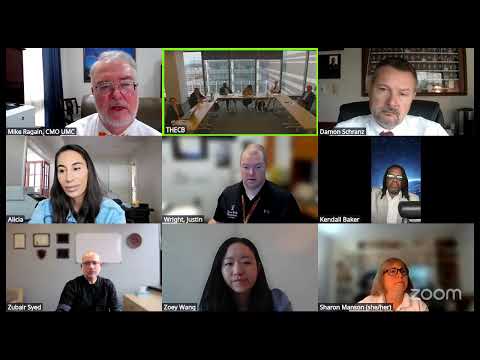
The Texas Legislature increased funding for graduate medical education and approved new behavioral health and family medicine-obstetrics programs, the Higher Education Coordinating Board staff told the Family Practice Advisory Committee on June 10, 2025.
The Texas Legislature included a substantial increase for graduate medical education in the 2026–27 budget, and the Texas Higher Education Coordinating Board (THECB) staff briefed the Family Practice Advisory Committee on the changes and new programs on June 10.
John Wyatt, senior director for government relations at THECB, said the final budget "included a total of $304,000,000 for GME expansion, which is a $71,000,000 increase, over the previous biennium." Wyatt described the GME expansion programas intended to help the state approach a 1.1-to-1 ratio of residency positions to medical-school graduates.
Elizabeth Mayer, assistant commissioner for academic and health affairs, told the committee THECB will administer several funded programs. She recapped amounts in the adopted budget: $304 million for graduate medical education expansion; $16,500,000 for the family practice residency program; $11,600,000 for the Joint Admissions Medical Program (JAMP); $4,800,000 for preceptorships; $3,000,000 continued for the rural residency physician grant program; and $5,000,000 for the forensic psychiatry fellowship program. Mayer also said the Legislature funded two new initiatives: a behavioral health innovation grant program and a family medicine-obstetrics postgraduate training program, each initially funded at $5,000,000, and that the Legislature provided $200,000 for a study on education and retention of obstetricians-gynecologists in Texas.
Wyatt and Mayer said the enacted budget also included a rider directing THECB to provide clearer reporting on how GME expansion funds are used. Wyatt said the rider will require THECB to include, in its next legislative appropriations request, details on utilization, actual and budgeted expenditures by awardees, and other data to help the Legislature review the program in the next session.
Committee members welcomed the new funding but warned that program-level reporting and sustainability would be critical going forward. Several members urged THECB to use the new grants-management system the agency is implementing to provide better financial transparency and to prepare the data the Legislature is asking for.
THECB staff said they will determine whether newly funded programs require statute or rules. Mayer noted that some programs established in prior sessions were created in appropriations language without an accompanying statute and therefore do not automatically trigger negotiated rulemaking.
Mayer and Wyatt said staff will follow up with the committee as rulemaking or program design decisions proceed and that THECB is preparing the reporting mechanisms the Legislature requested.