Get Full Government Meeting Transcripts, Videos, & Alerts Forever!
Get email alerts on the Family And Community Engagement topic
No spam. Unsubscribe anytime.
Committee favors regional ‘Spotlight’ student recognitions, adds seniors and community showcases after summit review
Summary
Wake County committee members and staff agreed to pilot a regional recognition model for the Spotlight on Students program (four events by proximity), add a senior recognition category and broaden community partner involvement after reviewing summit outcomes and participant feedback.
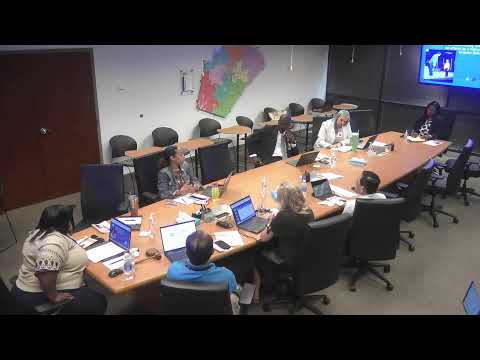
At a June 10 meeting, Wake County Public School System staff presented options to expand the Spotlight on Students recognitions and to incorporate a broader, regional approach and community partner participation. Committee members favored pairing schools by geographic proximity rather than by Board Advisory Committee (BAC) areas and endorsed adding a senior recognition category at no extra cost.
Student Services staff described three options: keep the current boardroom format with an additional date, organize multiple regional recognition events (four or five sites) that would include community resource fairs, or pair regions for larger combined events. The district’s staff (identified in the meeting as the Student Services presentation team) said their office would keep responsibility for vetting write-ups, coordinating plaques and training regional presentation teams.
Dr. Norfleet and Dr. Pettiford (Student Services presenters) asked the committee to consider travel times for families, facility capacity and translation services at regional sites. Dr. Burton, chair of the district family and community engagement committee, summarized summit feedback earlier in the meeting and said the district wants to continue to build “clear, accessible and consistent information” and to expand community engagement, citing the April family-and-community summit’s attendance and breakout-session model.
Committee members said the regional model should preserve the ceremony’s formality (students receiving recognition in front of a school/district audience) while allowing community outreach tables so families can connect with local resources. Members also requested cost estimates for the regional format before a final decision; several members noted the county budget cycle and sought assurance the model would be sustainable.
Staff summarized the April 26 family-and-community summit: more than 30 community and district tables, a Friday kickoff at Marbles Museum, high-quality keynote and breakout sessions, and positive attendee ratings (average ratings reported between 4.1 and 4.4 out of 5 for preparedness, usefulness and likelihood to attend again). Non-attendee feedback cited other obligations, unavailable public transportation and child-care needs as barriers. The district said it will continue to request feedback and to align future sessions to family needs using existing survey data.
The committee reached a working consensus in favor of a phased regional rollout: preserve the Spotlight program’s core format, add senior recognition, hold multiple regional events by proximity (four suggested), coordinate translation services and include local community resource tables. Staff will return with recommended dates, locations and estimated costs for implementation.