Get Full Government Meeting Transcripts, Videos, & Alerts Forever!
Get email alerts on the Personnel Benefits topic
No spam. Unsubscribe anytime.
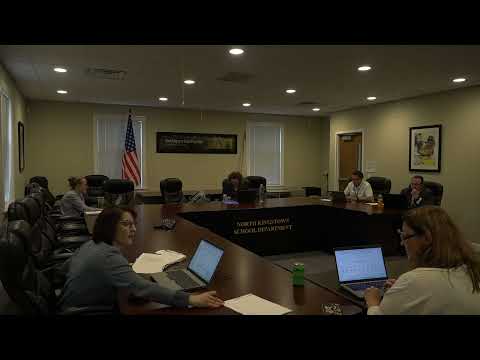
Committee reviews proposed GCB nonunit personnel benefits rewrite, defers final approval
Summary
The North Kingstown School Committee reviewed a proposed rewrite of the GCB policy governing nonunit personnel benefits, discussed categorization by work days and supervisory role, vacation/sick accruals, and carryover limits, and asked staff to refine language and return with final edits.
The North Kingstown School Committee reviewed a draft overhaul of the GCB policy covering nonunit personnel benefits and agreed not to adopt the draft at the meeting, asking staff to revise and return the proposal.
Stephanie Russo, the district HR director, presented the draft and described the process used: a committee of administrators and benefits staff solicited input from nonunit employees, met multiple times in March and May, and incorporated suggestions into the proposed policy. The draft removes a long title list and instead defines which employees are excluded and groups remaining employees by category for clarity.
Key areas of debate included how to classify employees (by days worked, by supervisory role, or by title), whether certain positions should be explicitly exempted, and how to handle employees who have individualized contracts. Committee members discussed three categories in the draft: 260-day administrative/supervisory 1, 260-day supervisory 1 (directors and assistant directors), and 215-day supervisory 2 (principals, assistant principals, deans). The committee asked staff to add clearer language on where assistant directors and certain outlier positions belong and to consider whether supervising status or work days should determine classification.
The group also discussed leave and accrual provisions in the draft. Proposed items and clarifications included: - Vacation: supervisory-1 employees would receive 25 vacation days; administrative (as categorized) would receive 20 days; principals and other 215-day employees have non-work days rather than vacation days and the committee asked staff to clarify terminology. - Carryover: the draft proposed allowing up to 10 vacation days to carry over, and staff and committee discussed adding a deadline (committee favored an October 1 or similar deadline) by which carried-over days must be used. - Sick leave: the proposal raises sick leave entitlement to 18 days for 260-day employees; the 215-day category would remain at 15 days. Accrual caps were unchanged (maximum accrual noted at 135 days). - Personal leave: the draft proposes three personal days for the categories under the policy; the committee discussed parity with teacher contract provisions and whether 2 or 3 days is appropriate for certain groups.
Committee members raised operational questions about substitutes and contracted personnel (ESS is the substitute vendor referenced) and about outside contractors (custodial staff managed by ABM) and whether the policy can require training for nonemployee volunteers or contracted workers. HR staff said they would follow up with ESS and contractors about training availability but recommended removing volunteers from a mandatory-training list.
The committee also discussed implementation details for part-time employees, readiness to pay out accrued leave on separation, and references to other policies (for example, sick-leave bank policy) that should be cited rather than replicated in full. HR staff said they would highlight edits in red on the draft chart of holidays and would return an updated, cleaner draft for final review later this summer; committee members suggested possible retroactive effective dates if the committee chose to do so.
Ending: Committee members requested further edits on classification language, carryover deadlines, and cross-references to other policies; staff will return a revised draft at a future meeting rather than pursuing adoption at this session.