Get Full Government Meeting Transcripts, Videos, & Alerts Forever!
Get email alerts on the Career And Technical Education topic
No spam. Unsubscribe anytime.
District C reports fast growth in Wake County summer "teamship" internships; committee raises questions about pay and access
Summary
District C told the committee its summer career accelerator (teamship) program has grown from 26 Wake County students in 2022 to a planned 341 in 2025, with nearly 1,300 applicants this year; presenters and board members debated unpaid internships, stipends and equitable recruitment.
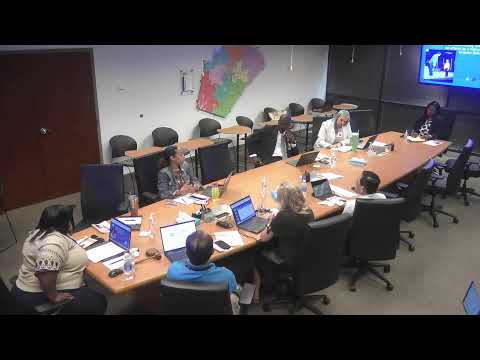
District C, an education nonprofit that runs reimagined internships called teamship, told the Wake County Community Family Engagement Committee on June 10 that its summer career accelerator (SCA) program has expanded rapidly in Wake County and will serve 341 students in 2025.
Karen Cho, senior programs manager for District C, and Dan Gonzales, chief executive officer and cofounder, described two models: a direct model (District C runs the program and sites) used in Wake County’s summers, and a member model used during the school year where certified District C coaches bring teamship into coursework. Cho said District C reached 26 Wake County students in 2022, 124 in 2023, 168 in 2024 and is slated for 341 in 2025. She said almost 1,300 students applied to this year’s summer program.
Cho said teamship places teams of high school students with real businesses to solve authentic problems and that District C trains school staff as certified coaches. Dan Gonzales said the member-model during the school year created 170 student internship opportunities last year, often as course capstone projects in CTE classes.
Board members raised questions about whether internship experiences should be paid. Cho said the Wake County summer teamships have not been paid; she explained reasons include program length, business partners’ inability to select individual students, and administrative complexity. Gonzales and committee members discussed alternatives such as stipends funded by school-district sponsors or grant dollars; Gonzales said “a stipend just for someone's successful completion is probably the cleanest way to do it” to avoid employment-law complications.
Committee members also asked about selection and equity. Cho said summer slots were filled on a first-come, first-served basis before priority deadlines but acknowledged that high application volume leaves many students without a summer site; District C said it redirects interested students to virtual teamship programs and school-year opportunities. Cho described targeted school recruitment through certified coaches and some paid advertising and said District C plans marketing steps (swag bags, targeted outreach) to raise participation among admitted students.
Cho and Gonzales described business benefits as well: District C reported growth in the number of business partners (three in the first Wake County year to an expected 27 in 2025) and several examples in which partners hired or offered part-time roles to students after pitch events.
Committee members encouraged District C to explore stipends and to work with the district to align curricula and assessment so the program’s outcomes are easier to show to potential funders. Cho said the program already collects applicant and program data and that District C can provide alignment materials when requested.