Get Full Government Meeting Transcripts, Videos, & Alerts Forever!
Get email alerts on the Youth Programs topic
No spam. Unsubscribe anytime.
Give Back program aims to steer Southeast Raleigh students from gangs into STEM, careers and mental-health supports
Summary
Presenters from the Give Back organization told Wake County’s Community Family Engagement Committee they run STEM, career-exposure and behavioral-health components that target vulnerable students in Southeast Raleigh, and said partners provide most program funding and in-kind supports.
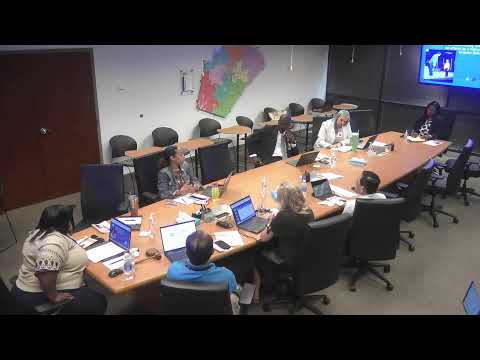
Ronnell Robinson, founder of the Give Back organization, told the Wake County Public School System’s Community Family Engagement Committee on June 10 that his group created a program called “Games over Gangs” to steer students away from neighborhood gang activity by teaching them game design and coding at nearby universities.
The presentation, given along with Carlos Pope of a university health-affiliated pipeline program and Jasmine Preston of Mentor, Raising Mentors Behavioral Health Services, outlined three linked program components: a STEM/game-design summer camp, multi-generation workforce and career pathways exposure, and weekly integrated behavioral-health sessions for participating youth.
The program’s core offer, Robinson said, originally sent students to NC State for four- to five-week camps where participants learned to code video games and experience a university environment they otherwise might not see. Robinson said the camp began as an effort to answer two questions: “How can we deter young students away from gangs? And the second question was, what do they like to do?” The answer led to game-design programming and expanded career exposure.
Carlos Pope described the Scholar Excel and PACE components as an “earliest exposure to college, career and workforce development,” saying the model includes college visits (UNC and NC State were named), industry site visits (Cisco was mentioned), and parent-facing components intended to align family expectations and support for students pursuing postsecondary pathways.
Jasmine Preston, chief executive officer of Mentor, Raising Mentors Behavioral Health Services, said the program will provide short weekly counseling sessions for students (25–30 minutes, one to two sessions per week) focused on problem solving, emotional regulation, coping skills and family engagement. “We want them to learn how to be great team players…to be responsible and be accountable for their actions,” Preston said.
Robinson said the Give Back organization was founded in 2003 and has worked for years in Southeast Raleigh. He and other speakers stressed that the program focuses on some of the district’s most vulnerable families and that gang activity in parts of Southeast Raleigh contributes to dropout risk. Robinson estimated recent cohorts of the camp include about 30 students each year and described an effort to add an optional third week and to connect Wake Tech for trade- and certification-focused pathways for students who will not attend a four-year college.
On funding, Robinson said about 80% of this summer’s support is coming from WellCare, with additional partnership support from Cisco, which is expected to help provide refurbished laptops for participants. The presenters said they collect pre- and post-program surveys with school partners and can provide outcome data to Wake County staff; Carlos Pope and others said they already run pre/post assessment for pipeline programs at UNC and can share that information to support alignment and funder requests.
Committee members asked about scale and follow-up. A committee member asked how many youths are served; Robinson said cohorts are typically 30 (split by gender in some years). Committee members and presenters discussed barriers that limit some participants from pursuing college — cited reasons included early parenting, financial pressure and local street economies — and they emphasized that the program’s multi-pathway model seeks multiple routes to stable employment and postsecondary credentialing.
The presentation concluded with committee members urging stronger school-based marketing and easier access for families, and with Robinson and partners agreeing to share assessment data and follow-up materials with Wake County staff to support future funding and expansion.
The committee approved the April 15 minutes at the start of the meeting; the motion to adopt was moved by Sheryl (committee member) and seconded by an unnamed member, and passed by voice vote.