Get Full Government Meeting Transcripts, Videos, & Alerts Forever!
Get email alerts on the School Transportation topic
No spam. Unsubscribe anytime.
Cumberland committee declines superintendent's proposed bell times, orders more study of bus routes
Summary
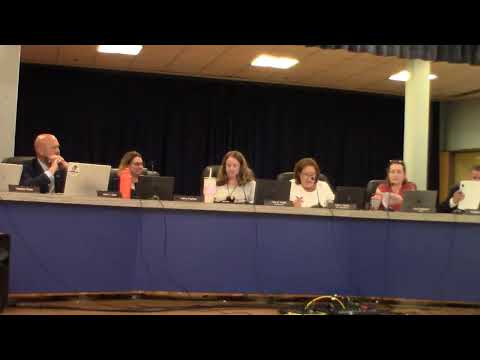
After hours of debate about bus contractor capacity, road construction and family schedules, the Cumberland School Committee voted unanimously to reject the superintendent's proposed 2025-26 school start times and directed staff to return with more detailed options and data.
The Cumberland School Committee voted 7-0 on June 12 to reject the superintendent's recommended start-time schedule for 2025-26 and asked staff to return with more detailed options after further study.
Committee members and administrators spent more than an hour discussing bus-routing constraints, contracted service levels with Durham school transportation, construction impacts on key routes and the budgetary cost of adding buses. The vote was narrowly procedural: the motion approved by the committee was to not accept the superintendent's proposed schedule and to continue work on alternative timetables for the next meeting.
The superintendent, Dr. Mike Thornton, cautioned that keeping or reverting to earlier, pre-COVID start times would likely require adding buses. "We will be late if you do this without adding buses," he said, noting the district's limited fleet and the operational impact of multi-tiered runs. Transportation staff and Durham representatives told the committee that several runs currently arrive close to bell time, mini-buses are at capacity, and ongoing local construction could create additional delays.
Members pressed Durham's role and accountability. Committee member Matthew Bacon argued the contractor should follow the committee's direction: "They need to work for us. If the schools want to go back to the pre-construction times, that is what we need to do," Bacon said during floor discussion. Bacon later moved to revert to pre-COVID times but withdrew that motion after members raised concerns about details and contract implications.
Committee members and parents described real-world effects of later start times, including scheduling conflicts for working families and constraints on field trips. Several members urged practical steps such as depot stops, route optimization and redistricting when B.F. Norton opens, but administrators said some changes would require policy amendments or additional funding. The superintendent also said Durham's contract includes a late-service penalty provision that the committee would need to consider if it changed bell times without operational adjustments.
Officials gave specifics about the competing timetables under discussion. Under the pre-COVID model discussed on the record, Ashton School, Community School and Cumberland Hills would have bell at 8:45 a.m. and start at 9:00 a.m.; the district's earlier-start schools (B.F. Norton and Garvin) would keep an 8:15 bell / 8:30 start; middle- and high-school times would remain unchanged in some scenarios. Preschool times and afternoon session end times generated confusion during the meeting; administrators said those details must be clarified before a final schedule is set.
Administrators and committee members also reviewed options beyond adding buses: depot stops (which would require a policy change), contracting an outside consultant to rework routes (the superintendent referenced a Woonsocket study that cost about $130,000 and said a similar study here might cost roughly two-thirds of that amount), and closer coordination with Durham on route programming. Transportation staff said Durham uses software (VersaTrans) for route planning but that further optimization and full scenario modeling can take weeks.
The committee instructed staff to reconvene with Durham and other stakeholders, gather missing data (fleet counts, exact run latency, impacts of planned construction and special programs) and return with specific, fundable options. Committee members said they want earlier start times if feasible, but emphasized that any change must be operationally reliable for families and safe for students.
The discussion was one of the evening's longest and most contested items; members said they would pursue multiple avenues, including policy adjustments, depot-stop feasibility and potential redistricting after new construction is complete.