Get Full Government Meeting Transcripts, Videos, & Alerts Forever!
Get email alerts on the Water Infrastructure topic
No spam. Unsubscribe anytime.
Water department outlines multi‑year capital needs as council weighs rate increase
Summary
Bountiful water department outlined aging reservoirs, annual mainline replacement goals and a multi‑year capital plan during a presentation tied to proposed rate increases; staff said portions of the work are required by regulations including the lead and copper rule.
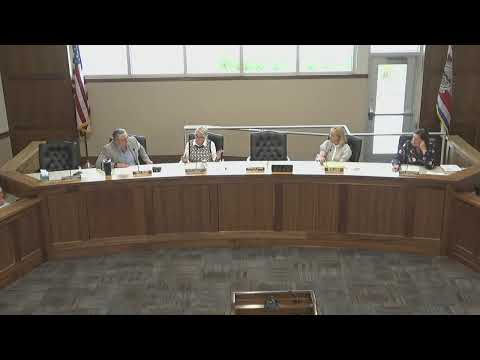
The Bountiful City water department presented infrastructure needs and a proposed rate increase during the June 10 council meeting, describing a multi‑year capital program to replace aging reservoirs, booster stations and water mains.
Craig Christensen (Water Department) told the council the city has 11,139 service connections, about 180 miles of mainline pipe, nine wells, 15 reservoirs and 14 booster stations. The department reported roughly $6.5 million in annual meter revenue and explained that part of the proposed rate increase is intended to fund a target replacement program of about 1.5–3.5 miles of mainline pipe per year; Christensen said the department aims to replace roughly 1.5 miles (three miles was referenced in the presentation as a multi‑year goal) of mainline annually as part of ongoing capital work.
Christensen highlighted two reservoirs as priorities: Mill Creek Reservoir and Barton Creek Reservoir. Mill Creek is now a 3.5 million‑gallon facility; staff described a plan to build an adjacent 1.5 million‑gallon reservoir to maintain service while the existing tank is rebuilt, ultimately resulting in two 1.5 million‑gallon tanks to allow alternating use and maintenance. Staff displayed photos showing concrete spalling, cracking and seepage at Mill Creek and noted root infiltration and leaks. Christensen also said the department coordinates its projects with the streets department so pipe replacement is performed before new overlay work.
Staff noted regulatory drivers such as changes tied to the Lead and Copper Rule that have altered the city’s approach to service‑line repairs (in some cases requiring entire service‑line replacement rather than spot repairs) and described the need to budget for compliance work. Council members asked about comparative rates in neighboring jurisdictions; staff responded that Bountiful’s rates historically have been on the lower end but with the proposed increases the city would move toward the middle of the pack among nearby cities.
Discussion vs. decision: The council heard the presentation and public comment; no rate ordinance or resolution was adopted on June 10. The hearing continues on June 24 when the council will consider final rate and budget adoption.