Get Full Government Meeting Transcripts, Videos, & Alerts Forever!
Get email alerts on the Airport Infrastructure topic
No spam. Unsubscribe anytime.
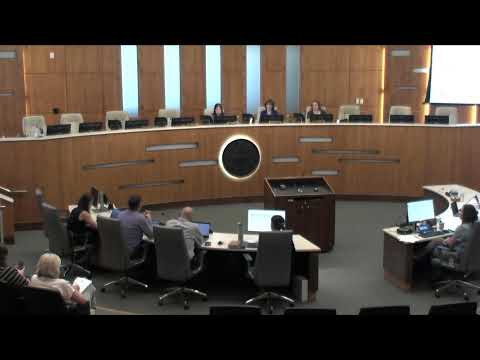
Adams County approves $523,890 design contract to upgrade fuel farm at Colorado Air and Space Port
Summary
The Board of County Commissioners approved a $523,890 task order with Kimley‑Horn and Associates to design an above‑ground fuel storage replacement at the Colorado Air and Space Port. The move is supported by CDOT grants and state legislation backing a transition to unleaded avgas.
The Adams County Board of County Commissioners approved a $523,890 task order with Kimley‑Horn and Associates to design improvements to the fuel storage farm at the Colorado Air and Space Port, the board voted 3–0 with two commissioners absent.
County and airport officials said the work will replace aging 1985 underground tanks with modern above‑ground tanks to improve safety, reduce environmental risk, and align the airport with state funding and industry standards as general aviation transitions toward unleaded avgas. William Flowers, deputy director of Colorado Air and Space Ports, said the task order is for design services and described the grant funding that supports the project.
"We're asking for approval for this task order with Kimley‑Horn to do the design work in the amount of $523,000.890," Flowers said. He told commissioners the existing system includes three underground tanks — two 15,000‑gallon jet‑A tanks and one 20,000‑gallon avgas tank — and the project would replace those with above‑ground storage: two 15,000‑gallon jet‑A tanks, a 20,000‑gallon avgas (100LL) tank and a 12,000‑gallon unleaded avgas tank. The project also includes asphalt and concrete work for the tank pad and supporting infrastructure.
Commissioner Kathy Henson asked why the county planned above‑ground tanks instead of replacing underground tanks. Flowers and airport staff said above‑ground tanks allow earlier visual detection of leaks and would avoid a requirement that the county self‑insure the underground tanks under its existing insurance program. "Above ground is obviously a more safety environmental impact as far as you could actually see visible leaks that occur within the tanks," Flowers said, adding that insurance considerations and state guidance on fuel modernization also factored into the decision.
An engineer from Kimley‑Horn, Casey Addison, said the project is intended primarily to provide an unleaded fuel option to the general aviation (GA) community; it adds a 12,000‑gallon unleaded tank but does not increase the airport's current fuel storage capacity. "As of right now, no. We're staying at the current capacity," Addison said when asked whether the design expands total capacity on the pad site.
Flowers told commissioners that the airport secured two Colorado Department of Transportation (CDOT) grants to support the work: a 90/10 match grant in the amount of $103,000 and a 50/50 grant of $585,000. He also referenced state legislation that created funding for airports to transition to unleaded avgas.
The board made a motion to approve the task order; the motion passed 3–0 with two members absent. No timeline for construction was given during the discussion. The task order covers design services only; construction contracting and any necessary permitting or further approvals would follow later.
The county attorney and airport staff may make non‑substantive corrections to the task order paperwork before final execution, per staff practice.