Get Full Government Meeting Transcripts, Videos, & Alerts Forever!
Get email alerts on the County Budget topic
No spam. Unsubscribe anytime.
Santa Clara County adopts balanced budget, orders temporary across‑the‑board cuts amid federal and state funding risks
Summary
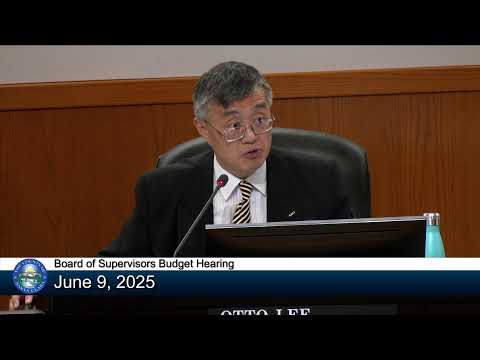
The Board of Supervisors adopted the recommended fiscal year budget June 9, while approving a temporary, across‑the‑board reduction in department operating budgets to cover a recent revenue shortfall and buy time to assess larger state and federal funding risks.
The Santa Clara County Board of Supervisors adopted the recommended fiscal year budget on June 9 and approved a temporary countywide reduction in operating (object 2) budgets to address a recent decline in projected revenues.
County Executive James Williams and Budget Director Ezekiel Vega briefed the board on the recommended budget and a set of revised recommendations. Williams said the county faces large federal and state risks — especially to Medi‑Cal and SNAP/CalFresh funding — that could substantially affect county safety‑net programs. Vega described revisions that reduced the shortfall since the May budget workshop and explained the administration’s proposal for a temporary, across‑the‑board operating cut to buy time for departments to identify targeted reductions or swaps.
Why it matters: County leaders said federal bills and state budget actions could significantly reduce Medi‑Cal and other federal funding streams that support health, behavioral health and social services. Williams warned officials to plan for further impacts and for a materially larger structural deficit in Fiscal Year 2026–27.
Key facts from presentations: Budget staff told the board that Medi‑Cal funding represents roughly $1.9 billion in the current year; social‑service federal funding is roughly $400 million. The administration reported a revised shortfall in certain local revenues of about $17.5 million since the printed budget, and a projected FY 2026–27 structural gap near $280 million. Auditors also identified potential revenue and spending adjustments; administration agreed with about $2.4 million of those recommendations.
Board action and next steps: Rather than deleting specific vacant positions without department consultation, the board approved a temporary negative appropriation applied across departments’ services and supplies (object 2) to achieve the needed additional reductions. The county will require departments to propose specific mitigation steps (service‑supply freezes, contract changes, position swaps or deletions) in the coming months; administration said it will return to the board with a consolidated package of proposed swaps and program impacts for review.
Supervisor discussion: Supervisors expressed concern about the transparency and programmatic impacts of an across‑the‑board reduction, and several asked administration to bring all proposed swaps back together so the board can weigh tradeoffs at once. Williams and Vega said the approach was a last‑resort measure to keep the budget balanced now and allow more informed decisions later, given constrained time and limited rainy‑day reserves.
Budget votes: The board adopted the recommended budget and approved the administration’s revised recommendations and the temporary object 2 reductions. The board directed departments to return with specific proposals for swaps or other adjustments before finalizing program changes for FY 2025–26.
What to watch next: Administration will meet with department heads and return in the coming months with proposed service‑level swaps and any adjustments tied to state and federal budget actions, including potential Medi‑Cal enrollment changes that could affect FY 2026–27 revenue.