Get Full Government Meeting Transcripts, Videos, & Alerts Forever!
Get email alerts on the Employee Benefits topic
No spam. Unsubscribe anytime.
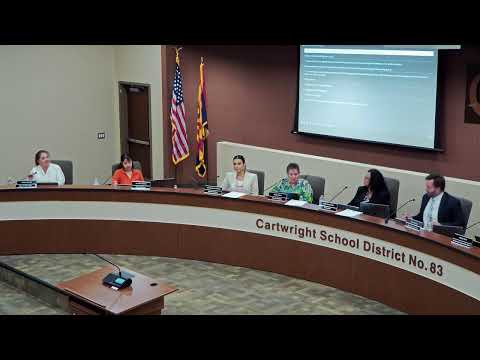
Cartwright board approves retiree "work for insurance" program with new substitute-day requirement
Summary
The governing board approved an updated retiree work-for-insurance program requiring eligible retirees to work at least 35 days as substitutes, clarifying eligibility and certification requirements and anticipating up to 16 participants next year.
The Cartwright Elementary School District governing board approved an updated "work for insurance" program for 2025–26 that allows qualifying retired employees to return in limited roles and receive district-provided health insurance in exchange for work.
Acting Superintendent Steve Watson presented the proposal, which administration revised after attorney review to reduce legal and statutory risk. The program requires participants to be qualifying district retirees, have minimum years of service, and to terminate insurance eligibility when the retiree becomes Medicare-eligible. The administration recommended a 35-day substitute-work minimum to qualify for the benefit; Watson said in the current year the highest participant worked 22 days and the program previously saw as many as 44 days.
Watson said program participants are expected to substitute in classrooms and the requirement for emergency substitute certification (or assistance obtaining it) is part of the implementation. The district also clarified pro-ration rules and the retiree return-to-work compensation formula; the program terminates for participants upon Medicare eligibility.
Administration presented counts of current and potential participants: 11 current eligible participants for 2024–25 and a projected maximum of 16 potential participants for 2025–26 if additional retirees elect the program. Watson said the proposal was designed to provide in-kind work in exchange for the insurance benefit and to address substitute shortages.
Board members asked about tracking and fiscal oversight; Watson said most current childcare employees had been placed in other roles and that administration would track days worked and certification. The board approved the program by roll call.
No specific contract numbers or budget amounts for the insurance cost were provided at the meeting; Watson said the program is intended to be limited in scale and administratively tracked to avoid improper use of district funds.