Lifetime Citizen Portal Access — AI Briefings, Alerts & Unlimited Follows
Council chair and DOC discuss pivot to public–private partnership for new jail annex
Loading...
Summary
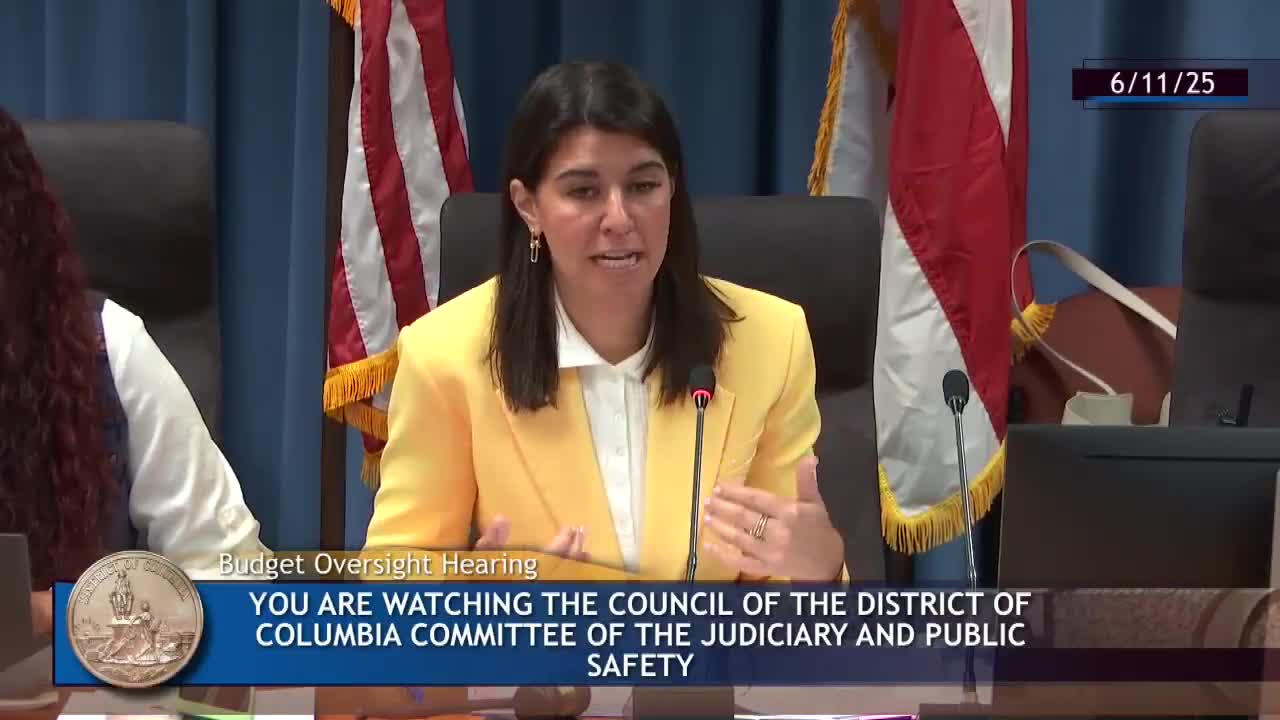
The Committee on Judiciary and Public Safety met June 11 to continue review of Mayor Bowser's proposed FY26 budget and questioned the Department of Corrections about a change in how the new jail annex would be financed and built.
The Committee on Judiciary and Public Safety met June 11 to continue review of Mayor Bowser's proposed FY26 budget and questioned the Department of Corrections about a change in how the new jail annex would be financed and built.
Chair Brooke Pinto opened the hearing by noting that "this budget takes away the funding for the construction of the new jail" and asked the department for assurances on a timeline if the executive pursues a P3. Pinto said she is "not interested in having a privately run jail in DC" and asked for "assurances on paper" that construction will proceed even if a private-sector partner is used for capital work.
Tom Faust, Director of the DC Department of Corrections, told the committee the administration has shifted the procurement approach toward a P3 for capital construction only and emphasized that "the District and DOC, we'll maintain all operational and staffing functions for the new facility." Faust said the FY26 budget contains $5,000,000 "directed for continued jail planning and pre designed services" and that the city already has "$23,000,000 in hand toward the ongoing process." He said DGS would lead the RFQ/RFP process and that an RFQ/RFP could be issued "by sometime, I believe, late summer." Faust added that any private partner would be bound by the project's existing conceptual designs and local approvals, including the Hill East Master Plan and prior reviews by the Commission on Fine Arts and the National Capital Planning Commission.
Why it matters: The funding and procurement approach determine how quickly the city can move from design to construction, what oversight remains with the District, and whether the community's design and program requirements will be enforced under a private developer-led delivery model.
Details and context: Faust said the P3 approach is intended to speed delivery because private bidders would submit an already-assembled team, including architect and contractor, as part of their proposals. Pinto pressed for more precise dates and asked how the financing would work; Faust said finance terms (leaseback payments and timing) would be negotiated by DGS and the city and deferred specific cost estimates to DGS or the Mayor's Office. Pinto also raised the need to ensure planned unit types could accommodate potential agreements with the Bureau of Prisons for housing people returning from federal custody.
What remains unresolved: Committee members asked for written timelines and assurances on design fidelity and the schedule for the RFQ/RFP. Faust deferred detailed schedule and financing questions to DGS and said he would follow up with specific timing. Pinto said she will seek more information before the council acts on the budget.
Provenance: First related remarks began in the committee opening statements by Chair Brooke Pinto (testimony opening remarks) and the department'wide presentation by Director Tom Faust. The discussion on P3 and funding continued through several exchanges in which Pinto asked for timelines and financing details and Faust provided the $5 million predesign figure and the $23 million already on hand.