Get Full Government Meeting Transcripts, Videos, & Alerts Forever!
Get email alerts on the Gaza Humanitarian Access topic
No spam. Unsubscribe anytime.
UN says humanitarian access to Gaza remains insufficient as WFP deliveries fall short
Summary
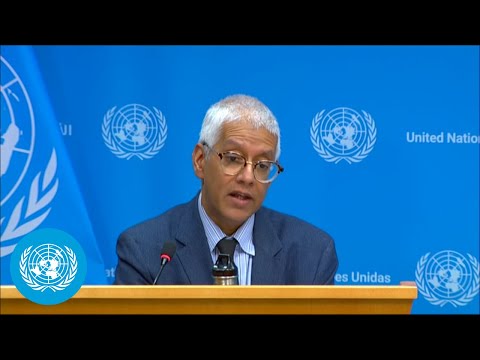
At a UN press briefing, the spokesperson said repeated denials and delays have limited life‑saving supplies to Gaza; the World Food Programme transported some 700 trucks to the border since May 19 but only a fraction entered Gaza.
Farhan, a UN spokesperson, said the office for the coordination of humanitarian affairs continues to receive reports of people being killed and injured while trying to access food in the Gaza Strip and warned that people across Gaza are at risk of famine.
"No one should be forced to risk their lives to receive aid," Farhan said, citing repeated denials and delays from Israeli authorities that have restricted humanitarian movements. He said that between April 13 and the Monday before the briefing, 29 of 35 attempts to access available stocks of fuel at Rafa were denied, and that a mission that morning had also been denied.
Farhan gave WFP delivery figures to illustrate the shortfall. "As of June 10, WFP has transported over 700 trucks of aid to the Karem Shalom border crossing point," he said, adding that while the trucks carried over 11,000 metric tons of food, only about 6,000 metric tons had entered Gaza — "enough to support fewer than 300,000 people for a month with minimal daily food requirements" for a population of about 2,100,000.
He warned that the shortage of accessible fuel is forcing health, water and sanitation facilities to shut down and that vaccines require fuel for cold‑chain systems. He also said the collapse of telecommunications and emergency communications would cripple life‑saving coordination and prevent affected communities from receiving critical information.
Reporters pressed the spokesperson on alternatives. Amelie asked for clarification that the 700‑truck figure covered the period since the May 19 reopening of the crossing; Farhan confirmed that it did. Another reporter, Gabriel, asked whether the UN would refuse to participate in a restrictive aid plan unless a minimum number of trucks were allowed; Farhan responded, "We will not keep food from people if we can get it to them. They need it to live. And denying food from people ensures the chance that many of them will die. So that is not a gamble we're going to take."
Farhan said the UN has called repeatedly for more crossing points to be opened and for permissions to facilitate humanitarian relief. He noted the World Health Organization and partners continue to sound the alarm over shrinking access to remaining health care facilities, naming Al Amal and Al Nasr hospitals in Khan Yunis as particularly affected. He said Al Amal, while partially functioning, is unable to accept new patients.
The briefing emphasized both operational constraints — denied permissions for convoys and fuel — and humanitarian consequences: insufficient food, mounting displacement, and risks to health services. The UN said it will continue to press authorities and to coordinate with partners to deliver aid where possible.