Get Full Government Meeting Transcripts, Videos, & Alerts Forever!
Get email alerts on the Commercial Leases topic
No spam. Unsubscribe anytime.
Assembly restores landlords' duty to mitigate damages in commercial leases
Summary
The Assembly passed a bill restoring a landlord's duty to mitigate damages when commercial tenants breach leases, aligning commercial rules with a 2019 residential change; supporters said it helps small businesses, opponents said it interferes with negotiated contracts.
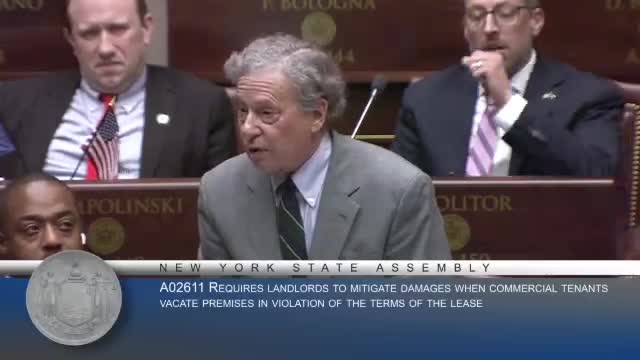
The Assembly approved legislation (Assembly No. 2611, rules report 4-88) that restores a landlord's common-law duty to mitigate damages in commercial lease cases. The sponsor, Mister Otis, said the change returns New York to the pre-1995 standard and mirrors the duty already restored for residential leases in 2019.
"This is a good bill for small business," Otis said, explaining the duty requires landlords to make reasonable, customary efforts to relet commercial premises at fair market rent (or the lease rate, whichever is lower) if a tenant vacates in breach. The bill also states lease provisions that exempt a landlord's duty to mitigate are void as contrary to public policy.
Opponents warned the measure could undercut negotiated commercial lease provisions and increase landlords' perceived risk. Mister Molotar and others asked whether liquidated-damage clauses or carefully negotiated commercial terms would be disrupted; sponsor Otis said tenants would not be relieved of liability but that the landlord's duty would limit damages to the extent re-renting reduces losses.
Floor critics said the change could raise rents or reduce available commercial space as landlords shift risk into lease terms. Supporters responded that vacant storefronts harm neighboring businesses and communities and that the bill's language keeps the mitigation burden reasonable — "in good faith and according to the landlord's resources and abilities," Otis said.
The Assembly recorded Ayes 94, Noes 51 and the bill was passed with immediate effect, per the clerk's announcement. Debate highlighted competing interests between protecting small businesses and preserving the predictability of negotiated commercial contracts.