Lifetime Citizen Portal Access — AI Briefings, Alerts & Unlimited Follows
Mayor's veterans office says FY26 budget holds steady; committee seeks details on program metrics and outreach
Loading...
Summary
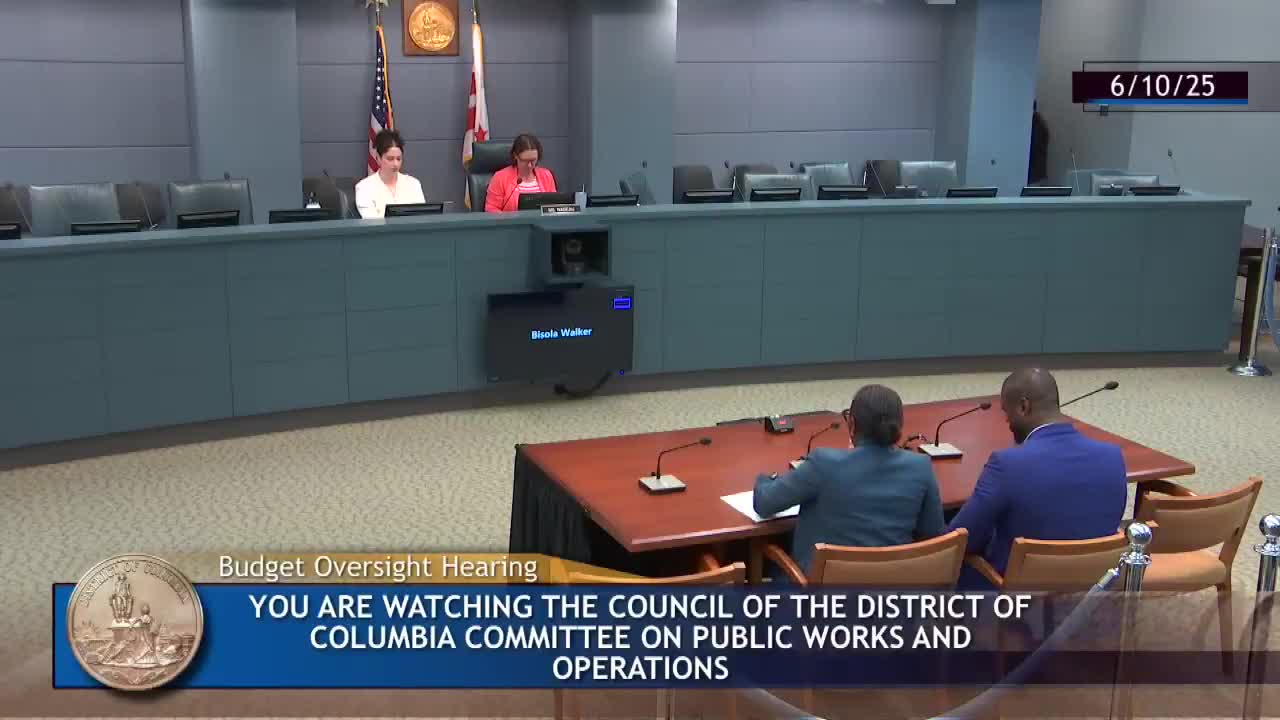
Charlotte Woodard, director of the Mayor's Office of Veterans Affairs, told the Committee on Public Works and Operations that MOVA's FY26 proposal would keep staffing and core programs intact. Members asked about VetsRide performance, the Veterans Homestead Deduction program and outreach to survivors and LGBTQ veterans.
Charlotte K. Woodard, Director of the Mayor's Office of Veterans Affairs, testified on June 10 that the mayor's proposed FY26 budget would not reduce MOVA's core programs or staff and that the office would remain at seven full‑time equivalent positions with a budget of $1,246,526.
Woodard described three pillars of MOVA's work — outreach, programs and benefits assistance — and said the office connects veterans and their families to federal VA benefits, housing partners and transportation support. “MOVA's fiscal year 'twenty 6 budget will continue at 7 full time equivalent employees and $1,246,526 reflecting no change from fiscal year 'twenty 5,” Woodard said.
Committee members questioned MOVA officials about VetsRide, the office's subsidized taxi program for eligible veterans, and about the Veterans Disabled Homestead Deduction program. Woodard said the FY26 budget includes $268,000 for VetsRide, which provides up to 10 ride vouchers per eligible veteran per month and operates seven days a week. MOVA told the committee VetsRide has provided thousands of free taxi rides to DC veterans since the program began; the office reported several tens of thousands of rides in recent years and projected approximately 11,000 completed trips in the current fiscal year.
On the Veterans Disabled Homestead Deduction program, MOVA said it had received 353 applications since the program began, that 150 disabled veterans were granted the deduction, and that 80 veterans recertified their eligibility; MOVA estimated the granted deductions equaled approximately $673,285 in tax savings for recipients to date.
Woodard also described targeted outreach plans for FY26, including continuing the office's monthly resource symposium, in‑person tabling at veterans service organizations, and partnering with community groups to reach survivors and LGBTQ veterans. MOVA said the office's LGBTQIA+ veteran coordinator provided 123 services in FY25 and will continue those monthly meetings around care and access.
Committee members asked for more data about how many eligible veterans have not yet claimed the homestead deduction and whether surviving spouses would be reachable through proposed legislation. Woodard said MOVA could not provide an exact count of eligible but unclaimed deductions during the hearing but noted a rough figure of about 1,794 DC veterans with 100% VA disability ratings; she also said that roughly five surviving spouses had inquired about eligibility so far.
Ending: Councilmembers signaled follow‑up requests for more precise program metrics and asked MOVA to return any written responses requested by committee staff before the hearing record closed on June 24.