Get Full Government Meeting Transcripts, Videos, & Alerts Forever!
Get email alerts on the Utility Rates Consumer Advocacy topic
No spam. Unsubscribe anytime.
Assembly passes bill to create utility intervener fund to reimburse community advocates
Summary
The Assembly approved a measure to create a fund to reimburse community groups and nonprofits for participation in utility rate proceedings before the Public Service Commission; supporters said it levels the playing field, opponents raised cost and scope concerns.
The Assembly approved legislation (Assembly No. 836, rules report 4-82) to create a utility intervenor account that would reimburse citizen groups, nonprofits and other qualified participants for reasonable expenses incurred when participating in certain proceedings before the Public Service Commission (PSC).
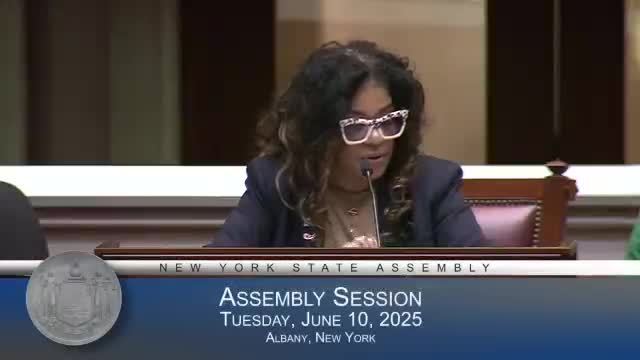
Sponsor Miss Solange said the measure aims to give consumers a voice in utility rate proceedings: "Customers shouldn't be a GoFundMe to fight unfair rate hikes," she said. The bill would let applicants request reimbursement of advocate fees, expert witness fees and out-of-pocket costs; the PSC would determine eligibility and the size of the fund.
Floor exchanges focused on who would pay and how much. Mister Palmisano and other members pressed the sponsor on whether the bill duplicates existing consumer advocacy functions (for example, the PSC's Office of Consumer Services, the Utility Intervention Unit, and the state special counsel for ratepayer protection) and whether costs would fall to ratepayers.
Solange said the fund would be drawn from ratepayer monies overseen by the comptroller and administered by the PSC; she pointed to Idaho and California as models and said intervenor participation can produce net savings in cases. Opponents, including Mister Lascher and others, warned there is no explicit cap in the bill, no cost estimate on the record, and that the PSC would have broad discretion over fund size, number of intervenors and reimbursement amounts.
Debate also covered the types of proceedings covered; the sponsor said the bill applies to cases relating to prices for gas, steam and electric service and to certain metering issues, focusing on residential consumer impacts. The Assembly recorded Ayes 102, Noes 43 on final passage.
Floor critics argued the measure could be duplicative of existing advocacy entities and could increase ratepayer bills if administrative costs are passed on. Supporters stressed transparency and access for small community groups that currently cannot afford expert testimony in PSC proceedings.