Lifetime Citizen Portal Access — AI Briefings, Alerts & Unlimited Follows
Council hearing highlights OUC pay raises, transparency concerns and new hotel fee proposal
Loading...
Summary
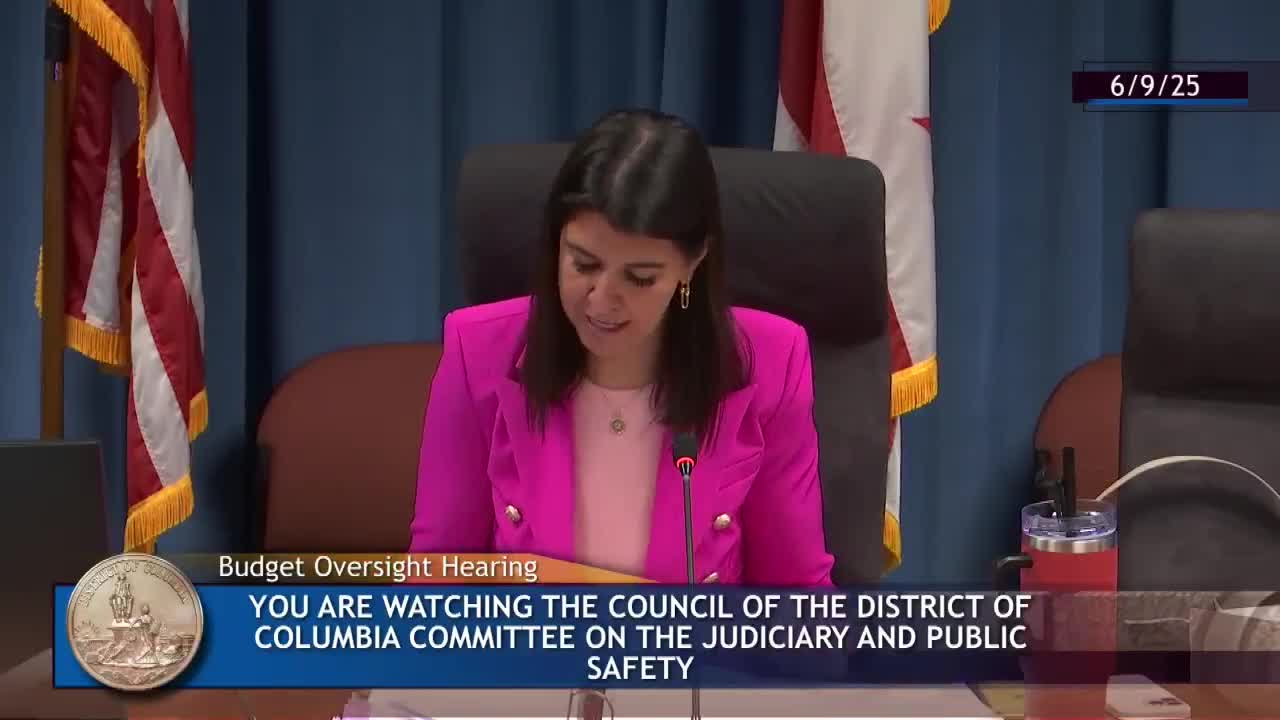
The Committee on Judiciary and Public Safety met June 9 to review the Office of Unified Communications' proposed FY26 budget, focusing on pay raises, recruitment incentives, capital IT projects, a proposed 80¢ nightly hotel fee to fund a new public services telecommunications special revenue fund, and public concerns about transparency in reporting 911 errors.
The Committee on Judiciary and Public Safety held a public oversight hearing on June 9 to review Mayor Bowser’s proposed FY2026 budget for the Office of Unified Communications (OUC), focusing on staffing, technology upgrades and transparency around reported 911 errors.
The hearing matters because OUC operates the District’s 911, nonemergency and 311 call-taking systems; the committee and public witnesses said funding, staffing and accurate public reporting affect emergency response times and public trust.
Public witnesses told the committee they continue to see serious service problems and incomplete public reporting. Dave Statter, owner of Statter 911 Communications, said a reported incident at the National Air and Space Museum resulted in a 25-minute arrival time for ambulance crews and that the event and other mistaken-address incidents he has reported do not appear on OUC’s public performance dashboard. “That’s because OUC doesn’t want us to know,” Statter said. Trippity (Troopdi) Patel, chair of Advisory Neighborhood Commission 2A, told the committee his building experienced an elevator fire in February and said the response took 30 minutes from call to on-scene arrival.
OUC Director Heather McGaffin and staff defended operations and described the FY26 requests as aimed at stabilizing staffing and technology. Director McGaffin said the mayor’s FY26 operating request for OUC is $64,693,200, a 1.6% increase, and said pay parity and retention incentives are priorities. “The mayor’s proposed FY26 budget provides OUC with the resources necessary to efficiently manage the thoughtfully planned growth of the district’s 911 and 311 public safety and public service communications platform,” McGaffin said. She told the committee OUC has achieved high call-answer performance so far in 2025: “we have been able to achieve 94.01% of all 911 calls being answered in 15 seconds or less so far in 2025.”
Key budget elements discussed - Pay and bonuses: The mayor’s proposal includes roughly $1.3 million for salary increases for 911/311 call takers and supervisors and about $1.0 million for recruitment and retention incentives. OUC said the minimum starting salary for 911 call takers will increase from $51,007 to about $61,003 effective Oct. 1, 2025; the agency said it plans to convert monthly attendance bonuses into quarterly, performance‑based bonuses and suggested a target of about $2,000 per quarter before final tax calculations. - Staffing and pipeline: OUC reported 107 call-taker positions with 25 vacancies and 16 people in the hiring pipeline; the agency reported 114 dispatcher positions with 17 vacancies. OUC said five candidates were expected to start the week after the hearing and 11 more were in psychological testing. - Technology and capital: OUC described investments across several capital projects. The FY26 capital request includes about $13.78 million, with $7.45 million identified for upgrades to the 311 service-request platform, CAD enhancements, radio site work and replacement of portable radios. The FY26 IT appropriation includes a request of about $18.5 million to support 29 FTEs and maintenance for telephony, radio, mobile data computing and software systems. - New special purpose revenue (SPR) fund / hotel fee: OUC is proposing a Public Services Telecommunications SPR funded by an 80¢ nightly hotel fee. McGaffin said the fee is intended to avoid raising the existing 76¢ per‑phone‑line fee for residents and that it is estimated to generate about $6.9 million annually; OUC said the hotel fee would fund 52 dispatchers and related NG911 costs. Panelists and council members cautioned about possible impacts on tourism and hotel competitiveness.
Transparency and reporting concerns Committee chair Councilmember Brooke Pinto and witnesses pushed OUC on the performance dashboard and its compliance with reporting requirements in the SecureDC transparency framework. Statter testified he had submitted about 30 feedback forms this year documenting mistakes (including quadrant/address errors and duplicate dispatches) and said none appeared on the public dashboard. Chair Pinto and OUC staff discussed the committee’s need for call identifiers or timestamps to let OUC review the underlying call recordings and CAD entries; OUC said internal privacy rules and the volume of calls mean staff needs standard intake information to research incidents promptly.
Operational practices Chair Pinto and witnesses asked about on‑shift behaviors cited by callers, including whether staff are permitted to have TVs or cell phones. McGaffin said OUC allows TVs without sound in operations centers to monitor news and major events but enforces a cell‑phone restriction for systems that access criminal history and other sensitive databases; she described stricter shift supervision as a factor behind improved seat time and reduced answer times.
What’s next / staff follow-up Council staff requested a crosswalk of transfers to the proposed SPR, a breakdown of the 16 people in the hiring pipeline by role (call taker vs. dispatcher), and more detail on the proposed performance‑based bonus policy and tax revenue projections for the hotel fee. Chair Pinto said the committee will remain in close contact with OUC as the FY26 budget process continues.
Ending The OUC portion of the hearing concluded after about an hour and a half of testimony and questioning; the committee then moved to review the Office of the Attorney General’s budget. The issues raised about transparency, call-taker staffing and the proposed hotel fee are likely to be followed closely as the committee considers final FY26 budget language.