Get Full Government Meeting Transcripts, Videos, & Alerts Forever!
Get email alerts on the Banking topic
No spam. Unsubscribe anytime.
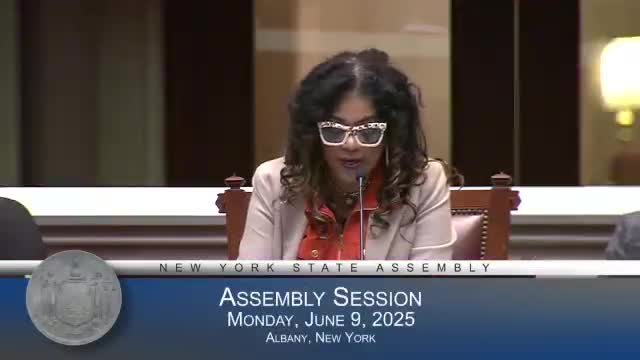
Assembly requires 60‑day notice, reason before state‑chartered banks close accounts
Summary
A bill requiring state‑chartered banks to provide 60 days’ notice and state a reason before closing a customer’s account passed the Assembly 101–41; sponsors said the measure protects consumers while opponents raised concerns about investigations and regulatory overlap.
The Assembly passed legislation requiring state‑chartered banking institutions to provide account holders with 60 days’ written notice and an explanation of the reason before closing an account, and to return outstanding funds within 60 days after closure. The floor vote was 101–41 in favor.
Sponsor Assemblymember Jacobson said the bill aims to prevent sudden account closures that can lead to bounced checks and cascading financial harm. “If you don't have this and you end up bouncing checks because the account was closed and you didn't know, it's going to cause havoc,” Jacobson said on the floor.
Questioners pressed on exceptions for law‑enforcement actions and national security. Jacobson and others clarified the bill does not preempt or interfere with federal law enforcement or regulatory requirements; if federal statutes or orders require immediate action (for example, in money‑laundering investigations), banks must comply with federal law.
Members raised implementation and supervision concerns, noting multiple federal regulators oversee banks and asking how statechartered institutions would operationalize the notice requirement; the sponsor said the Department of Financial Services would enforce the state requirement for state‑chartered entities and that banks routinely send notices for other matters.
Supporters described the bill as a consumer‑protection measure; critics argued it could complicate investigations or add costs that disproportionately affect smaller state‑chartered institutions. The Assembly adopted the bill and recorded the vote 101–41.