Get Full Government Meeting Transcripts, Videos, & Alerts Forever!
Get email alerts on the School Safety topic
No spam. Unsubscribe anytime.
District presents student conduct data; officials outline reporting, restorative responses and handbook updates
Summary
Lake Oswego School District principals presented disciplinary and bias‑incident data and described steps the district will take next school year, including MTSS updates, behavior handbooks and a required student acknowledgement of secondary behavior and cell‑phone expectations.
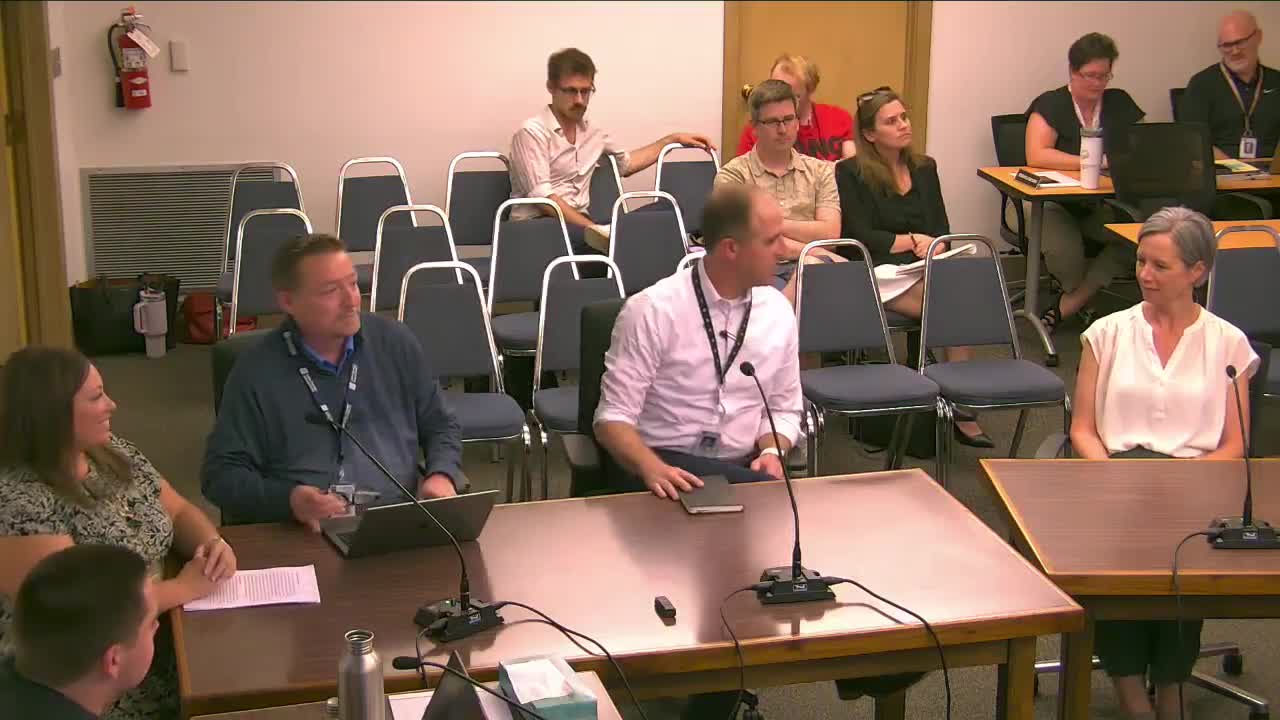
Lake Oswego School District principals and program directors on Tuesday presented data on student conduct, bias incidents and discipline, and described actions the district will take to clarify expectations and support students.
Principals Melissa Griffiths (Hallinan Elementary), Curt Schultz (Lake Oswego Middle School) and Kristen Collier (Lake Oswego High School) walked the school board through the district’s approach to investigations, the bias‑incident reporting process and tiered behavior supports (MTSS). Schultz and Collier emphasized that more students and bystanders are reporting incidents and that the district has been able to confirm and follow up on an increased number of bias incidents as a result.
Schultz described the investigative process: staff interview the reporting student, identify witnesses and consult counselors, deans and administrators; parents are brought in as partners; and consequences are applied when supported by the evidence. Schultz said the district also uses restorative learning during in‑school suspensions, assigning readings, reflections and conversations so students learn the history and impact of harmful language or symbols.
The presentation included discipline data showing an increase in elementary suspensions compared with prior years and an uptick in secondary incidents tied to cell‑phone policy violations. When asked how many cell‑phone violations contributed to incidents, a district presenter answered “75.”
Next steps presented to the board include: revising and distributing an MTSS behavior guide for elementary schools; producing a concise one‑page expectation statement for secondary students on behavior and cell phones that students must acknowledge in Synergy when they receive schedules; and using advisory time and teacher circles to discuss incidents when investigations cannot identify an individual perpetrator. At the elementary level, staff said they may reintroduce a signed half‑sheet acknowledgement for parents to ensure understanding of expectations.
Board members praised the principals’ cross‑school coordination and asked staff to include consequences and clearer documentation in parent communications so families understand how incidents are handled. No formal board action resulted from the presentation; staff will return with updated materials and implementation timelines.