Get Full Government Meeting Transcripts, Videos, & Alerts Forever!
Get email alerts on the Open Meetings Act Ipra topic
No spam. Unsubscribe anytime.
County attorney’s office briefs health council on Open Meetings Act and IPRA requirements
Summary
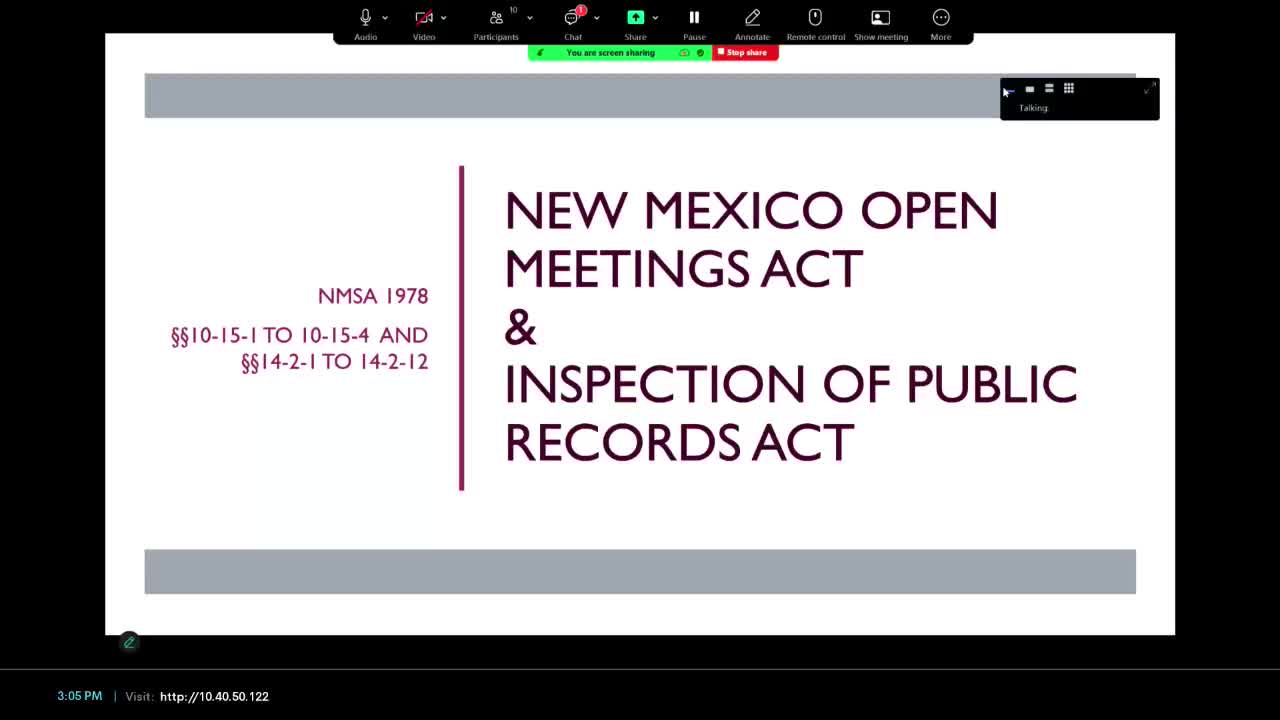
Deputy Family Attorney Katie Twates briefed the Los Alamos County Health Council on the state Open Meetings Act and the Inspection of Public Records Act, covering quorum rules, notice and agenda requirements, public‑meeting records and potential legal consequences for violations.
Katie Twates, Deputy Family Attorney, gave a legal briefing to the Health Council on open‑meetings and public‑records obligations under state law and county resolution 19‑28.
Twates summarized four required elements for a public meeting: a quorum, public notice, an agenda with specific items and timely meeting minutes. She said councils and advisory bodies must avoid “rolling” or “walking” forums — serial communications among a quorum outside a posted meeting — because those can violate the Open Meetings Act.
“Almost every state, I believe every state has some version of sunshine laws,” Twates said, describing the state Open Meetings Act and the Inspection of Public Records Act as the statutes that require transparency. She reviewed county practices for posting agendas (no less than 72 hours for special meetings, 10 days for regular annual calendars), the definition of a quorum under the council’s resolution, and requirements for minutes: date/time/place, members present/absent, substance of proposals, and votes.
Twates also said public records include emails, texts and notes related to council business and recommended that members use a separate email account for Health Council business to simplify public‑records responses. She warned that violations of the Open Meetings Act can be a misdemeanor and that actions taken in violation of required public‑meeting procedures could be invalidated.
Ending: Twates provided the council with handouts and said she would circulate the presentation; members asked procedural questions about agendas, posting and working groups.