Get Full Government Meeting Transcripts, Videos, & Alerts Forever!
Get email alerts on the Zoning Ordinance topic
No spam. Unsubscribe anytime.
Planning commission recommends against changing tattoo spacing; urges comprehensive zoning review
Summary
The commission considered an amendment to reduce the B-2 district spacing requirement for tattoo establishments from 1,000 feet to 750 feet but stopped short of a citywide change, recommending the Common Council not adopt the amendment and urging a broader review of zoning rules through the Accelerate Kenosha initiative.
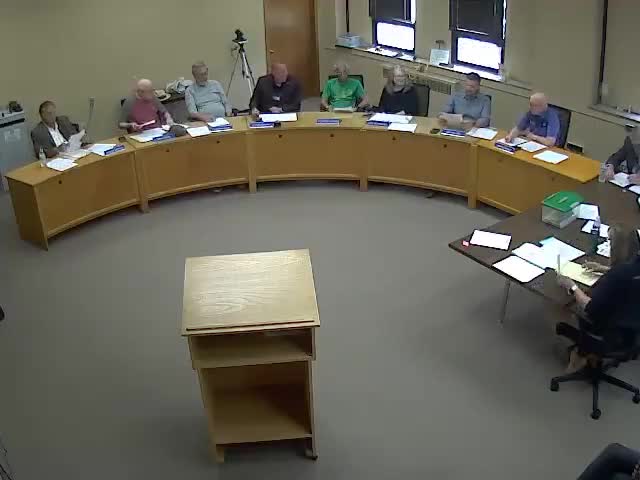
The Kenosha City Planning Commission debated an ordinance amendment Thursday that would reduce the minimum separation distance for tattoo establishments in the B-2 zoning district from 1,000 feet to 750 feet and ultimately forwarded a negative recommendation to the Common Council, urging a broader, comprehensive review of zoning standards.
Why it matters: The spacing rule controls where tattoo businesses may locate in commercial districts; changing it would affect where future tattoo establishments could open. Commissioners and staff said a piecemeal change for a single applicant is not the preferred approach and recommended the Accelerate Kenosha zoning review address spacing and other dated provisions comprehensively.
Applicant Rhianna White, owner of Peach Toe Tattoo LLC, told the commission she has worked in Kenosha for about three years and asked to open a shop at a Fifth Avenue location she said is roughly 820 feet in a straight-line measurement from an existing tattoo business, based on staff—s parcel-to-parcel measurement method. White said the current ordinance prevents her from occupying the tenant space she has selected.
Planning staff provided the ordinance history: tattoo uses were once prohibited across the board, later were grouped with adult uses and eventually separated, leaving the 1,000-foot spacing as the remaining special standard. Staff told commissioners that other Wisconsin communities typically either have no spacing requirement or treat tattooing as a conditional use without spacing; a few communities were considering changes.
Several commissioners urged patience and a citywide review. Commissioners discussed alternative approaches, including creating a defined pathway to grant exceptions or adjusting how the ordinance measures distance (for example, door-to-door rather than parcel-to-parcel). One commissioner proposed eliminating the spacing rule entirely; that motion was withdrawn. Another motion to change the distance to 750 feet was brought forward but the commission recorded a negative recommendation to the Common Council after roll call.
The commission asked the administration to have the Accelerate Kenosha task force continue its review of the zoning code and to consider whether certain distance requirements should be removed or replaced with clear exception standards. Staff said they expect initial recommendations from that initiative in the third quarter of the year. The Common Council will consider the ordinance change; staff noted a public reading was scheduled for June 16 and council action for July 7.