Get Full Government Meeting Transcripts, Videos, & Alerts Forever!
Get email alerts on the Food Retail Liquor Tobacco Distribution topic
No spam. Unsubscribe anytime.
Committee advances study directing health department to map fast-food, liquor and tobacco saturation
Summary
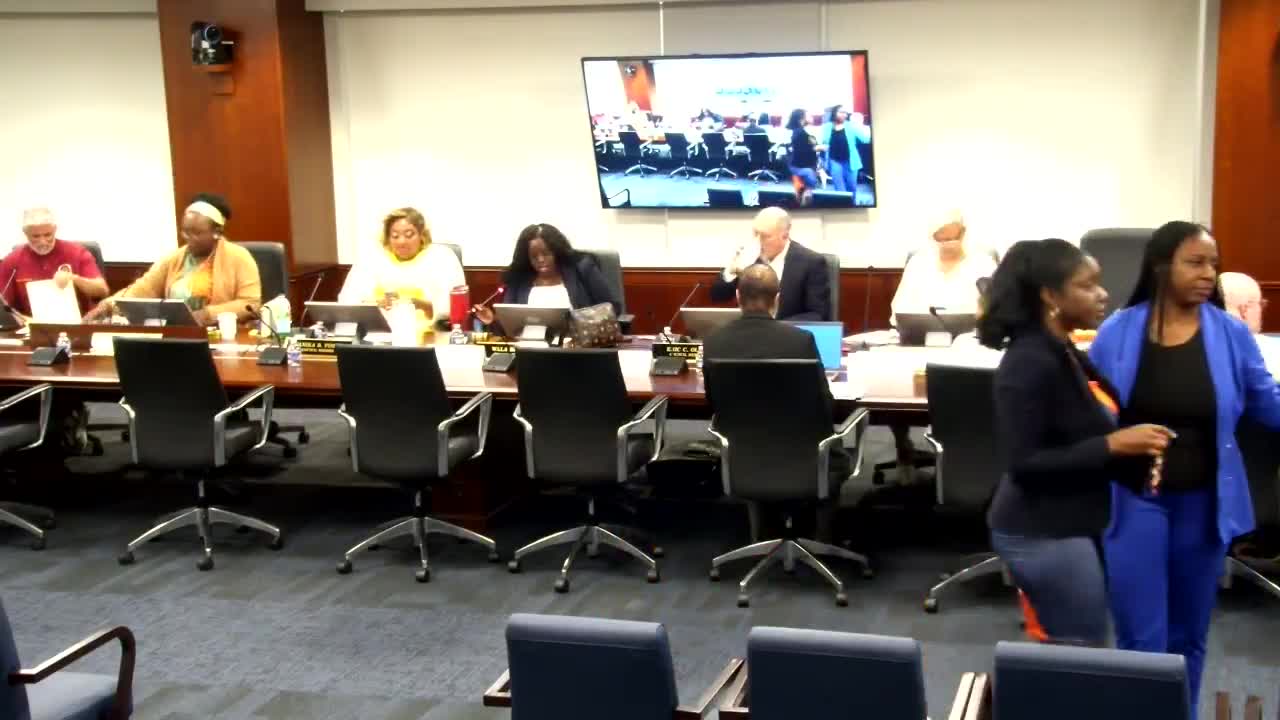
The Health, Human Services and Public Safety Committee on June 5 voted 5-0 to move Draft 2 of CR 54 20 25, a council resolution directing the Prince George's County Department of Health to study the public‑health impacts of the distribution of fast‑food restaurants, liquor stores and tobacco retailers across county neighborhoods.
The Health, Human Services and Public Safety Committee on June 5 voted 5-0 to move Draft 2 of CR 54 20 25, a council resolution directing the Prince George's County Department of Health to study the public‑health impacts of the distribution of fast‑food restaurants, liquor stores and tobacco retailers across county neighborhoods. Vice Chair Oriada moved the draft; Council member Fisher seconded the motion, and the motion carried 5-0.
The measure, introduced April 29, 2025, asks the health department to produce a Health Atlas that links public‑health metrics with land‑use patterns so county decision‑makers can identify oversaturated areas and consider impacts during planning and zoning reviews. Council member Harrison, a sponsor and primary proponent, said the atlas would be used in permitting and planning decisions and to identify communities that have suffered long‑term health disparities. “Prince George's County right now ranks number 1 in the state of Maryland in fast food saturation,” Harrison said, adding that “we cannot continue to sit idle.”
Committee materials include staff analysis from policy analyst David Noto and a physical impact statement; Draft 2 was distributed to committee members (page 3 of the binders). Planning Department Director Lakeisha Hall told the committee Draft 2 was revised to align with the county’s adopted general plan (Plan 2035) and to add measurable performance metrics and land‑use language, including attention to auto‑oriented uses such as gas stations and drive‑throughs. Dr. Levy of the health department said the proposal dovetails with forthcoming county health and wellness initiatives and that the departments will coordinate on implementation.
The Office of Law reviewed the measure and said it is “improper legislative form” but that it “sees no legal impediments to its adoption,” according to comments in the meeting record. Committee members and staff discussed working with the Maryland‑National Capital Park and Planning Commission on how the atlas could inform applications that come before that agency.
Supporters framed the resolution as a tool to address health inequities. In committee debate, sponsors cited county statistics and local hospital use to argue the atlas could justify incentives for healthier retail and, in some cases, influence approval of new retail uses that the sponsors said contribute to poor health outcomes. The measure does not itself change zoning rules; it directs the health department to produce a study and report to the council. Committee members said the study’s findings would inform later, more specific legislation such as incentive programs for healthier restaurants.
The vote to move Draft 2 was recorded as: Chair Blige (aye), Vice Chair Fisher (aye), Council member Watson (aye), Council member Olson (aye), Vice Chair Oriada (aye). The motion carries 5-0.
Committee members asked staff to coordinate with Park and Planning, the health department and the incoming county executive on next steps and with the county’s Planning Department on linking the Health Atlas to Plan 2035 goals. The committee did not adopt final legislative language changing land‑use rules; it advanced the draft for further council consideration.