Get Full Government Meeting Transcripts, Videos, & Alerts Forever!
Get email alerts on the Energy Policy topic
No spam. Unsubscribe anytime.
Senate unveils energy affordability plan aimed at cutting utility bills; heavy floor debate follows
Summary
SB 254 would change rate-making, securitize utility investments, return more cap-and-trade revenue to ratepayers and create a clean energy infrastructure authority; proponents forecast large, long-term savings while opponents warned of new costs and regulatory uncertainty.
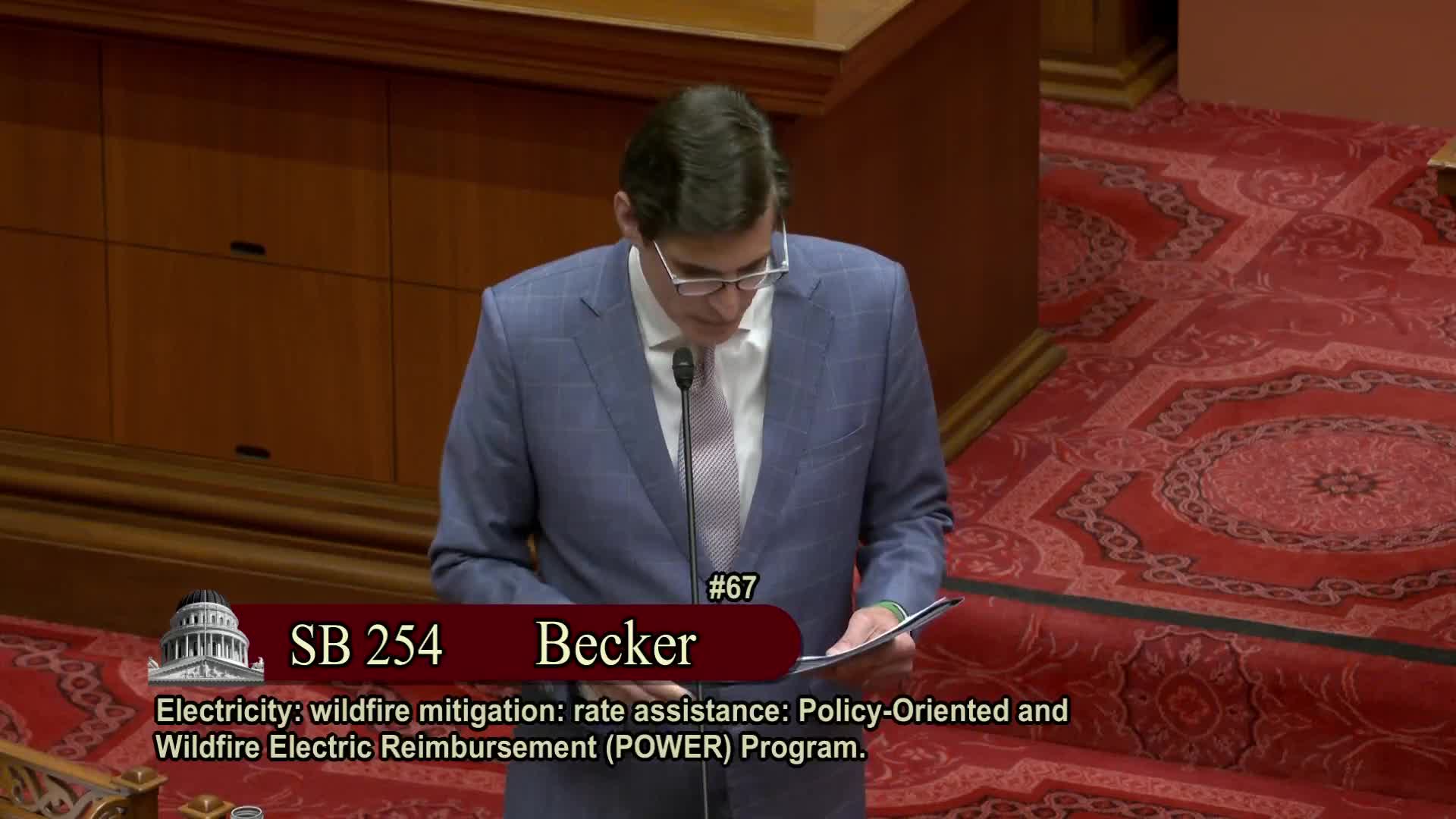
Senator Ben Becker presented SB 254, a comprehensive package of reforms the Senate described as the largest legislative effort in years to rein in rising electricity costs and accelerate clean-energy deployment. Floor debate was extensive and partisan, with backers forecasting multi‑billion-dollar savings over time and opponents warning the bill could raise costs or create new bureaucracies.
Becker said the bill contains nine major provisions to improve spending decisions, lower development costs and return more money to ratepayers. Key elements include returning 100% of utilities’ cap-and-trade proceeds to customers through the climate dividend (the bill’s author cited a near-term figure of $245 million per year based on 2024 numbers), creation of a power fund to shift wildfire-prevention and some public-purpose costs out of rate recovery, tighter PUC oversight and transparency, requirements that utilities submit at least one rate plan that would limit increases to inflation, securitization of certain capital costs to reduce financing costs, and a clean energy infrastructure fund to lower transmission costs.
Supporters — including large energy consumers, consumer groups and clean-energy organizations — argued the bill would curb investor-owned utilities’ record profits and reduce long-term costs. Senator McGuire, pro tem, said the authority could save billions by lowering financing costs and that securitization could save roughly $8.8 billion over 10 years based on TURN estimates. Senator Padilla and others said the energy package could deliver tens of billions in bill credits and aid households across the state.
Opponents, including Senator Strickland and Senator Sejarto, called the package “bizarro” and criticized it for creating new authorities, adding regulatory complexity and failing to address what they said were root causes of high costs. Critics cited concerns that new financing tools and mandates could alter investor incentives, require state bond financing, and increase fiscal uncertainty. Several senators requested clear, short-term dollar savings per household; the author gave a short-term climate-credit figure but said many savings would accrue over time as investments were securitized and lower-cost financing and public ownership reduced future transmission expenses.
The measure was taken up as part of a special-order “affordability package.” Debate on SB 254 will continue on subsequent floor days; the special-order sequence makes it a priority item for the Senate calendar. Speakers requested a clear outreach brief translating long-term projections into near-term monthly bill impacts for consumers.