Get Full Government Meeting Transcripts, Videos, & Alerts Forever!
Get email alerts on the Assessments Landscaping Lighting topic
No spam. Unsubscribe anytime.
Council asks staff to propose phased return to full assessments for Landscaping & Lighting District; public hearing set
Summary
The Ridgecrest City Council Wednesday set a June 18 public hearing and asked staff to propose a phased plan to return Zone 3 of Landscaping & Lighting District 2012-1 (the area around Walmart) to its full assessment level.
The Ridgecrest City Council Wednesday voted to set a June 18 public hearing and asked city staff to develop a recommendation for how to roll a previously capped assessment for Zone 3 of the consolidated Landscaping & Lighting District 2012-1 back to its full amount.
The discussion centered on a single zone that has been receiving a reduced assessment (a cap) while other parcels in the district have borne higher costs; staff said reinstating the full assessment on the six capped parcels would shift more of the district—s cost onto those parcels and reduce the general fund contribution currently covering the difference.
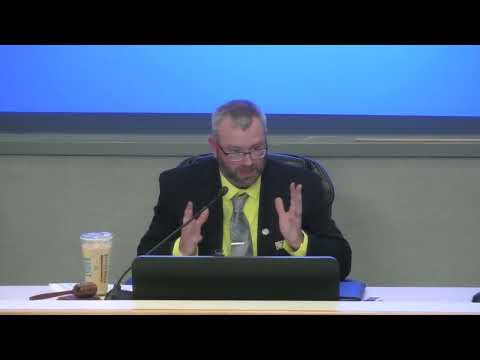
Travis Reed, a city staff member, told the council the consolidated engineer's draft report was prepared two ways to show the difference in assessments and that the city could either continue the cap with a general fund contribution or reinstate the full assessment. "We consolidated the report into 1 item, so that way all of our assessment districts are covered under 1 report," Reed said. He described Zone 3 as the area around Walmart and said the staff report showed the difference in assessment outcomes.
Reed said the choice to keep the cap would require a general fund contribution of roughly $11,000; reinstating full assessments would spread the cost to the capped parcels. Reed also explained the district uses an Equivalent Benefit Unit (EBU) calculation and that the original maximum assessments increase by a cost-of-living factor (3% per year) though the council may levy less than the maximum.
Several councilmembers favored phasing a return to full assessments rather than an immediate, full reinstatement. "We could tier it in," Reed said when asked about options; other councilmembers suggested rolling in over multiple years (examples offered included phases such as 25/50/75 or 50/75/100) to give property owners time to adapt. One member noted the capped parcels had received the reduced assessment for roughly eight years and that reserves had covered costs for several years until recent deficits.
The council moved and seconded the staff recommendation to set the hearing and asked staff to return with a specific phased plan for how the fees would be rolled in; the motion passed 5-0. Several councilmembers also urged staff to use the June 18 hearing to collect public comment and finalize a recommended phase-in percentage and timeline before returning to council with a draft implementation schedule.
Staff clarified that the city typically targets a reserve balance (staff said a rough target for residential zones was $30,000) to cover unexpected repairs; when reserves reach the target, the city reduces reserve contributions and the per-parcel assessment can drop accordingly. Reed noted the maximum assessment is set at formation and increases annually by the adopted inflation factor, but the council determines the actual levy each year.
Because the council set the hearing, property owners will have an opportunity at the June 18 meeting to comment before council decides whether to maintain the cap, reinstate full assessments, or approve a phased approach.