Get Full Government Meeting Transcripts, Videos, & Alerts Forever!
Get email alerts on the Public Safety topic
No spam. Unsubscribe anytime.
Senate requires RCFEs to maintain 72 hours of backup power for resident health and safety
Summary
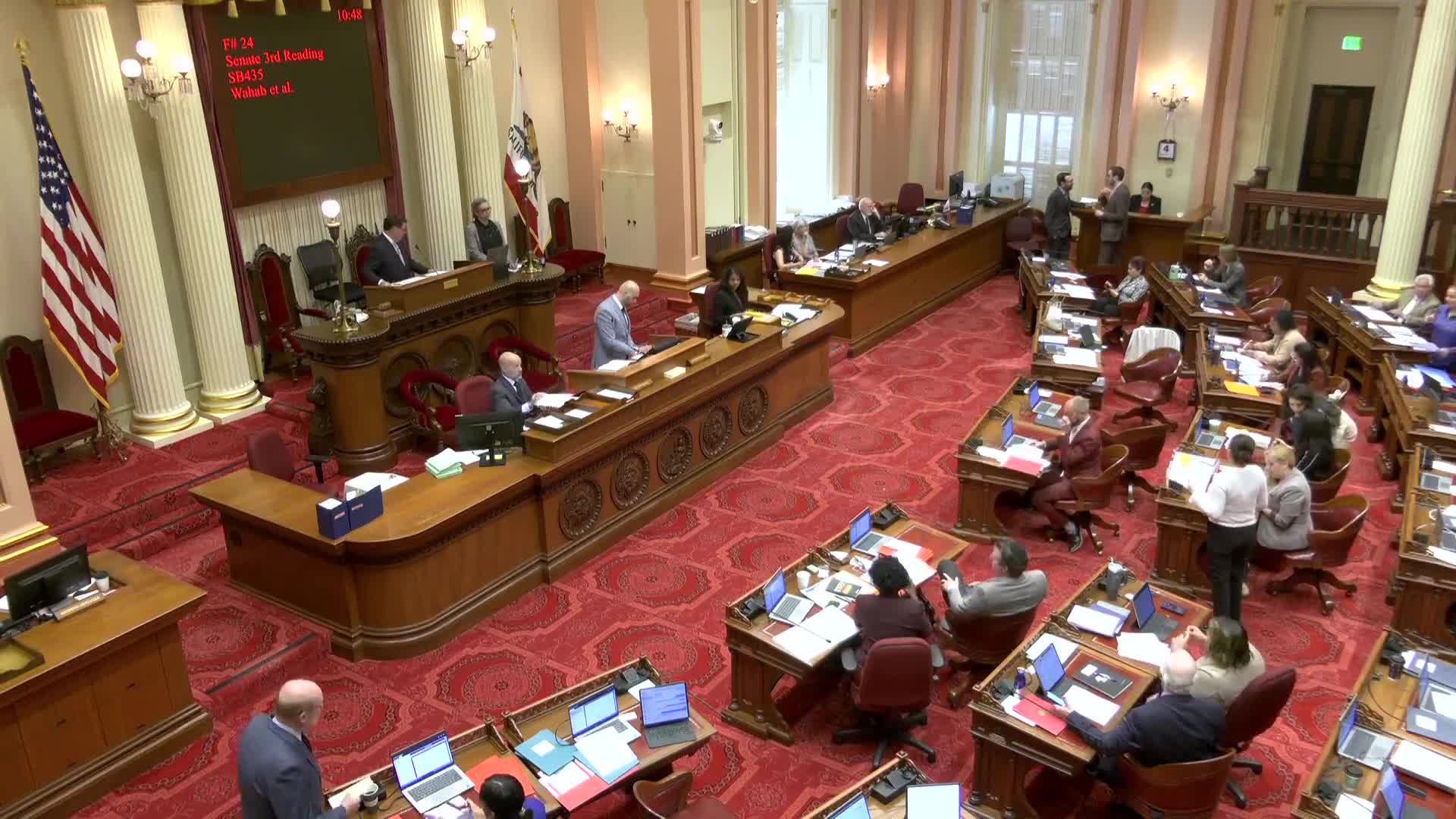
Lawmakers approved SB 435 to require residential care facilities for the elderly to have backup power capable of supporting residents’ health and safety for 72 hours during outages; supporters cited wildfire shutoffs and heat waves as immediate risks to frail residents.
The Senate passed SB 435 on a unanimous vote (Ayes 38, Noes 0), requiring residential care facilities for the elderly (RCFEs) to maintain alternative power sources that can sustain critical resident needs for 72 hours during outages.
Senator Minhajee Wahab, sponsor of the bill, told the chamber that “in 2024, investor owned utilities performed 34 public safety power shutoffs” and that approximately 200,000 older adults and persons with disabilities live in RCFEs statewide. She said many RCFEs lack backup power and “seniors are particularly vulnerable during extreme heat waves.”
Backers argued the requirement is a safety necessity: without electricity, residents can lose ventilation, air conditioning, lighting and the operation of oxygen machines and medical devices. The bill draws contrast with skilled nursing facilities, which have already moved toward mandated backup power following prior outages. Supporters said the 72-hour threshold aligns preparedness with foreseeable multi-day outages and protects frail residents and first responders during disasters.
The measure passed 38-0 and will require facilities and regulators to produce compliance plans and standards. Lawmakers said the state would need to coordinate enforcement and possibly target funding to help facilities upgrade systems in high-risk zones.
The debate highlighted the intersection of climate-extreme events, aging populations, and infrastructure resilience. Implementation questions were raised about funding and timelines for compliance; proponents said many facilities are in high fire-risk and heat-prone areas and that the bill is intended to prevent avoidable harm.