Get Full Government Meeting Transcripts, Videos, & Alerts Forever!
Get email alerts on the Health End Of Life topic
No spam. Unsubscribe anytime.
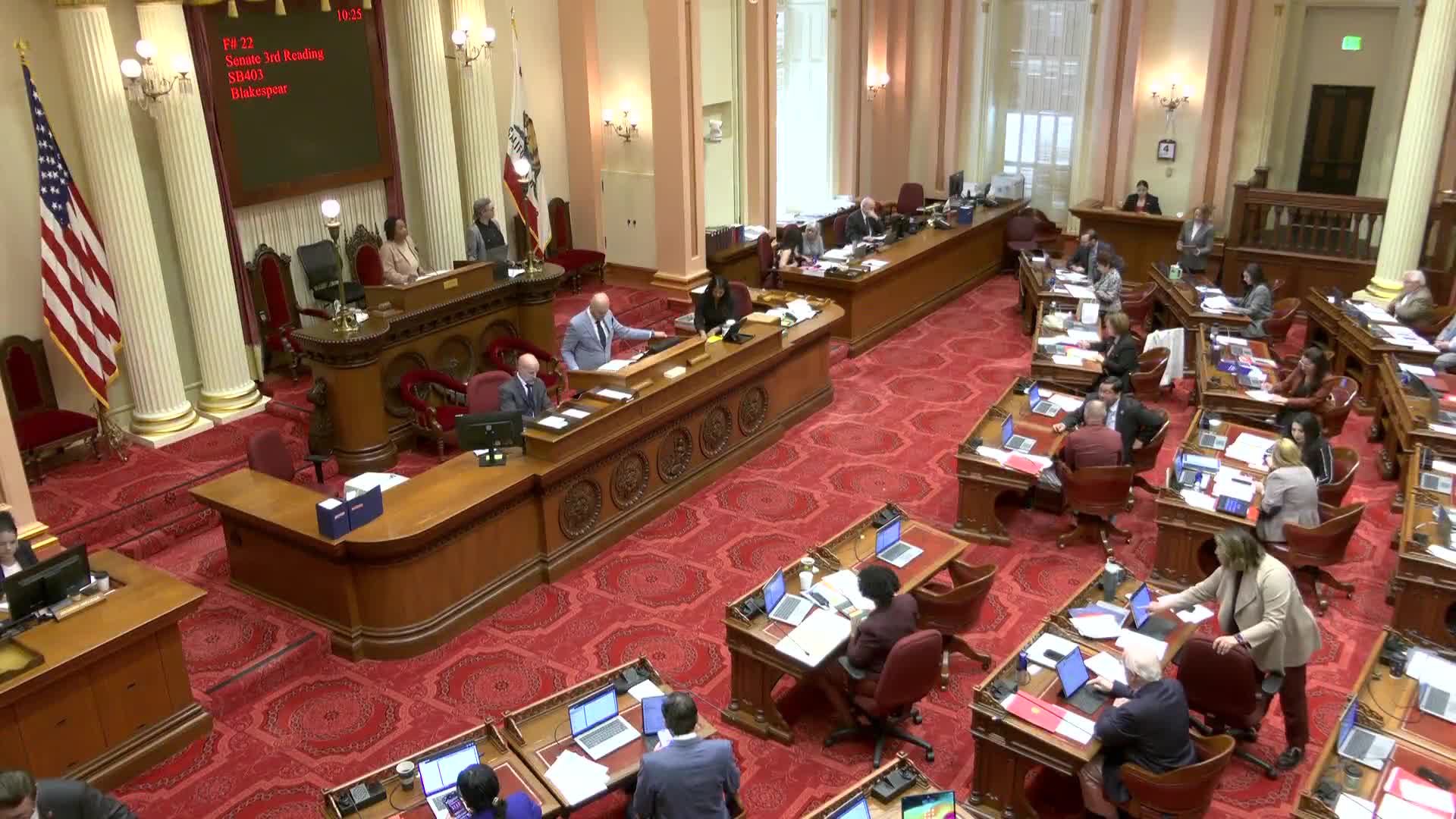
Senate makes End of Life Option Act permanent by removing sunset
Summary
The Senate voted to remove the sunset clause from California’s End of Life Option Act, making the medical aid-in-dying statute permanent after lawmakers cited nine years of data showing the law functioning as intended.
The Senate on a 25-6 vote removed the sunset clause from the End of Life Option Act, making California’s medical aid-in-dying law permanent.
Senator Toni Atkins, authoring SB 403, told colleagues on the floor that “medical aid in dying gives mentally capable, terminally ill adults with a prognosis of 6 months or less to live the option to request from their doctor a prescription for medication that they can then decide to self administer and die peacefully in their sleep.” She said nine years of state data show the law “is working exactly as lawmakers intended.”
Supporters described the bill as limited in scope and used personal testimony to underline its impact. Senator Scott Wiener said he rose “in strong support” and detailed the harm that ignorance and denial of the Holocaust could cause to public dialogue — comments made in another debate but indicative of the chamber’s broader use of personal testimony across bills this session. Senator Anthony Portantino and Senator Laird recounted family and constituent experiences to explain why they supported permanence for the statute. Opponents, including Senator María Elena Durazo and Senator Susan Rubio, argued for continued periodic review and heightened reporting requirements to protect underserved communities and ensure equity in access to end-of-life care.
SB 403’s changes are narrowly targeted: it removes the law’s scheduled repeal without altering eligibility criteria or the law’s guardrails. The author said the bill clarifies reporting and encouraged improved public reporting of program data; a floor amendment required the Department of Public Health to work with stakeholders to identify additional public data that could be released.
The Senate recorded Ayes 25, Noes 6; the measure passed and will proceed to the Assembly or to the enactment process depending on next steps in the calendar.
The vote and debate focused on balancing personal autonomy for terminally ill adults against concerns from advocates that disadvantaged Californians receive equitable access to palliative care and protection from coercion. The author and several supporters emphasized the small number of people who use the law annually and the safeguards already in statute.