Get Full Government Meeting Transcripts, Videos, & Alerts Forever!
Get email alerts on the After School Programs topic
No spam. Unsubscribe anytime.
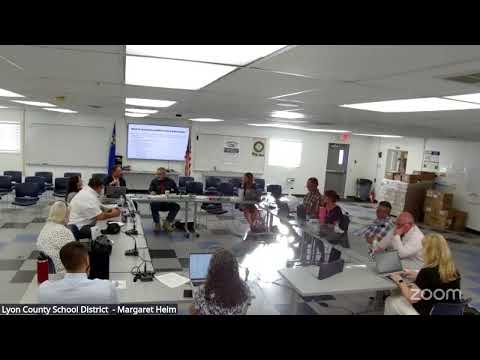
Lyon County trustees discuss after-school tutoring, transport barriers and Boys & Girls Club partnerships
Summary
Board members and district staff reviewed recurring after-school tutoring programs, transportation and staffing challenges, and ongoing talks with the Boys & Girls Club to expand drop-off options for participating students.
Trustees of the Lyon County School District and district staff discussed options to expand after‑school tutoring and enrichment, focusing on supervision, transportation and pay for staff who run programs.
Board members and administrators said peer tutoring and school‑based tutoring have existed in cycles, but sustaining reliable programs is constrained by bus capacity and staff time. District leaders reported ongoing conversations with local Boys & Girls Club operators about transporting students from schools to club sites after programs end to reduce the district’s bus burden.
The discussion began with trustees noting examples of established peer‑tutoring models, including programs used when a principal ran the site-level effort and when high‑school students tutored younger students under staff supervision. District staff said the EDU 112 (a WNC credit used in the district’s jump-start pathway) places college students or paraeducators in classrooms for a semester of on-site hours, which can provide one‑to‑one support and classroom experience for potential future teachers.
Trustees and staff identified the main barriers to expanding after‑school offerings: transportation cost (the district currently runs after‑school buses only for Silver Springs because of expense), limited staff availability because after‑school work typically is not in teacher contracts, and low hourly stipends for staff who might supervise programs (trustees discussed a prevailing rate of about $25–$26 per hour). Staff said these constraints explain why some programs “come and go.”
District representatives described talks with Mike Webb and other leaders at the Boys & Girls Club about coordinating pick‑ups. The district said the 21st Century program must run at schools for the first hour after school and then the district and the Boys & Girls Club have been discussing transporting students to club facilities, but both partners face similar staffing and financial limits across more remote communities.
Trustees suggested potential approaches, including pursuing targeted funding to support bus runs or stipends, leveraging EDU 112 placements and community partnerships to provide supervised after‑school enrichment, or piloting expanded transportation in one location before scaling. The board did not take formal action but asked staff to continue discussions and to bring options that include cost estimates and logistics to a future meeting.
The board also noted successful site examples where schools use the Boys & Girls Club van to transport students from campus to the club site and recommended exploring those localized models districtwide where feasible.