Wayne County treasurer outlines options to avoid tax foreclosure ahead of March deadline
Loading...
Summary
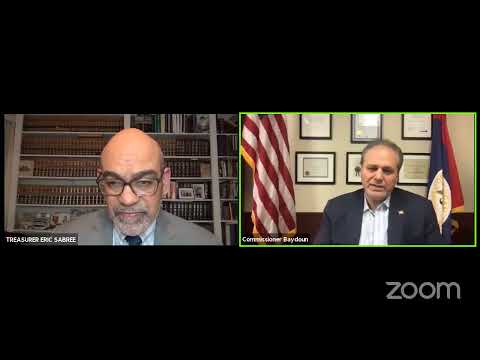
Wayne County Treasurer Eric Sabri and Commissioner Sam Beydoun urged homeowners and business owners to contact the treasurer’s office about delinquent property taxes, explaining timelines, payment plans, hardship applications and nonprofit resources ahead of the March deadline.
Wayne County Treasurer Eric Sabri and Commissioner Sam Beydoun urged homeowners and business owners to contact the treasurer’s office about delinquent property taxes and foreclosure risks, and laid out payment-plan and hardship options available before an upcoming March deadline.
Sabri, who has led the Wayne County Treasury for five years, said taxes billed by local municipalities that are unpaid by March 1 become delinquent and enter a multi‑year process that can lead to forfeiture and then foreclosure. "Forfeited doesn't mean you're gonna lose your property," Sabri said, explaining the county places a lien and adds forfeiture fees and higher interest in the second year of delinquency.
Why this matters: Delinquent taxes can trigger liens that block refinancing or sale, increase interest and fees, and — if not addressed over the statutory timeline — lead to foreclosure. Sabri described options the treasurer’s office uses to keep owners in their homes or businesses, including payment agreements, hardship withdrawals under state law, nonprofit referrals and a recently amended hardship policy for small landlords and business owners.
Key deadlines and the delinquency timeline - Sabri said each municipality issues taxes (typically a summer/current bill and a winter bill). If not paid by March 1, the bills become delinquent; because of calendar timing discussed in the forum, Sabri noted the county’s statutory rules mean some deadlines can effectively shift by a day in a given year. "The statute says... it won't be delinquent until March 2 this year," he said. - Sabri described three years of the process: first-year delinquency, second-year forfeiture (county places a lien and performs title work), and third-year foreclosure. He cautioned that going into forfeiture raises interest and fees and can prevent borrowing against the property.
Payment agreements and interest rates - Owner‑occupants (principal residences): Sabri said the treasurer’s office offers five‑year payment agreements carrying a lower interest rate and requiring that taxpayers also remain current on that year's taxes. He said this lower rate for owner‑occupants can be "only 6% a year instead of the regular 18." He emphasized the need to pay older years that most affect foreclosure risk first (for example, paying 2017 before 2019 if both are delinquent). - Non‑owner occupants, landlords and most business owners: Sabri said these accounts are offered different terms under state law, generally at the statutory interest rate of 18% per year (1.5% per month) and with shorter payment schedules; the treasurer’s office typically requires renewed agreements annually for non‑owner occupants. - Sabri said the office recently amended its hardship policy for small landlords (owners of five properties or fewer) and business owners: in qualifying cases they may place 25% down on amounts facing foreclosure and stretch remaining payments over two years (with a deadline cited as March 9, 2023 for those temporary terms as described in the forum). Applicants must submit documentation and apply through the treasurer’s website.
Hardship applications and legal basis - Sabri advised homeowners and business owners to apply for a hardship withdrawal to delay foreclosure if they are experiencing substantial financial hardship. He cited Michigan law by statutory reference, saying the treasurer acts under Michigan Compiled Laws §211.78 to consider hardship applications. "You don't have to be only a low income person to apply for a hardship," Sabri said, listing illness, job loss or other circumstances as qualifying examples.
Assistance programs, nonprofit partners and language access - The treasurer’s office said it refers taxpayers to nonprofit partners that provide counseling and sometimes direct funds, including Wayne Metro, United Community Housing Coalition, Southwest Solutions and U‑Snap‑Back. Sabri said a local bank donated $300,000 to Wayne Metro to help prevent foreclosures and that the funding helped keep about 350 people in their homes. Wayne Metro also used CARES Act emergency housing relief funds for foreclosure prevention. - Sabri said the treasurer’s office provides some translated materials and has staff who speak Arabic, Spanish and Bengali to assist callers and in‑office visitors. He provided the office contact details: taxinfo@waynecounty.com, (313) 224‑5990 and treasurer.WayneCounty.com.
Excess proceeds after auction and recent legal developments - Sabri discussed a Michigan Supreme Court decision in Rafaeli v. Oakland County that allows former owners and other interested parties to file claims for auction proceeds in excess of taxes owed and foreclosure expenses. He said the county now sends notices and that the legislature passed bills in December to allow eligible claimants to file for excess proceeds — generally requiring a claim to be filed by July 1 in the year the office notifies the public. "This year is the first year. We just received information in January about how this is gonna work," Sabri said, and the county is preparing notices.
Practical steps Sabri recommended - Contact the treasurer’s office early by phone or email, or check the county website for delinquent balances and payment‑agreement applications. - If behind on multiple years, prioritize the oldest year that most directly affects foreclosure risk, apply for hardship if eligible and explore nonprofit assistance. - Veterans, first responders and frontline health workers: Sabri said Veterans Affairs (Wayne County) may offer assistance and that veterans and frontline workers can qualify for payment agreements without a down payment if they show ID; he gave the Veterans Affairs phone number (313) 224‑5045.
How to obtain bills and buy county‑owned property - Sabri said taxpayers can obtain copies of tax bills via treasurer.WayneCounty.com by entering the property address. On properties that go through foreclosure, Michigan law gives the state the first right of refusal, the municipality second and the county third; neighbors who want to acquire a property generally must work with the owner before foreclosure or watch public auctions and land‑bank sales.
What the treasurer’s office asked taxpayers to do - Sabri repeated that the first step is to contact the treasurer’s office so staff can advise on payment agreements, hardship applications and referrals to nonprofits. "Don't be afraid to come and see us," he said. "We can refer you to someone who can possibly help with the finances."
The forum concluded with Sabri and Commissioner Sam Beydoun encouraging residents and businesses to reach out to the treasurer’s office early to avoid forfeiture or foreclosure and to learn about payment and hardship options.