Get Full Government Meeting Transcripts, Videos, & Alerts Forever!
Get email alerts on the Children And Youth topic
No spam. Unsubscribe anytime.
Mayor’s office outlines Office of Children, Youth and Families, seeks city funding and partnership with Impact Tulsa
Summary
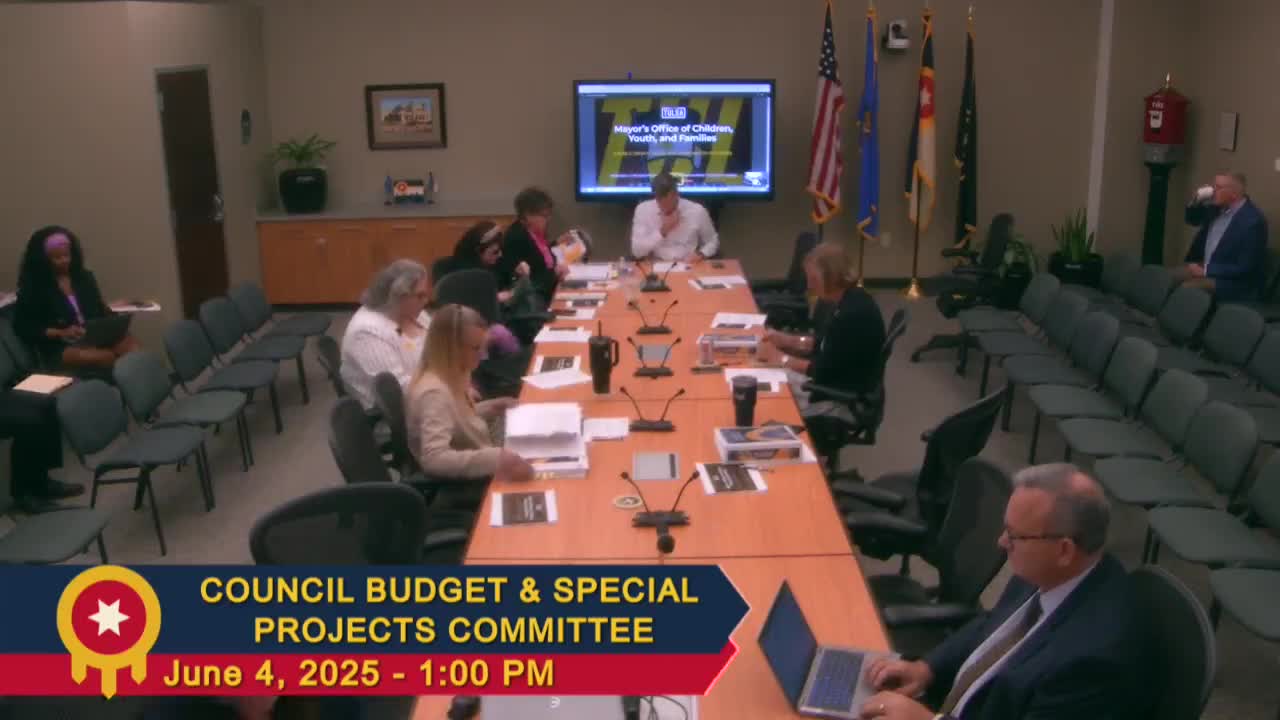
Deputy Mayor Crystal Reyes and Impact Tulsa briefed the Tulsa City Council on the proposed Office of Children, Youth and Families and the partnership operating it, asking the council to consider a city funding allocation as part of the FY26 budget process.
Deputy Mayor Crystal Reyes and Impact Tulsa briefed the Tulsa City Council on the proposed Office of Children, Youth and Families and the partnership operating it, asking the council to consider a city funding allocation as part of the FY26 budget process.
The office, the presenters said, is intended to act as a city‑embedded cradle‑to‑career hub to coordinate city departments, tribal nations, districts, philanthropy and service providers so program and fiscal resources align behind a set of measurable youth outcomes. Impact Tulsa will serve as the operational partner and provide staff time under a city contract.
Why it matters: Councilors and the administration said the office would aim to improve early‑grade literacy, expand pre‑K enrollment, reduce chronic absenteeism tied to housing instability, connect graduates to paid internships and workforce pathways, and coordinate summer safety strategies for youth — activities councilors described as competing with other constrained city priorities during a tight budget year.
Deputy Mayor Crystal Reyes said the administration has set a long‑range goal of adding 15,000 young people “on a path to economic mobility” by 2030 and that a broader metric discussed with partners is reaching 100,491 youth across the cradle‑to‑career continuum. She described early priorities including a fiscal map of public and private spending on youth services, cabinet meetings that include tribal nations and philanthropy, and a timeline for cabinet‑developed policy recommendations to come to council later in the summer.
Ashley (Impact Tulsa), identified as the organization’s executive director and the operational lead for the office, told the council Impact Tulsa provides data and implementation capacity; the contract between the city and Impact Tulsa supplies a share of staff time and access to the nonprofit’s broader team and national partners.
Key program points presented - Eviction alerts and family stabilization: The presenters said the initiative is expanding an eviction alert pilot to include Union and Jenks public schools, with an approximate per‑district data expansion cost discussed in the presentation (described in the meeting as roughly $7,000 per district) to enable coordination of school‑based supports after evictions. - Legal and wraparound supports: Impact Tulsa and partners are pursuing philanthropic and grant funding to embed legal counsel and social supports in pilot school sites, with a target to launch pilot services (if funding is secured) by August 2025. - Early learning and literacy: The office aims to increase pre‑K enrollment in high‑need ZIP codes, with a 70–75% enrollment target for eligible 4‑year‑olds that administrators said would translate into thousands of kindergarten‑ready children; presenters also described a Read Around the 918 literacy campaign and an early‑warning literacy tool to align partners’ interventions. - Workforce pathways: Presenters described plans to create a streamlined citywide infrastructure to match students to internships and career pathways, including scaling existing programs like “learning with a wrench.” - Safety and summer strategy: The office will coordinate with Tulsa Police Department and other city departments on summer safety and violence‑prevention programming targeted at youth.
Partners and outside resources cited: Impact Tulsa and the Office listed national and local partners offering technical assistance or funding interest: StriveTogether (national cradle‑to‑career network), FUSE fellows, Bloomberg (childcare/early childhood support), the Hunt Institute (policy/advocacy assistance), Harvard’s Redesign Success Planning Institute, and StriveTogether funding ($75,000 noted for community convening and stipends). Presenters said some of those supports are in‑kind offers or contingent on partner agreements.
Budget ask and council questions: Councilors asked how much the city was being asked to fund immediately and whether private or grant dollars could offset general‑fund impacts. Presenters said the city was asked for start‑up support (the presentation and council discussion repeatedly referenced a city establishment ask; the initial figure referenced in the meeting was $250,000 to establish the office) and that the administration expects to pursue outside funds to supplement the city allocation. The full‑year cost referenced in the conversation was described ambiguously in the transcript; councilors asked for clearer, itemized cost and leverage information before final appropriation decisions.
Council concerns and next steps: Several councilors praised the goals but pressed for clearer documentation of (1) what is new city expense versus existing work Impact Tulsa already leads, (2) which specific programs or positions would be paid with city general fund dollars, and (3) concrete, auditable commitments from outside partners. Councilors also questioned the timing and optics of creating new general‑fund commitments while departments face cuts and critical service funding needs.
Presenters said the cabinet and action alliances will develop policy recommendations and a logic model; they offered to provide the council a written logic model and a clearer breakdown of the proposed budget and grant‑pursuit plans by the end of the week. Council members said they expect those materials to inform the small budget committee’s June 11 meeting and the council’s upcoming FY26 deliberations.
Ending: The council did not vote on the office request during the meeting. Members asked staff to provide a full, itemized explanation of the FY26 cost, the proposed city funding mechanism, and a list of committed outside funding or in‑kind resources to evaluate the request during the budget process.