Get Full Government Meeting Transcripts, Videos, & Alerts Forever!
Get email alerts on the Open Meetings Law topic
No spam. Unsubscribe anytime.
Plan commission receives refresher on Wisconsin open meetings law and rules of order
Summary
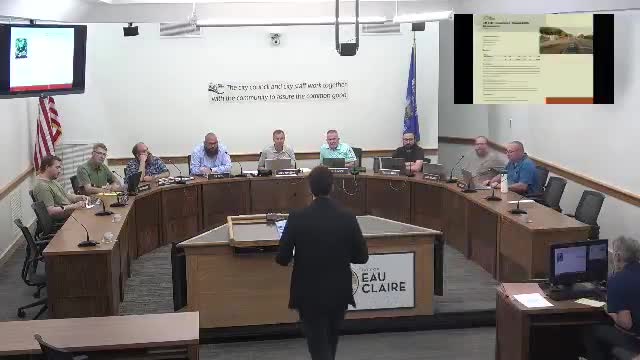
Assistant City Attorney Blake Herbison and city planning staff briefed the Eau Claire Plan Commission on open meetings law, quorum rules, public notice requirements, and parliamentary procedure during a June 2 training session; commissioners asked for reference materials and clarified when to consult staff and legal counsel.
Assistant City Attorney Blake Herbison briefed the Eau Claire Plan Commission on the Wisconsin open meetings law and meeting procedures during the commission’s June 2 session, emphasizing public notice, quorum rules and the risks of informal gatherings that could constitute a meeting under state law.
Herbison told the commission, “the open meetings law in the state of Wisconsin requires that all meetings of a governmental body be preceded by public notice and be held in open session unless otherwise allowed by law.” He outlined key requirements: public notices should normally be given at least 24 hours in advance and must identify the body, date, time, place and subject matter to be discussed; special emergency exceptions may be narrower; and gatherings of a sufficient number of members or serial communications can create an unlawful “walking quorum.”
Why it matters: Violations of the open meetings law can carry forfeitures and court costs, and they undermine public confidence in local decision‑making. Commissioners were reminded to avoid substantive discussion outside noticed meetings, to forward questions to staff in advance when possible, and to consult the city attorney’s office about any uncertain situations.
Training highlights - Definition of a meeting: Herbison described how meetings are not limited to formal gatherings; discussions among a sufficient number of members for the purpose of exercising the body’s authority can be considered meetings. He advised commissioners to avoid substantive, multi‑member discussions outside noticed sessions. - Notice and agenda content: Notices should generally be posted at least 24 hours ahead and include sufficient detail to apprise the public of the subjects to be discussed; large deviations from the posted agenda risk open meetings issues. - Quorum and walking quorums: With a nine‑member commission, Herbison said that meeting in groups of five or more with a meeting purpose is typically presumed to be a meeting; serial communications among members can also create an unlawful effective quorum. - Penalties and remedies: Herbison summarized forfeiture exposure for open meetings violations, describing a typical forfeiture range and court costs that officials should avoid by following the rules. - Rules of order and amendments: The city planner and staff reviewed practical parliamentary procedure guidance (motion, second, discussion, amendment, vote) and the chair’s role in preserving order. Commissioners received a brief primer on how amendments stack (amendments to amendments are dealt with before returning to the main motion) and were directed to consult the League of Wisconsin Municipalities resources for procedural questions.
Commissioner requests and staff offers Several commissioners asked for printed or electronic references. Herbison and planning staff agreed to identify and circulate concise reference materials, including a League of Wisconsin Municipalities procedural cheat sheet, and advised commissioners to route questions to planning staff (Ned Knoll) so staff can escalate legal questions to the city attorney’s office when appropriate. The attorney said the city attorney’s office prefers to receive questions through staff to avoid creating ad hoc discussions among commissioners.
No formal action was taken; the session was training and guidance only.