Get Full Government Meeting Transcripts, Videos, & Alerts Forever!
Get email alerts on the Signs On Traffic Devices topic
No spam. Unsubscribe anytime.
Spokane Valley council bans signs on traffic-control devices; staff says enforcement will use existing resources
Summary
The City of Spokane Valley unanimously adopted an ordinance prohibiting signs attached to traffic-control devices, a narrow change the city says is meant to reduce distractions for motorists. Residents at a public hearing urged separate rules for political signs and asked about enforcement and costs.
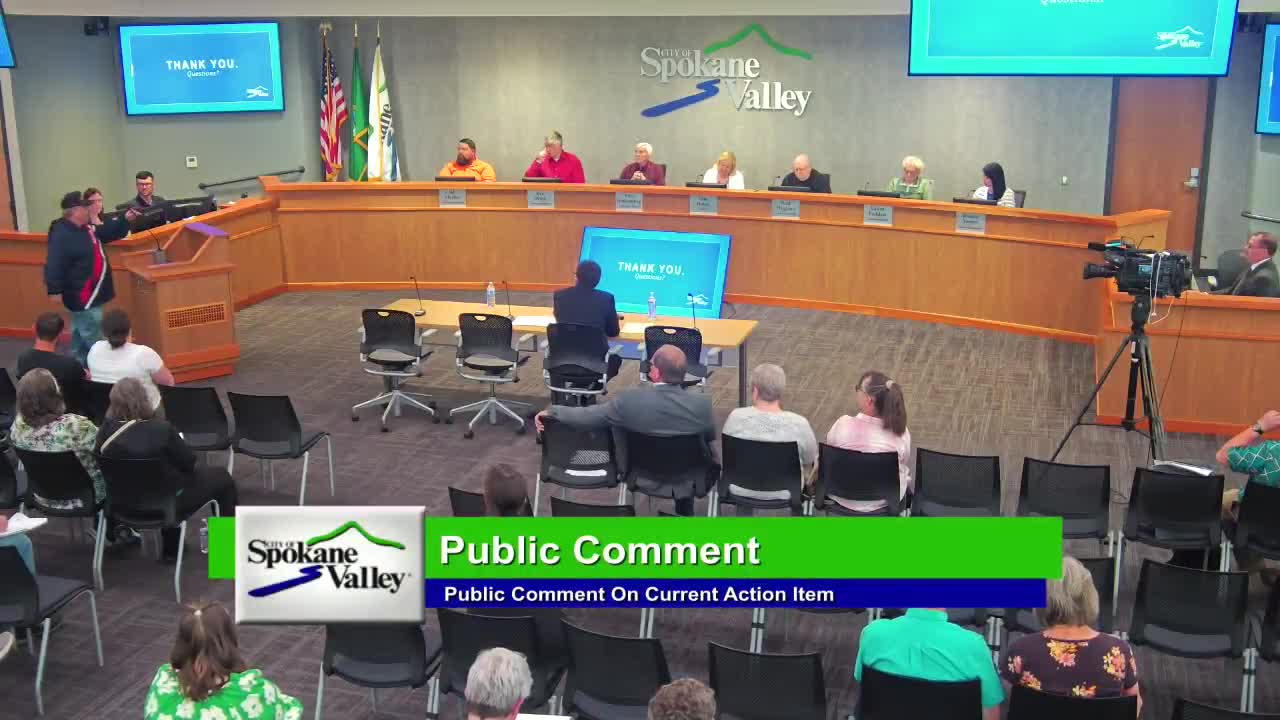
The Spokane Valley City Council unanimously adopted an ordinance amending Spokane Valley Municipal Code Title 22, Chapter 110, Section 60 to prohibit signs attached to traffic-control devices, after a public hearing in which residents raised questions about political signs, memorial crosses and enforcement.
City Attorney Kelly Concrete told the council the change is tightly targeted. “The prohibition here is just not attaching those to traffic control devices,” Concrete said, adding the ordinance does not bar placing signs in grassy medians or other right-of-way areas so long as they do not obstruct a traffic-control device. “There is no cost to the city to adopt or enact this ordinance and there is no plan to hire additional staff to enforce it. Enforcement would be handled by our existing staff,” Concrete said.
The measure grew out of concerns that signs attached to stop signs or other devices can divert a driver’s attention, the city said. Resident Bob West urged the council to consider a separate section of the code for political signs, arguing the draft language could catch longstanding local practices such as attaching campaign signs to the lower portion of a stop sign post: “I would suggest that we have a language in there or something about, a separate section,” West said.
Some public commenters asked whether nontext displays — for example, memorial crosses with flowers — would be treated as signs. Concrete replied that the ordinance treats objects that “convey meaning without words” as signs when attached to traffic control devices, and reiterated the ban is limited to attachment to the devices, not placement elsewhere in the right-of-way where they do not obstruct visibility.
Councilmember Merkel asked whether the city could add a political-sign section; Concrete warned that distinguishing signs by message (for example, singling out political signs) raises First Amendment issues and suggested that content-based distinctions are legally risky. Councilmember Holman said the city intends to send the entire sign code to the planning commission for a broader review.
Supporters of the ordinance urged prompt action before the upcoming election season. “Let’s get this sign thing under control,” Ben Lund said during public comment.
The ordinance was moved and seconded and passed unanimously. Council members said the change is narrow and intended to improve traffic safety; the broader topic of political-sign regulation will be considered through the planning commission process and possible future code updates.