Get Full Government Meeting Transcripts, Videos, & Alerts Forever!
Get email alerts on the Education Budget topic
No spam. Unsubscribe anytime.
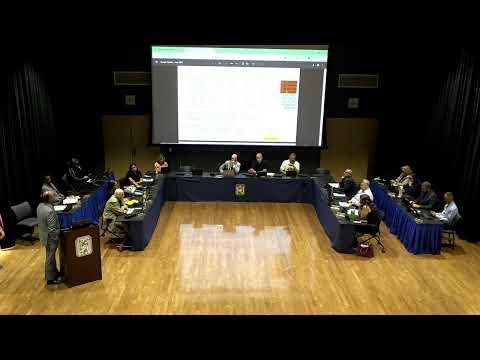
Lower Moreland board directs 5.25% millage increase to close 2025–26 budget gap
Summary
On June 3, 2025, the Lower Moreland Township School District board directed administrators to set the tax millage for 2025–26 to yield about a 5.25% increase and present a final budget for adoption at the June 17 meeting.
On June 3, 2025, the Lower Moreland Township School District Board of School Directors heard a detailed update on the 2025–26 proposed budget and instructed administrators to set the districts millage so the tax levy would produce an approximate 5.25% increase for next fiscal year. Mark McGuinn, a staff member in the district business office, told the board that is the direction he will use in preparing the final budget for the June 17 meeting.
McGuinn said administrators have identified roughly $622,000 in expenditure reductions to date but still face a remaining shortfall under conservative assumptions. "My direction is, having a millage that equates to an increase of 5.25," he said, adding the November adoption timeline will include the homestead/farmstead resolution and the full, line‑by‑line budget posted after board adoption.
The board was shown a mix of one‑time and recurring pressures on the budget. McGuinn highlighted roughly $1.22 million of items that were added during 2024–25 and not previously budgeted, including an added night custodian at the middle school and growth in special‑education costs. Health care costs were reported to be running higher than expected (McGuinn cited a roughly 19% increase and about $700,000 as a significant cost driver). The administration also described revenue variances tied to property settlement timing and transfer taxes and presented conservative assumptions about interim tax receipts from several large developments in the township.
Board members asked how the 5.25% direction would affect fund balance and rating risk. McGuinn said the districts total fund balance at the end of 2023–24 was previously reported at 8.24% (unreserved 2.7%) and that relying heavily on fund balance this year would reduce those cushions. He outlined a scenario in which using larger portions of fund balance over multiple years could leave the district with total fund balance near 3% and unreserved balance near 1.15% under worst‑case assumptions. McGuinn and other staff emphasized that a budget that does not rely on fund balance would be looked on more favorably by rating agencies such as Standard & Poors.
Board members discussed alternatives (for example, a smaller millage increase paired with limited use of fund balance), but a majority expressed preference for the administrations recommendation to reset the districts structural position and avoid drawing down reserves. As a result the board provided direction to prepare the budget for adoption with the 5.25% millage increase; the board will consider formal adoption and the homestead/farmstead resolution at its June 17 meeting.
Next steps: administration will post the proposed final budget after board adoption and provide the homestead/farmstead calculation to the districts tax bill processor. The budget package will include detailed revenue and expenditure schedules and back‑up documentation for public review prior to the June 17 meeting.