Get Full Government Meeting Transcripts, Videos, & Alerts Forever!
Get email alerts on the Housing Affordable Dwelling Units topic
No spam. Unsubscribe anytime.
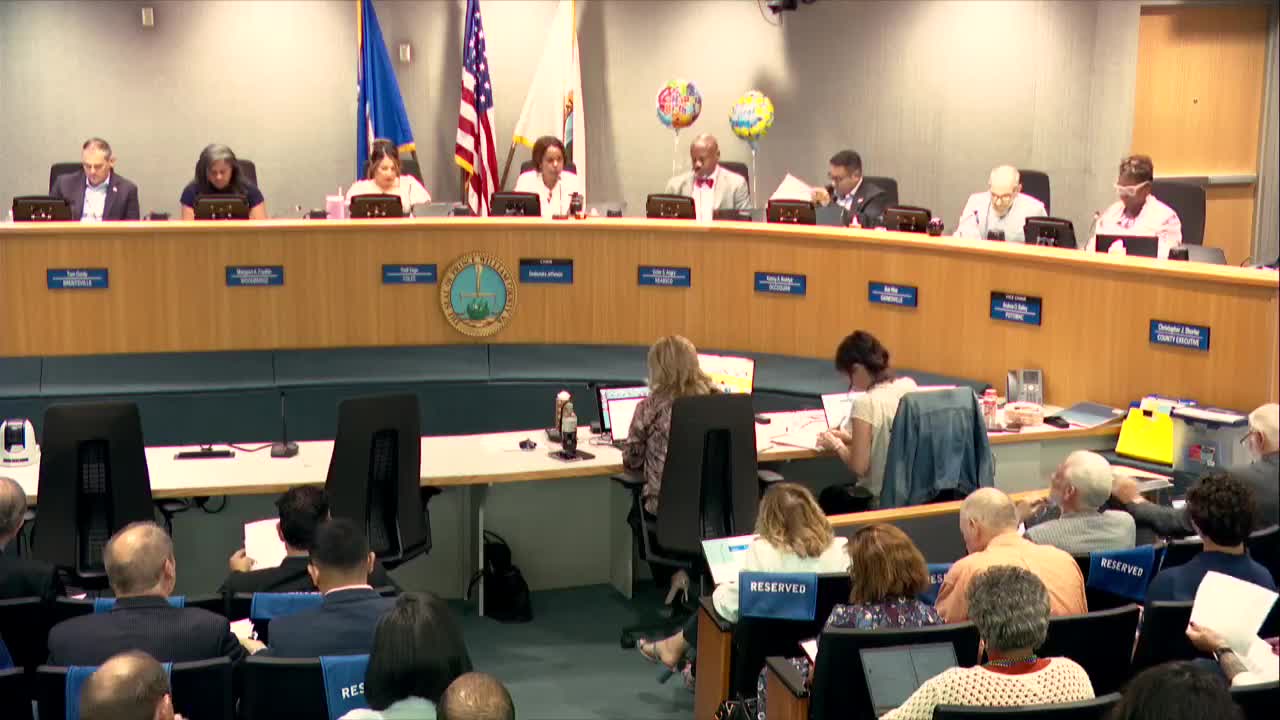
Prince William supervisors adopt affordable-dwelling-unit ordinance after hours of debate
Summary
Prince William County supervisors adopted a new Affordable Dwelling Unit ordinance on June 3 after extensive public comment and several hours of debate.
Prince William County supervisors adopted a new Affordable Dwelling Unit ordinance on June 3 after extensive public comment and several hours of debate.
The 5-3 vote followed testimony from faith and tenant-organizing groups, housing advocates and opponents from neighborhoods that expressed both urgency over housing costs and concern about how the ordinance is written and enforced. The final ordinance uses the voluntary, state-enabled ADU framework to require proffered negotiations and creates a path for developers to provide affordable units, pay into the county housing trust fund, or use other incentives the county offers.
The ordinance is intended to increase the supply of mixed-income housing near transit and major commercial centers and to allow the county's housing trust fund to be used for projects that produce or preserve affordable units. Supporters said the ordinance unlocks the county's $15 million housing trust fund and is a necessary first tool to expand housing options; opponents said the ordinance places too much implementation discretion with staff and the zoning administrator and could strip the elected board of critical land-use authority.
Why it mattered
Prince William has a documented shortage of rental and for-sale housing at a wide range of price points. Advocates — including faith-based VOICE representatives and tenants'rights groups — told supervisors that families are being priced out of the county and urged passage. Rev. Keith Savage said the proposal will help "people being priced out of living in their own communities," and VOICE leaders asked the board to "let the housing trust fund do its job."
At the same time, several supervisors and public witnesses urged revisions before adoption. Supervisor Weir said the draft contained unresolved legal and enforcement questions and told the board, "This thing needs a whole lot more work," citing concerns about appeals and the burden of proof in waiver requests. Other supervisors asked for clearer definitions for terms such as "moderate income," stronger compliance monitoring, and a predictable review process if the ordinance does not perform as intended.
What the ordinance does
- Establishes an ADU program using the state authority cited by staff; the county's ADU framework is voluntary for developers but includes conditions and incentives intended to encourage inclusion of affordable units in market-rate projects. - Creates requirements and administrative processes for affordable-unit deed restrictions, rental affordability periods, and options to contribute to the county housing trust fund as an alternative to on-site units. - Sets program details (income targeting, example sales-price calculations tied to HUD AMI figures, and monitoring) to be administered by the Office of Housing. - Directs planning and housing staff to track outcomes and report to the board; supervisors asked staff to return with implementation results and recommended a public review process for the program.
Public comment and board debate
More than a dozen speakers represented tenant organizations, faith groups and housing advocates. Rev. Mandy North and other VOICE leaders said delay would leave the county's housing trust fund idle and urged immediate adoption. Jill Norcross of the Northern Virginia Affordable Housing Alliance told the board that neighboring jurisdictions had used similar tools to add housing and that passing the ordinance would allow the county to begin producing units and using the trust fund. Tenants and workers'group leaders also urged targeting deeply affordable units to the households most in need.
Opponents and several supervisors cautioned that the ordinance's language left too much authority with staff and the zoning administrator, asked whether the county would be able to enforce restrictions, and urged clearer definitions and a review mechanism. Jennifer Osborne, a local resident, said she supported more housing generally but warned the draft had "too many loopholes" and could shift development authority away from the elected board.
Votes and next steps
- The main ADU ordinance passed 5 to 3. Supervisors Vega, Weir and Gordy voted no. - The board had earlier divided out the creation of a county housing fund (separate subsection). The housing-fund item was then voted on separately and approved by a separate recorded vote.
Staff will implement the program through the Office of Housing. The housing office and County Attorney's Office will provide the board with periodic implementation reports; staff said they will track unit production, funding uses, and compliance with deed restrictions. The board also directed continued outreach to developers, housing advocates and the county's state legislative delegation to pursue statutory options for stronger local tools.
Speakers quoted in this article are limited to those identified in county meeting records and the public transcript. Supervisor Roger Boddie, Supervisor Daniel Franklin, Supervisor Andrea Bailey, Supervisor Kenny Boddie, Supervisor John A. Gordy, Supervisor Victor Angry, Supervisor Frank Weir, Tanya Washington (Planning director), Joan Duckett (Director of Housing), Reverend Keith Savage, Reverend Mandy North and Jill Norcross were among the speakers and staff cited in the transcript.
Ending
Adoption begins a multi-year, phased effort to add new housing types near existing transit nodes and to begin using the county's housing trust fund. Supervisors who opposed the ordinance said they would continue to press for statutory changes or local refinements; supporters said the county could not delay further and must use the fund and local tools to increase housing supply now.