Get Full Government Meeting Transcripts, Videos, & Alerts Forever!
Get email alerts on the Mobile Vending topic
No spam. Unsubscribe anytime.
Council approves downtown food‑truck pilot, sets pilot zones and permitting requirements
Summary
The council created a temporary pilot program allowing food trucks in designated downtown and private locations, set permitting and an amnesty window, and instructed staff to return with an update before the pilot expires.
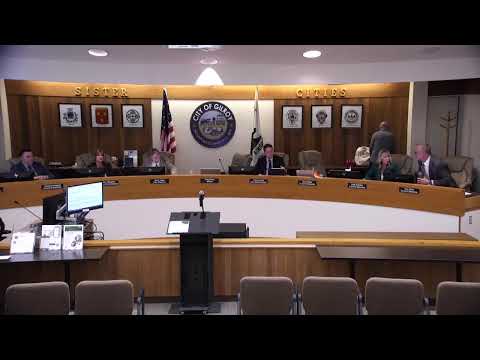
The Gilroy City Council on June 2 approved a temporary pilot program to allow food trucks to operate in designated areas of the city while staff completes a comprehensive update to the mobile‑vending ordinance.
Economic Development Manager Victoria Valencia presented the proposal and told the council the pilot is intended to “assess feasibility and public response, ensure land‑use compatibility, evaluate traffic, parking and pedestrian impacts, [and] support economic development and placemaking.” The pilot would remain in effect until Dec. 31, 2025, or until an updated ordinance is adopted.
Under council direction at the meeting, staff will implement these baseline rules for the pilot: vendors must hold a Santa Clara County Environmental Health permit and a state seller’s permit; vendors must either have an existing City of Gilroy business license or submit a business‑license application and a city mobile‑vending application during an amnesty period; the council approved a 60‑day amnesty window to allow vendors time to submit required applications; the city will not require live‑scan fingerprint background checks for food‑truck operators under the pilot; and special‑event vending is permitted with event organizer approval and required permits.
Council also designated pilot zones: a Fifth Street public parking lot area (staff recommended initial operating hours and the council discussed Thursday–Sunday evenings; council asked staff to be flexible and monitor demand — staff noted the lot will require traffic control and signage), selected Gourmet Alley adjacent parking lots (parking‑lot stalls parallel to the alley rather than in the alley), and Eagleberry Street‑adjacent spaces. The council established a no‑vending zone along Monterey Street (Leavesley to Luchesa) except for permitted special events.
Valencia noted health‑department rules that require restroom access for food‑truck workers when a vendor will operate longer than one hour; as a result, staff will require written permission showing restroom access on the same parcel or within 200 feet, or vendors will need to provide portable restroom access. Councilmembers and public commenters discussed later closing hours (some vendors asked for service into the late night); the council directed staff to allow extended hours where demand and safety allow and to monitor costs for staffing and traffic control.
The council voted 7‑0 to approve the pilot and directed staff to return with an update and a draft updated mobile‑vending ordinance in the fall. Councilmember Joey Fugazi moved the motion with Councilmember Sharon Marks seconding.
Speakers quoted or referenced in this article are identified from the meeting transcript: Victoria Valencia, economic development manager; Councilmembers Joey Fugazi and Sharon Marks; and multiple food‑truck owners and downtown business representatives who testified during public comment.