Get Full Government Meeting Transcripts, Videos, & Alerts Forever!
Get email alerts on the Land Use Residential topic
No spam. Unsubscribe anytime.
Council denies Shady Oaks land‑use and zoning change after weeks of debate over trees, setbacks and noise
Summary
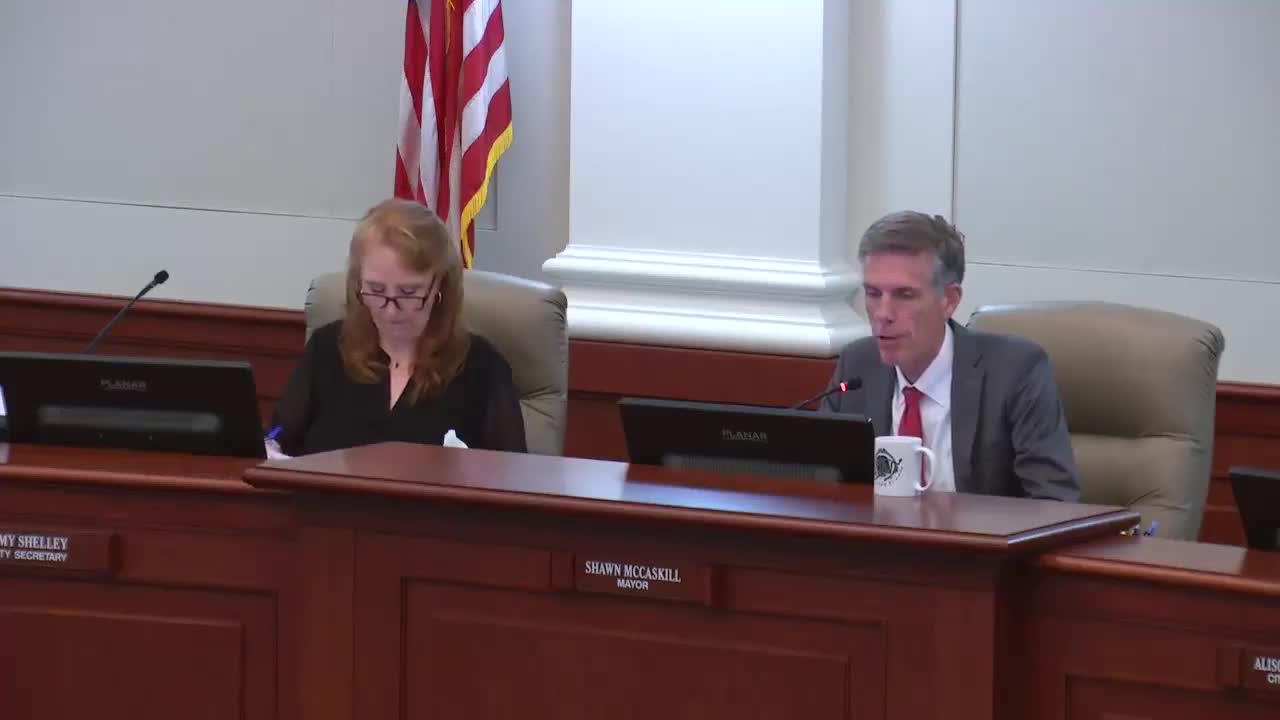
Southlake City Council denied a proposed change to the City’s consolidated future land use plan and the related zoning and development plan for 1835 Shady Oaks Drive at its June 3 meeting, voting 4‑3 on both the land‑use amendment and the zoning ordinance.
Southlake City Council denied a proposed change to the City’s consolidated future land use plan and the related zoning and development plan for 1835 Shady Oaks Drive at its June 3 meeting, voting 4‑3 on both the land‑use amendment and the zoning ordinance.
The two motions were framed as denials: the council first voted to deny the land‑use plan amendment and then denied the zoning and development plan. A motion to deny the land‑use amendment carried 4‑3 and a separate motion to deny the zoning change also passed 4‑3.
The proposal before the council would have changed the property’s land‑use designation from office/commercial to low‑ and medium‑density residential and rezoned the tract to a planned unit development with single‑family lots. The developer revised the plan after earlier hearings: the lot count was reduced from 29 to 27 and the applicant raised the minimum lot size to 20,000 square feet for all lots. The applicant also said tree preservation on the revised plan exceeded 33 percent.
Neighbors and speakers at the public hearing described strong support for residential development over commercial reuse of the site but said the plan did not do enough to preserve mature canopy trees or to provide a meaningful sound buffer from Highway 114. "I implore you to impose every measure possible to maintain as many trees as possible," resident Esther Spickler told the council during public comment.
The applicant, John Huffman of record, told council the revised plan reduced density and was intended to preserve large specimen trees. "We went from 29 lots to 27 lots," Huffman said, adding that the development team worked with an arborist and used GPS mapping to identify trees for preservation.
Council members repeatedly pressed both sides on two related issues: the practical effect of installing an 8‑foot masonry wall along the Highway 114 edge and how construction staging would affect tree preservation. Several council members and residents said heavy equipment needed to install a masonry wall or construct house foundations near the frontage likely would require removal of trees that the conservation plan showed as preserved.
Council discussion also focused on the setback between the frontage road and the proposed building envelopes. Under the applicant’s revised plan, there was a 25‑foot landscape buffer from the property line and a further 25‑foot setback (50 feet total from the frontage right‑of‑way to the building line). Some council members and residents said that distance is smaller than other Southlake neighborhoods adjacent to the highway and urged either larger setbacks or fewer lots so mature trees could be preserved and noise could be mitigated.
Speakers from nearby neighborhoods — including Garden Court and Fox Hollow — told council they had unanimously opposed commercial use and preferred residential, but many of those residents also said the council should demand a lower density or greater setback to protect street character and tree canopy. "If you had a development in there with 15 lots or 17 lots and a lot more trees, then you would have an exquisite neighborhood," one council member said during debate.
Council members who supported denial said they were responding to persistent resident concerns about proximity to 114, tree loss during construction and long‑term noise exposure. Council members who supported approval cited the applicant’s concessions — larger lot sizes, gating and tree preservation above 30 percent — and said the proposed plan was significantly improved from prior versions.
Because the council first denied the land use amendment and then denied zoning, the applicant may request the land use amendment be reconsidered in a future meeting, but the council’s votes put the current proposal on hold. The city attorney reminded council and the public that if a land use amendment is adopted while zoning subsequently fails, applicants may ask the council to reconsider the land use change.
What happens next: the developer may pursue further revisions or a different application; no new zoning or land‑use status was adopted for the site as a result of the council’s votes.