Get Full Government Meeting Transcripts, Videos, & Alerts Forever!
Get email alerts on the Council Procedures topic
No spam. Unsubscribe anytime.
Wausau committee forwards revisions to council rules, sets firm packet deadline and delays decision on naming personnel in public comments
Summary
The City of Wausau committee moved to forward revisions to Rule 5 and Rule 6 to the Committee of the Whole and agreed to a firm deadline for distributing agenda-packet materials.
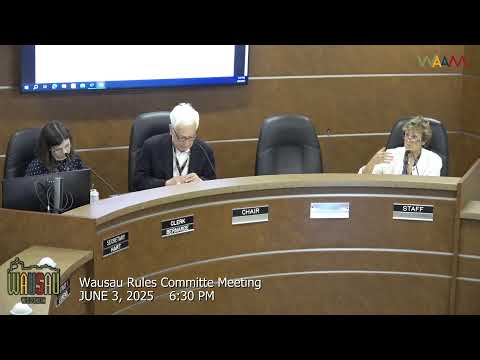
The City of Wausau committee moved on several changes to the council’s standing rules on Tuesday, forwarding revised Rule 5 (order of business) and revised Rule 6 (introduction of business and packet distribution) to the Committee of the Whole and agreeing to a firm deadline for packet updates.
Council members voted to accept amended minutes from a prior meeting before turning to the rule revisions. The committee then agreed to send the revised Rule 5 — which reorganizes how proclamations, memorials and communications from the mayor are placed in the order of business and adds a reading of a public-comment statement at meetings — on to the Committee of the Whole for further consideration.
The group also approved forwarding revised Rule 6, which contains language about agenda and packet timing. As discussed, committee members and staff agreed to a clear deadline to stop accepting changes to packet materials: no updates will be accepted or redistributed after close of business (staff proposed 4:30 p.m.) on the last business day preceding a meeting. Committee members said the change is intended to give elected officials, staff and the public time to review materials rather than receive repeated updates in the days before a meeting.
On the proposed City of Wausau public-comment statement (a short statement to be read during meetings or placed on agendas), members debated a sentence that would prohibit members of the public from identifying “specific personnel by name.” Some alderpersons argued the restriction may be too broad and could conflict with protected speech when comments are civil; others said they had seen public testimony that personally attacked staff and preferred limits. The committee asked staff to research parliamentary authority (references to Robert’s Rules of Order were discussed) and legal constraints and to return with additional guidance rather than immediately striking or adopting that sentence.
Members also discussed signage during meetings and whether to adopt a rule restricting signs. Staff reported an internal review found one Wisconsin county (Ozaukee County) that prohibited signage; otherwise municipalities vary. The committee agreed not to draft a detailed signage rule at this time and to leave signage enforcement largely to the presiding officer’s discretion, subject to maintaining order and safety.
The committee discussed creating a short decorum/education sheet for distribution in the chamber and with agendas so members of the public and council alike understand meeting procedures. Staff said such a sheet would be consistent with the municipality’s adoption of Robert’s Rules of Order and could be distributed as an educational policy rather than an ordinance.
Finally, the committee reviewed the city’s appointment application process for boards, committees and commissions. Staff will retool the online application so applicants can indicate qualifying credentials for positions that require them (for example, architect, hotel operator, historian), allow file uploads (resume, certifications), and remove or mark inactive any standing committees or task forces that are no longer active. The committee discussed, but did not adopt, a requirement that appointees appear before council; members said invitations to appointees to speak at the meeting when their appointment is considered are generally at the mayor’s discretion.
The meeting closed after procedural motions; staff will prepare the researched materials and updated application for future committee review.