Get Full Government Meeting Transcripts, Videos, & Alerts Forever!
Get email alerts on the Council Procedure topic
No spam. Unsubscribe anytime.
Council debate over executive sessions ends with failed vote on employee-investigation session
Summary
Terrebonne Parish Council debated using executive sessions to consider policy and employee-investigation matters; legal counsel advised caution and a final vote to enter an executive session failed to meet the two-thirds requirement under Louisiana law.
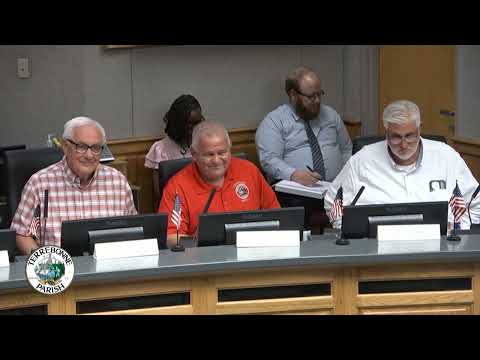
Terrebonne Parish Council members spent significant time debating whether to convene into executive session to discuss policies and potential employee allegations related to the council clerk’s office.
Parish legal counsel advised the council against using the executive-session exception for two agenda items, saying the written agenda item did not meet the Louisiana Revised Statutes exception (LA R.S. 42:16–17) as drafted. Council members then voted on a substitute motion to avoid taking items 1 and 2 into executive session; that substitute motion passed on the council floor (members recorded a majority vote during the meeting).
Separately, the council considered a motion to convene an executive session under LA R.S. 42:16–17 to discuss a strategy for investigating employee allegations that would require counsel and administrative cooperation. The motion to enter executive session was moved and seconded and initially counted in a roll-call vote, but members later confirmed that the meeting must meet a two-thirds affirmative threshold for that specific exception. After further counting and procedural review, the council did not reach the two-thirds threshold and the motion to convene the executive session failed.
Parish Attorney (referred to in the meeting as Miss Neil) told the council she had advised earlier by email that the council should not take action on items 1 and 2 and that item 3 could, depending on content, satisfy the executive-session exception; she reiterated that opinion during council discussion. Council members who supported executive session argued they needed to discuss policy and procedure changes privately; those opposing executive session said the agenda language was vague and the use of the exception could violate open-meetings law if challenged.
Ending: With no executive session convened, the council remained in open session and proceeded with the published agenda. The meeting record shows both procedural caution from legal counsel and divided council views on the appropriate use of executive sessions for internal personnel or policy matters.