Get Full Government Meeting Transcripts, Videos, & Alerts Forever!
Get email alerts on the Land Conservation Taxes topic
No spam. Unsubscribe anytime.
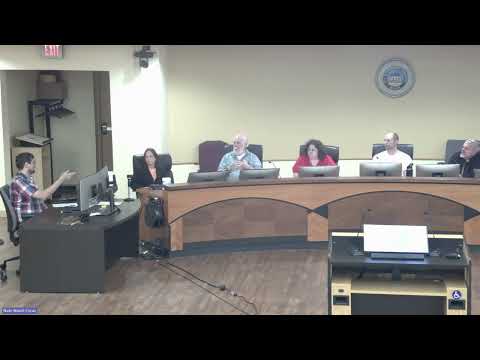
Torrington conservation commission reports acquisition of scattered parcels from tax sale, totaling roughly 8 acres
Summary
Commission staff summarized a multi‑parcel acquisition effort tied to the city's unusual tax-collector arrangement; members discussed locations, redemption risks and future transfers to the local land trust.
Torrington's Conservation Commission on Wednesday reported that the city acquired several small, landlocked parcels through the recent tax sale process, adding roughly eight acres of open space dispersed around the city.
Staff described the acquisition as the outcome of an extended negotiation with the independent tax office that manages the city's tax sales. Under the arrangement described to the commission, properties that did not sell at the May tax sale were offered to the city to relieve the tax office of ongoing carrying costs; the city accepted a set of parcels it assessed as useful for conservation. The presenter said some of the parcels are 0.16 acres or comparable small lots, and that several are adjacent to or expand existing protected blocks, including land near Machuga and the Sue Grossman trail network.
The commission discussed practical constraints: many of the newly acquired lots are landlocked or were plotted in century‑old subdivisions without developed roads, meaning legal access and development are unlikely without attorney work. Staff reminded members that a six‑month redemption period applies to properties sold at the tax sale, during which former owners can pay back taxes and reclaim parcels. Several members said the parcels are likely to remain in public ownership because they are small, not buildable on their own, or already adjoin conservation land.
Commissioners and staff reviewed a map showing the groupings and edges of the parcels. Staff recommended holding some lots as city property while potentially transferring others to the local land trust (Heritage) when appropriate; staff said transfers to the land trust could be arranged at little or no city cost when the land trust requests them. Members asked staff to ask the tax office to flag additional unsold parcels in future sales as candidates for conservation acquisition.
Commissioners also discussed whether to pursue additional unsold parcels in a future tax sale and urged staff to return to the tax office to request that any similarly landlocked parcels that again fail to sell be offered to the city. No formal vote was recorded on this follow‑up request; staff said they would return with more detail at a later meeting.
Ending: Staff indicated the group obtained several small parcels that enlarge contiguous conservation holdings in key places, and that the commission can revisit acquiring additional unsold parcels at future tax sales or arranging transfers to Heritage where practical.