Get Full Government Meeting Transcripts, Videos, & Alerts Forever!
Get email alerts on the Environment topic
No spam. Unsubscribe anytime.
Commissioners approve BLM cooperative contract for Dyer's Willow weed project; helicopter spraying set to begin
Summary
Bannock County approved a cooperative agreement with the Bureau of Land Management and partners to begin a Dyer's Willow (invasive weed) suppression project using helicopter application; federal, state and county partners and a cost‑share program for private landowners were discussed.
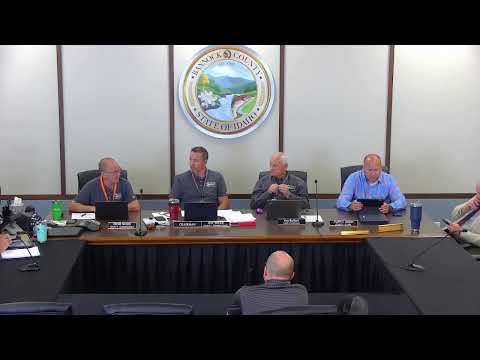
Bannock County commissioners approved a cooperative contract with the Bureau of Land Management (BLM) on May 29 to support a Dyer's Willow weed‑control project that will include aerial application, county-funded treatment on some hard‑to-reach parcels and coordination with multiple federal and state agencies.
Public Works staff (Kyle, the county public-works director) explained the project is being managed through the regional Cooperative Weed Management Area (CWMA) and said the BLM, U.S. Forest Service and county staff will coordinate work. “This project's being done through the cooperative weed management area,” Kyle said, adding that the helicopter portion was expected to begin next week if weather cooperates and that the BLM work on county lands was “only like a day project” in some places.
County speakers described the scope of planned treatment: the Forest Service will start a larger project near Harkness that will move toward Inkom and other priority corridors (Paystack, Hogsback). County staff said they will also use helicopters to access steep or remote parcels and that the county will pay for some of those flights on county funds. One speaker said private landowners often accept helicopter application at “$25 an acre” for rapid coverage of steep ground.
Commissioners and staff discussed the county’s cost‑share program for private landowners — still being finalized — and the need to accelerate outreach so landowners can access treatment within the appropriate seasonal window. Some commissioners urged fall outreach to prepare for next spring and noted the program is behind schedule relative to ideal spray windows.
A commissioner moved to approve the contract with BLM; legal had reviewed the agreement. The board voted in the affirmative.
Ending: The contract with the BLM was approved and the county will proceed with coordinated aerial treatment and interagency planning; staff will continue to develop the cost‑share program and outreach to landowners.