Get Full Government Meeting Transcripts, Videos, & Alerts Forever!
Get email alerts on the Public Health topic
No spam. Unsubscribe anytime.
Riley County Health Department requests $2.29 million from county in proposed 2026 budget
Summary
Health Director Diane Creek presented the department’s proposed 2026 budget, projecting $4.16 million in revenue, $6.38 million in expenses and a county funding request of $2,288,123, prompting commissioner questions about inter-county services and grant matches.
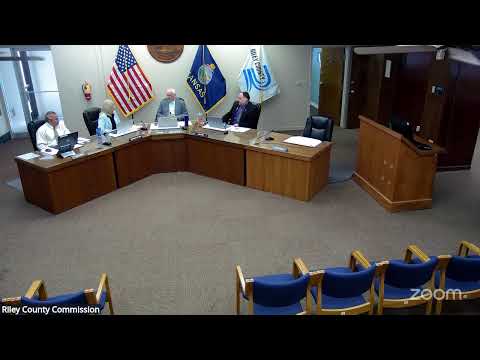
Diane Creek, Riley County Health Department director, presented the department’s proposed 2026 budget during the June 2 meeting of the Riley County Commission. Creek outlined projected revenues, expenses, staffing and a county funding request tied to grants and program expenses.
Creek said the department projects $4,157,268 in 2026 revenue from state, federal and other grants, client services and insurance reimbursements and $6,378,304 in total projected expenses. The budget anticipates a beginning cash balance of roughly $338,741 from 2025 and requests $2,288,123 from the county — an increase of $334,790 over the previous year, Creek said.
Creek walked commissioners through the budget’s program structure: 11 programs administered by the health department that together support 47 staff and serve Riley County as well as parts of Pottawatomie, Geary, Clay, Dickinson counties and Fort Riley. She called out a $65,585 allocation from the county’s opioid fund to support an opioid‑related staff position, supplies and distribution of naloxone and educational materials.
Creek said pharmacy and vaccine supply costs are projected to rise, but she expects corresponding revenue increases where those services are billable. She also noted changes to how some grant‑matched programs are budgeted: state and federal match rules for programs such as home visitation and OPEI affect whether the county or the grant carries particular line items.
Commissioners asked specific questions about the county effectively subsidizing childcare licensing and other services for neighboring counties and about whether those other counties should contribute. Creek said the health department currently provides childcare licensing and other services for neighboring counties under state reimbursement arrangements; she and staff plan outreach to educate those counties and to seek additional local contributions in future budget cycles. “I still struggle with the idea of subsidizing other counties,” one commissioner said during the discussion.
Creek also described a change at the state level affecting STI partner‑notification staffing (the DIS program): KDHE reduced the number of statewide DIS positions and redrew coverage zones, which will affect how the department coordinates with other jurisdictions.
Commissioners did not take a funding vote at the meeting. Creek said department staff will continue to refine the budget and follow up on interlocal reimbursement questions and grant match details ahead of final county budget decisions.
Ending: The department presented a complex budget dominated by grant funding and personnel costs; commissioners asked staff to return with clarifications on inter‑county reimbursements and grant matches before the commission makes a final funding decision.