Get Full Government Meeting Transcripts, Videos, & Alerts Forever!
Holyoke committee advances ordinance to create centralized finance office, debates residency and bargaining authority
Summary
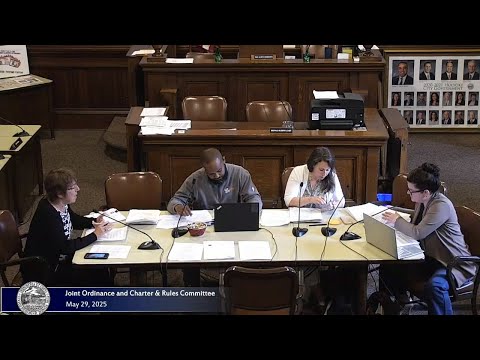
The Charter and Ordinance committees of Holyoke City Council advanced a substitute municipal modernization ordinance on May 29 that would create a Department of Administration and Finance and a CAFO (Chief Administrative and Financial Officer), after hours of debate over authority lines, residency for appointees, and who would lead contract negotiations.
The Charter and Ordinance committees of Holyoke City Council advanced a substitute municipal modernization ordinance on May 29 that would create a Department of Administration and Finance and a CAFO (Chief Administrative and Financial Officer), after hours of debate over authority lines, residency for appointees, and who would lead contract negotiations.
The committee meeting focused on how the CAFO would centralize financial functions, oversee personnel and bargaining strategy, and how the change would affect the law department and an independent director of internal audit. Committee members proposed and adopted several amendments, including language on a residency deadline for the CAFO and a timeline for certification of a treasurer/collector.
Councilor Jourdain, who helped draft the substitute ordinance, said the proposal is meant to create a “central business office” that consolidates payroll, personnel and accounting and to give the new CAFO authority over positions that now report to multiple departments. He described the proposed director of internal audit as having "almost like an inspector general of Holyoke type role," a position he and others said needs independent legal support from the council.
Councilor Linda Bacon pushed back on cost concerns and residency, telling colleagues she would not support adding three new positions "unless I can see no net increase in costs." Bacon and other councilors pressed for a side‑by‑side budget showing that translates proposed reorganization into neutral or reduced overall cost. Committee discussion referenced a citywide budget the chair described as reflecting an approximate 4.6% baseline increase, and Bacon said members were concerned that residents could face additional property tax pressure without demonstrated savings.
Re…
Already have an account? Log in
Subscribe to keep reading
Unlock the rest of this article — and every article on Citizen Portal.
- Unlimited articles
- AI-powered breakdowns of topics, speakers, decisions, and budgets
- Instant alerts when your location has a new meeting
- Follow topics and more locations
- 1,000 AI Insights / month, plus AI Chat