Get Full Government Meeting Transcripts, Videos, & Alerts Forever!
Get email alerts on the Voting Systems topic
No spam. Unsubscribe anytime.
Dare County elections staff recommend new ES&S voting system; board approves preliminary resolution
Summary
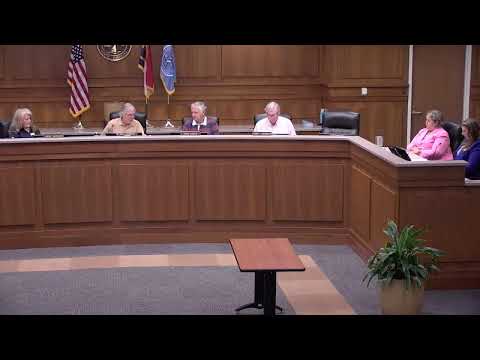
After a demonstration by an Election Systems & Software representative, the Dare County Board of Elections voted to approve a preliminary resolution asking county commissioners to fund replacement voting equipment and to forward required materials to the State Board of Elections for certification and testing.
Dare County elections officials on May 29 heard a demonstration of new voting equipment from an Election Systems & Software (ES&S) representative and approved a preliminary resolution asking the county commissioners to fund replacement and upgraded voting machines.
The demonstration, given by a vendor representative identified in the meeting as Tom, showed two ballot-marking/scanning products ES&S is offering, an ADA ballot-marking device and a ballot-on-demand/print-on-demand process for early voting and one-stop sites. After questions and discussion about cost, maintenance and compliance, the board voted, by voice, to approve a preliminary resolution that staff will present to the Board of Commissioners and to the North Carolina State Board of Elections as part of the required purchase process.
Why it matters: county election officials said the recommended package is intended to replace older leased AutoMark ADA units and to modernize one-stop printing and tabulation processes. Officials said the change would address federal ADA requirements and could reduce per-ballot costs in early voting by moving to a ballot-on-demand approach at some sites.
Vendor demonstration and key features Tom described two primary pieces of the ES&S package: an ExpressVote-style ballot-marking device for voters with disabilities and a ballot-on-demand solution used at one-stop/early voting sites. He demonstrated how the ballot-marking device enforces vote limits (the vendor said "This machine can't over vote") and prints a ballot-style paper record that voters can review and, if desired, feed back into the scanner for tabulation. The vendor said the ballot-marking device weighs about 22 pounds versus roughly 52 pounds for an AutoMark unit the county currently leases.
The demonstration included details the vendor identified as operational advantages: a faster internal printer compared with the county's current DS200-related printers, a random serial-numbering option printed on ballots (vendor described it as an added reconciliation element rather than a ballot identifier that could be traced to a voter), a battery backup of about four hours, and replaceable thermal paper for the ballot-marking device.
Costs, warranties and lifecycle concerns Staff and board members pressed the vendor about costs, warranties and obsolescence. The vendor said a standard equipment warranty from ES&S is one year and that routine maintenance, firmware and software updates are covered through annual maintenance or licensing agreements. The vendor estimated, absent a federal or EAC mandate that would force earlier replacement, an expected functional lifetime of roughly 10–12 years for the equipment in normal election use.
The board noted the county currently leases older AutoMark units and pays roughly $20,000 per year for those leases; staff said the proposed package would increase up-front equipment costs (some components are manufactured at higher unit cost) but could reduce per-ballot costs for early voting and absentee operations through ballot-on-demand printing. During the demonstration the vendor compared per-ballot costs, saying preprinted ballots cost on the order of "about $0.20–$0.26" per ballot in many counties versus roughly a "dime" per ballot when printed on demand (vendor-provided figures; final procurement estimates will be provided to the commissioners). The vendor also said replacement printer cartridges are specified for large capacities (he noted a cartridge that can print up to 75,000 ballots).
Accessibility and one-stop implementation The vendor emphasized ADA compliance: federal HAVA requirements mean every precinct must provide an ADA-capable ballot-marking device. Staff told the board they asked for a set of devices sufficient to cover precinct needs and to have a small number of extras for backup; during the meeting staff said the request as presented sought 16 devices plus two spares (18 total). The vendor discussed options for sip-and-puff devices, universal tactile pads and headphone jacks for voters with varied disabilities.
Board discussion and outcome Board members asked about how ballot serialization and random numbers would be used to reassure voters and how the county would reconcile ballot counts across devices and precincts. Members also raised concerns about one-year manufacturer warranties and the long-term maintenance cost. Staff clarified that this vote was a preliminary resolution that will be included with budget estimates and that final purchase requires county-commissioner approval and subsequent state-conducted acceptance testing before use in an election.
Formal action: the board moved and seconded approval of the preliminary resolution; the resolution passed on a voice vote. The vote was a procedural approval to transmit staff's recommended equipment list and cost estimates to the Board of Commissioners and to start the state review and required acceptance-testing process. The resolution does not itself authorize purchase or payment; that decision remains with the county commissioners and will be subject to the State Board of Elections' certification steps.
What happens next Staff will prepare the final resolution and budget detail to present to Dare County commissioners, and the recommended equipment will then be submitted to the North Carolina State Board of Elections for certification and for acceptance testing prior to any election use. Staff also noted vendor support and state-required testing are part of the procurement and implementation timeline.
Ending: The vendor left after the demonstration and the board moved on to approve minutes and hear the director's report.