Get Full Government Meeting Transcripts, Videos, & Alerts Forever!
Get email alerts on the Opioid Settlement topic
No spam. Unsubscribe anytime.
Chatham County OKs $364,500 opioid settlement spending for prevention, naloxone and treatment
Summary
The Board of Commissioners authorized $364,500 in National Opioid Settlement funds for a mix of strategic coordination, treatment access, recovery supports, early intervention and naloxone distribution, beginning April 1 and running through the next fiscal year.
Chatham County commissioners voted to direct $364,500 of the county’s share of the National Opioid Settlement to five evidence‑based strategies aimed at preventing overdoses and expanding treatment and recovery supports.
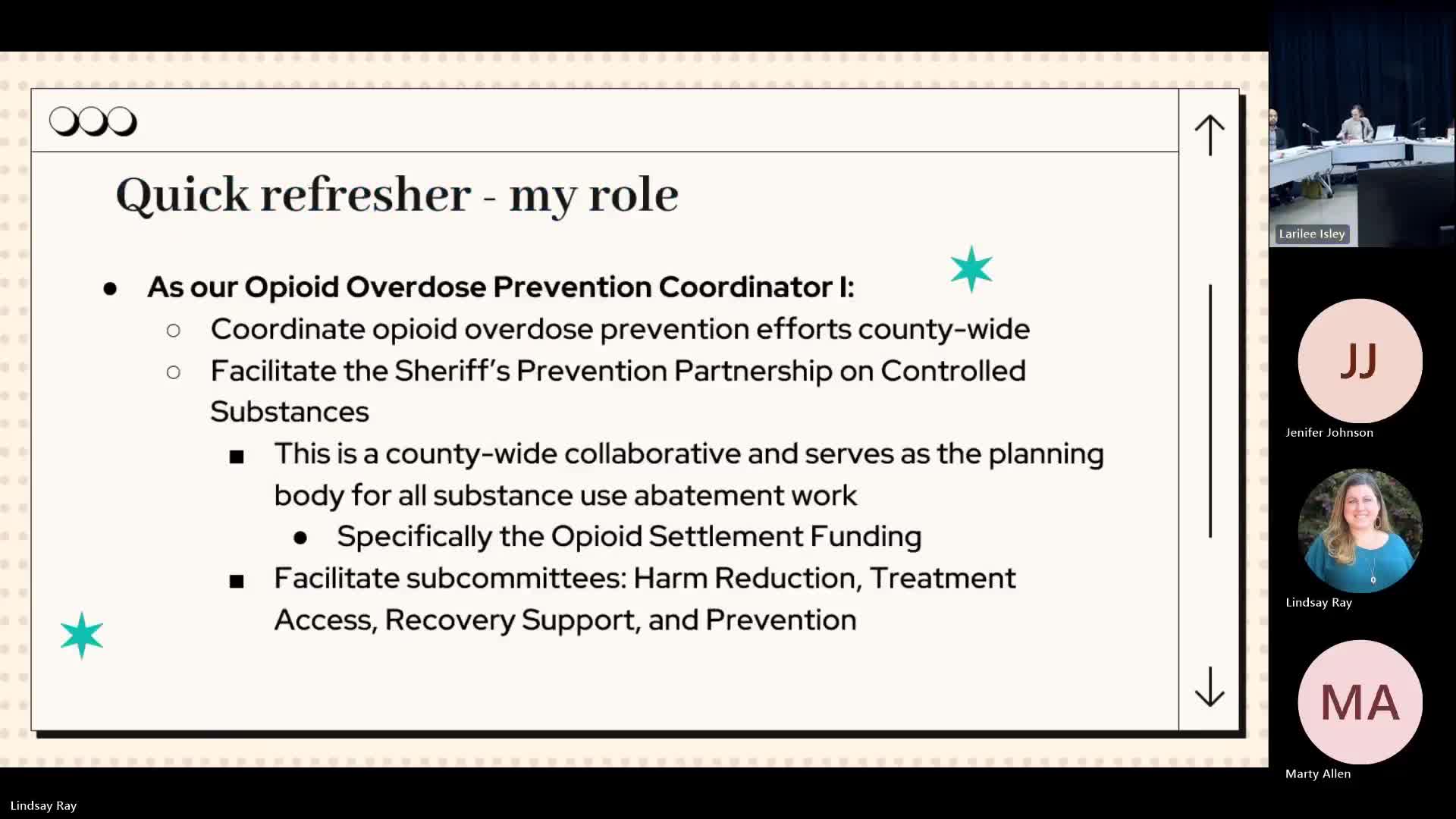
The county’s opioid overdose prevention coordinator, Morgan (Chatham County Public Health Department), told the board the county has chosen “Option A” under the state memorandum of agreement, which allows localities to spend their settlement shares on a menu of 12 evidence‑based interventions. Morgan described the five strategies and proposed amounts: collaborative strategic planning ($139,500, including the coordinator’s salary and training), evidence‑based addiction treatment ($55,000 to reduce barriers such as co‑pays and transportation), recovery support services ($50,000 for transportation vouchers and peer supports), early intervention for youth ($20,000 for peer education and family support), and naloxone distribution ($100,000, primarily to buy the medicine).
Morgan said the settlement is front‑loaded and totals about $5.2 million for Chatham County over an 18‑year payout stream; the $364,500 request covers the remainder of the current fiscal year plus the next full fiscal year. She told commissioners the county has already distributed more naloxone kits since December than it did in the entire prior fiscal year and has trained dozens of residents and installed emergency overdose units in public buildings.
Sheriff Mike (Sheriff’s Office), who co‑chairs the local prevention partnership, described the collaborative effort among the sheriff’s office, health department, schools and nonprofits and called the work “countywide” in scope. Morgan said the partnership’s subcommittees — harm reduction, treatment access, recovery support and prevention — developed the proposals based on impact and feasibility.
Commissioners voted to approve a resolution directing the expenditure. No roll‑call tally was recorded in the public transcript; the motion was approved by voice vote.