Get Full Government Meeting Transcripts, Videos, & Alerts Forever!
Get email alerts on the Zoning And Planning topic
No spam. Unsubscribe anytime.
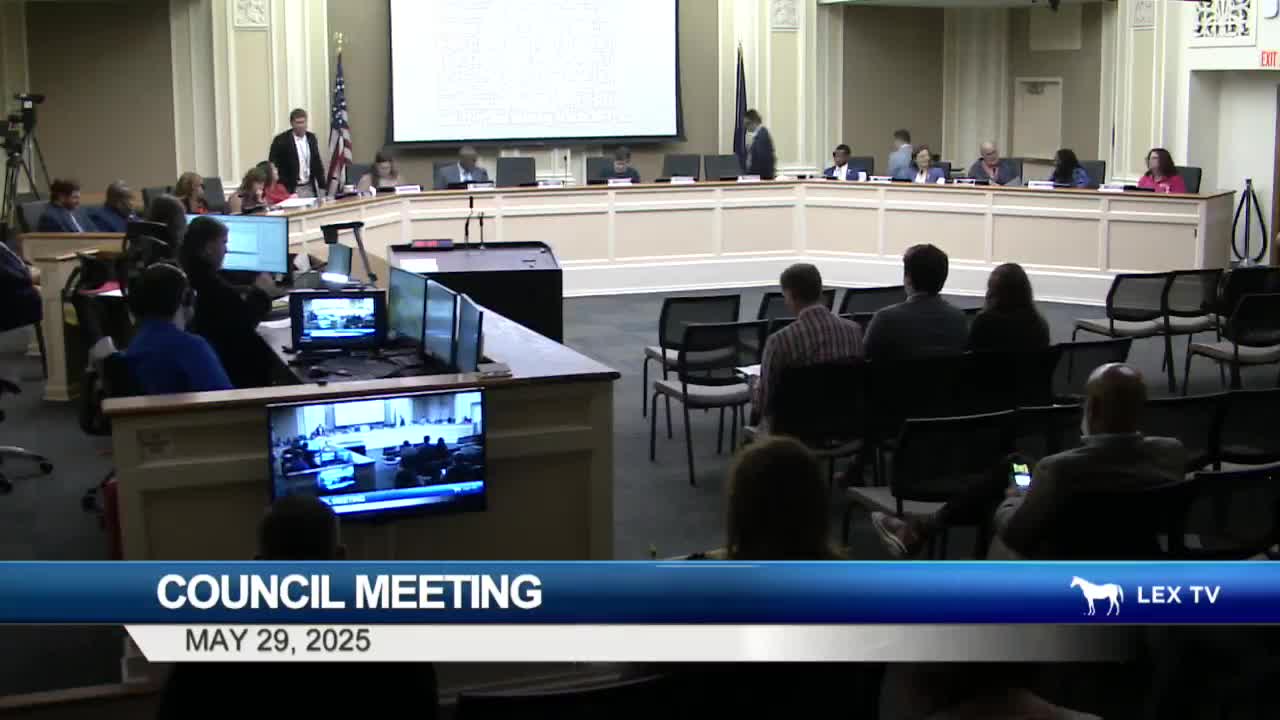
Council approves notice and waiver changes as zoning ordinance rewrite moves forward
Summary
Council members amended and approved multiple notice-related provisions in a major zoning ordinance text amendment (ZOTA), directing staff to align subdivision regulations and to apply new notice standards to development and waiver processes. The ordinance was advanced on first reading as amended.
The Lexington-Fayette Urban County Council debated and approved several amendments that change public-notice rules and waiver procedures in a broad zoning ordinance text amendment (ZOTA) intended to clarify objective development-review standards.
The ZOTA (item 4 on the docket) was read into the record and discussed at length. Public commenter Amy Clark urged restoration of some "big box" provisions and objected to broad "special project" language she described as "void by vagueness." Clark identified specific zoning articles and asked the council to retain safeguards requiring multiple storefront access points and to limit storage in front yards.
Council member James Brown proposed an amendment to 21‑4(c) under filing, which he read into the record. The amendment requires a completed application to include a current deed, copies of plans and studies, payment of filing fees and a sign posted on the property "in a conspicuous location for a minimum of 21 days prior to the scheduled technical review committee meeting." Brown said the applicant must provide an affidavit that the sign was posted and maintained; the amendment also requires mail notice to property owners and occupants within a 250‑foot radius when a development plan includes a change in land use not part of a prior zone change. Council member Morton seconded the amendment.
Council member LaVern Lynch proposed and moved an addition to Brown's amendment specifying required content for mailed notices: the date of the plan, the address of the subject property, the application record number, and contact information for the Division of Planning. Morton seconded Lynch's motion. The council approved the Brown amendment as amended by voice vote.
Council member Morton then proposed a separate amendment to 21‑9(b) (the waiver notice requirement). The proposed language requires mail notification of waiver requests to occupants and owners within 250 feet of the subject property and to registered neighborhood associations, with addresses obtained from the property valuation administrator and the division of planning; the notice must be given at least 10 calendar days before the meeting at which the waiver is considered. Council member Curtis seconded Morton's amendment; the council approved it.
Director Duncan of the Planning Division told council members that, following adoption of the ZOTA, staff will ask the Planning Commission to initiate a follow-up ZOTA to amend the land subdivision regulations so that subdivision plans receive the same notice applied to development plans. Duncan said staff expects to move that follow-on ZOTA quickly and that, in the interim, staff will apply the new development-plan notice rules to preliminary subdivision plans.
Why it matters: The ZOTA is a comprehensive rewrite intended to clarify objective standards for ministerial review of development plans. The amendments approved on the floor change how neighbors will be notified about development and waiver requests, add content requirements for mailed notices, require on-site posting for development plans, and explicitly include registered neighborhood associations in waiver notices. Those changes affect transparency and how close-by residents and associations learn about projects that could alter neighborhood character.
What the council decided: The council approved Brown's 21‑day on-site posting and 250‑foot mailed-notice standard (21‑4(c)) as amended to require specific content in mailed notices; it also approved Morton's 21‑9(b) waiver-notice amendment requiring mailed notice to owners, occupants and registered neighborhood associations within 250 feet. The transcript records those voice votes and the ordinance was advanced for first reading "as amended." The Planning Division committed to initiate an immediate follow-up ZOTA to align subdivision regulations with these notice changes.
Ending details: Public commenters, including Amy Clark, asked the council to restore certain special-project safeguards and flagged concerns about vague special-provision language. Staff and council members responded by carving notice and procedural changes into the ZOTA and by committing to additional amendments to subdivision rules after adoption of this ZOTA.