Get Full Government Meeting Transcripts, Videos, & Alerts Forever!
Get email alerts on the Office Of Cultural Affairs topic
No spam. Unsubscribe anytime.
Former directors and arts leaders urge Houston to maintain a staffed Cultural Affairs office and preserve HOT funding
Summary
Multiple former cultural affairs directors, nonprofit leaders and arts organizations told the committee that downgrading the mayor's Office of Cultural Affairs risks undoing years of progress and imperils competitive grant opportunities and HOT-funded programs.
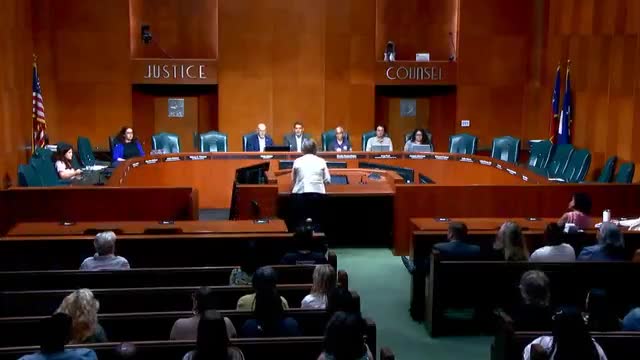
Former directors of Houston's mayoral cultural affairs office, nonprofit arts leaders and museum officials urged the Arts and Culture Committee on May 21 to preserve a staffed Office of Cultural Affairs and maintain hotel occupancy tax (HOT) funding that supports large cultural institutions and citywide grant programs.
Deborah McNulty, who led the mayor's Office of Cultural Affairs from 2015–2021, told the committee the office functions as a strategic connector for the city's cultural ecosystem and that removing leadership risks leaving communities "in the dark." McNulty said the office's value extends beyond administering contracts and that its role includes building partnerships, securing outside funding, supporting cultural-district designations and resolving permitting issues.
"This is not about administering grants or managing service contracts," McNulty said. "What makes the city's investments matter is the vision, the why behind the funding, and the ability to connect dollars to outcomes." She said stakeholders have asked for a clear plan and rationale for recent administrative changes.
Minette Basil, director of the Office of Cultural Affairs under Mayor Bill White and early in Mayor Parker's term, described long-running efforts to create civic-art policy and to reconcile funding streams across departments. Other speakers — including Cynthia Alvarado of the Midtown Cultural Arts District and Marcy Dallas, a Hue Arts organizer — described how a full-time cultural office helped the city secure a $1 million Bloomberg Philanthropies public art challenge grant and enabled complex interagency projects involving TxDOT, METRO and management districts.
Eric Ania, chief financial officer of the Museum of Fine Arts, Houston, and a Museum District representative, told the committee the Museum District's institutions generate substantial economic activity and urged that HOT allocations to cultural institutions be maintained at current levels. "Museum District institutions generate more than $600,000,000 in economic impact," Ania said, and he noted that the Museum of Fine Arts receives about 1 million annual visitors, 60% of whom attend free of charge.
Speakers repeatedly urged the committee and administration to articulate a long-term plan for cultural affairs, preserve staff capacity that can convene cross-departmental work and ensure the city continues to compete for national funding and recognition.
Committee members thanked speakers and said staff would follow up on questions about the structure and funding for the office.