Get Full Government Meeting Transcripts, Videos, & Alerts Forever!
Get email alerts on the Homelessness topic
No spam. Unsubscribe anytime.
Bartlesville council adopts ordinance regulating unsheltered camping, sets six‑month rollout and extends task force
Summary
After five months of work, the city’s Unsheltered Homeless Task Force presented a multi‑part implementation plan and the council adopted a new ordinance regulating certain acts in public spaces while approving a six‑month education rollout and extending the task force’s term for oversight.
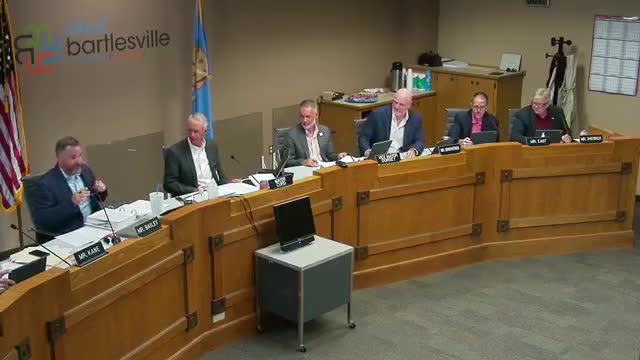
The Bartlesville City Council on June 2 adopted an ordinance recommended by the Unsheltered Homeless Task Force that defines certain prohibited acts in public spaces and sets a six‑month education and incremental rollout before enforcement begins.
The change follows a five‑month effort by the task force to map services and create an operational pathway the group calls the “Highway of Homelessness.” Task force members told the council they focused first on clearly defining who the group would serve — people who are unsheltered — and on creating a shared intake, ID and referral process so outreach by police, medical providers and service agencies can connect people to local resources more consistently.
“The intent is to make sure that this is well understood and nobody gets caught by surprise,” said Unsheltered Homeless Task Force Chairman and Councilwoman Darren Kirkpatrick, recommending a six‑month education period before enforcement. Kirkpatrick told the council the rollout will include public education, training for officers and an emphasis on voluntary compliance and connection to services.
Task force co‑lead Rachel Schoeller described the group’s approach to the council as practical and data‑driven: the task force aims to give first responders and service providers a consistent process for initial contacts, to help individuals obtain identification, and to use a shared database so service gaps are visible across agencies. Schoeller told council members the group had identified gaps in shelter beds, transportation and identification services and had developed specific projects — signage with QR codes linking to resources, SOAR training for disability applications, and coordination on transportation and community court work.
Council debate emphasized balancing public safety and compassionate approaches. Kirkpatrick and other council members said the ordinance is designed to encourage voluntary compliance and to reserve citation or municipal court action for situations where public safety is at risk. Kirkpatrick described the ordinance’s monetary penalty as a legal cap put in place to ensure violations remain municipal misdemeanors, not felonies.
After discussion the council voted to adopt the ordinance and then separately approved a resolution extending the task force so it can oversee the rollout and continue meeting monthly for the next six months and then quarterly. Council recorded unanimous approval on both items.
What the ordinance means in practice: the council and the task force emphasized that the ordinance is only one tool in a broader strategy to move people toward housing and stabilize the community. The group intends to monitor outcomes, allow adjustments during the six‑month period and return to the council if changes are needed.
The council’s action followed public comment both in favor of and critical of elements of the proposal. The task force and the council said they will emphasize outreach, shelter referrals, and data tracking during the transition to enforcement.