Get Full Government Meeting Transcripts, Videos, & Alerts Forever!
Get email alerts on the Utility Billing topic
No spam. Unsubscribe anytime.
Tenants say surprise common-area utility fees are common; bill would require clearer disclosures and cap pass-throughs
Summary
Multiple tenants and tenant advocates urged the Council to limit surprise common-area utility pass-throughs and require clear lease disclosures after several witnesses described high and unpredictable monthly utility charges. Developers and some property managers said utilities are part of building operating costs and complex to standardize.
Several tenants told the Committee on Housing they were surprised by large, recurring common-area utility fees passed through by building owners and managers. The Fair Housing Practices Amendment Act would require clearer disclosure of common-area utility fees, limit unexpected pass-throughs and provide tenants more ability to challenge charges used to calculate monthly bills.
Tenant testimony
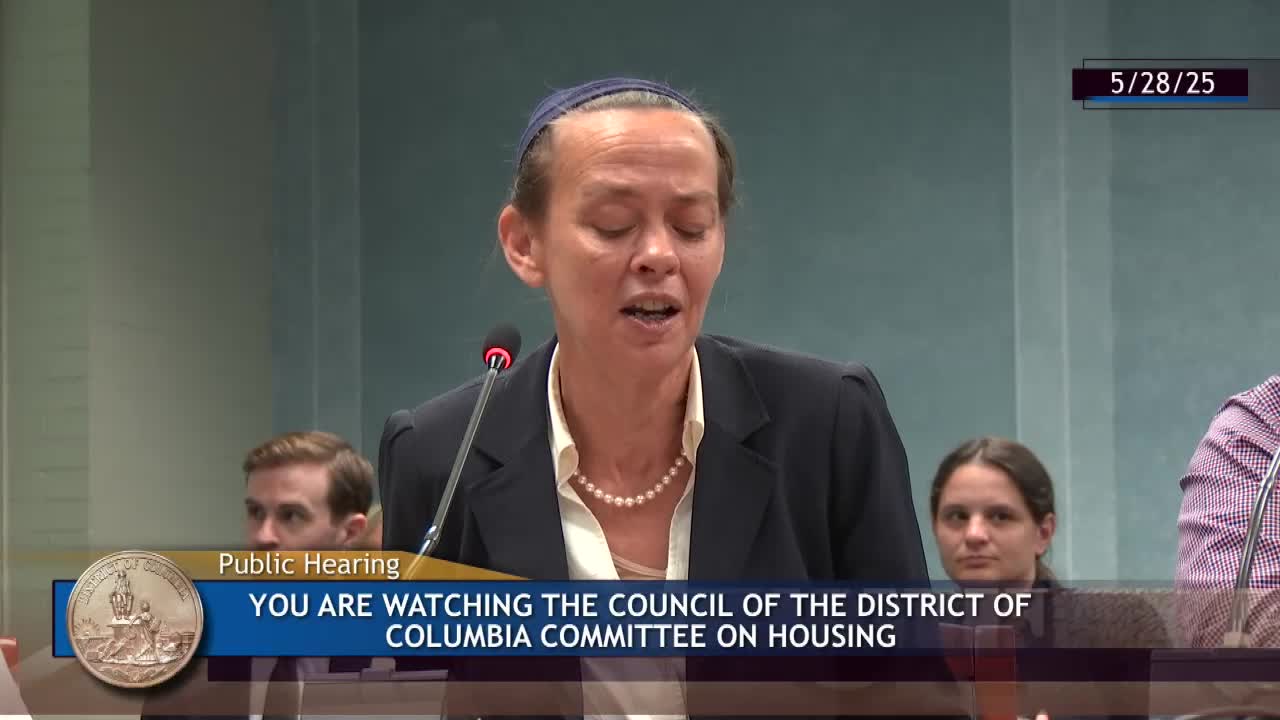
Laura DeJagger, a tenant association president at a 200-unit Navy Yard building, described months in which common-area electricity and water charges pushed her household—s monthly bills up by hundreds of dollars on short notice. "There's no reliable way to predict what it's going to be on any given month," she said, adding that bills often appear less than two weeks before they are due.
Legal and policy views
Legal Aid and Housing Counseling Services recommended that the Council require landlords to produce the detailed calculations and source invoices used to compute any common-area charge before pursuing a nonpayment eviction. "Landlords often try to bring failure-to-pay utility cases when tenants have no underlying, verifiable accounting for the charge," Jamie Long of Legal Aid said. Her group recommended that judgments tied to utility nonpayment be redeemable, as is standard for rent judgments, so tenants can pay and remain housed.
Industry response
Property managers said buildings include many moving parts — tenant turnover, seasonal lighting, unanticipated system repairs — that can produce month-to-month swings. "Because our base rent is quite low, we attract many subsidized residents and variable utility pass throughs make budgeting tenuous," said Laura DeJagger. Managers told the committee they—d support model disclosure language, but cautioned that one-size-fits-all rules could produce unintended consequences in older, mechanically diverse building stock.
What the proposed bill would do
Proposed language would require landlords to list common-area utility pass-throughs in lease documents or move-in disclosures, describe the formula used to calculate each tenant—s share, and produce source invoices and allocation data upon tenant request. It also would make judgments in utility-nonpayment eviction cases redeemable in the same manner as rent judgments.
Ending
Council members asked agencies to draft model disclosures and to consult with tenants, affordable-housing providers and property managers on how to implement a workable rule. The committee left the record open for additional technical comments.