Lifetime Citizen Portal Access — AI Briefings, Alerts & Unlimited Follows
Proposed eviction reforms would accelerate timelines and require court registry payments; tenant advocates warn of curtailed due process
Loading...
Summary
The mayor—s package and a companion eviction bill would shorten notice periods and require disputed rent to be paid into a court registry at early hearings. Legal-aid groups warned the changes could strip longstanding protections and increase default judgments if courts remain backlogged.
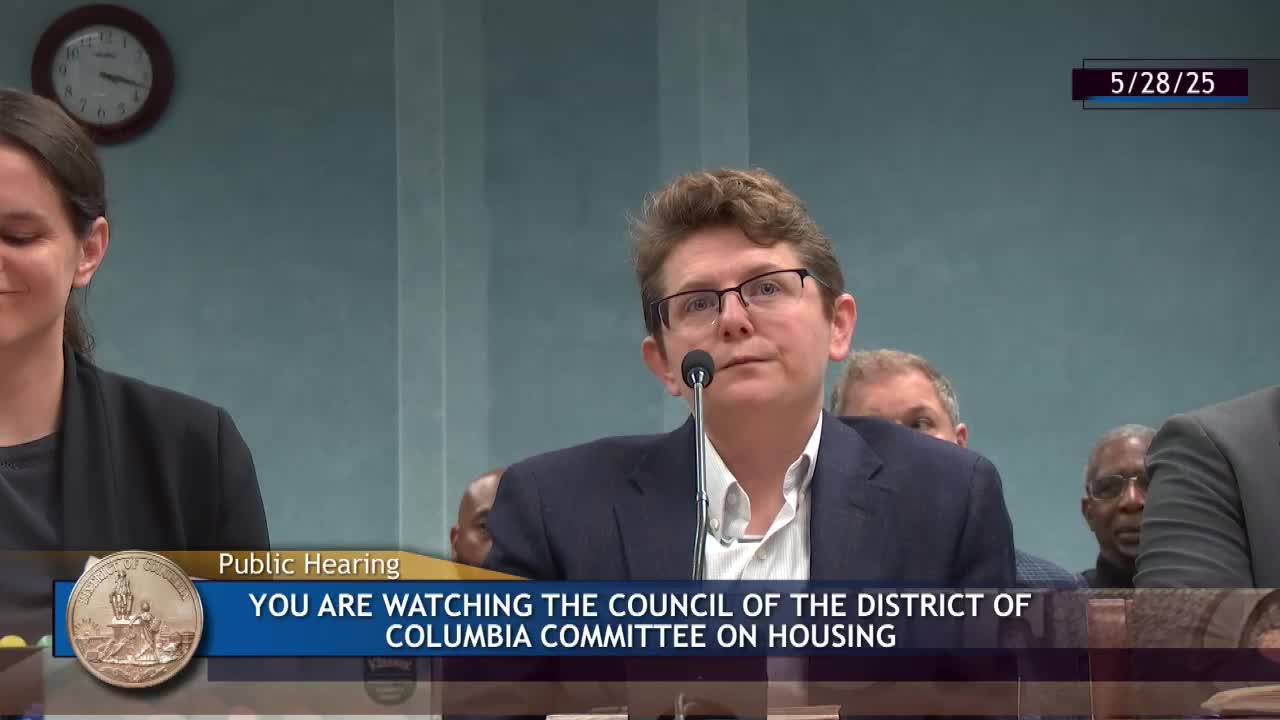
The Committee on Housing heard hours of testimony on changes to DC—s eviction process that would speed certain proceedings, change the timing for protective orders and require disputed rent payments to be deposited with the court early in some cases.
The administration said the measures are intended to restore a functioning rent-collection system after pandemic-era rules and court backlogs created heavy arrears that threaten properties— finances and maintenance. "A broken process doesn't serve our tenants or providers," Chad Jarvis of Jubilee Housing said.
What the changes would do
Key procedural reforms under discussion would:
- Shorten the pre-filing notice period landlords must give tenants for nonpayment in some instances and compress time between filing and the initial hearing.
- Give judges clear authority to order disputed monthly rent to be paid into a court registry at or immediately following the initial hearing (protective order), with a prompt follow-up hearing on the correct amount.
- Create an expedited pathway for cases alleging tenant involvement in violent activity on or near a property, allowing housing providers to ask the court to move these cases on a faster track.
Supporters— rationale
Housing providers and managers said the district—s eviction court is clogged and that delayed outcomes force landlords to carry months of unpaid rent, leaving little money for repairs and building operations. "In April 2025 alone, we wrote off $749,000 in uncollectible rent," Glenda Walker of W.C. Smith said, illustrating the scale of arrears at some portfolios.
Many providers said quicker hearings, registry payments and clearer rules would give tenants an efficient path to correct arrears while preventing permanent balance accumulation that leads to foreclosure and displacement.
Critics— concerns
Legal-service organizations, tenant advocates and civil-rights groups warned the bills would erode due process and increase default evictions, particularly for low-income tenants.
"Taken together, all of these changes mean more default judgments for tenants," said Laurie Liebowitz, an attorney who represents tenants. Several witnesses described cases in which tenants were surprised by dismissed defenses because of technical or procedural filing defects; they said mandatory registry payments at the outset would increase pressure on tenants who are still pursuing living-condition defenses.
Court capacity
Multiple witnesses and committee members noted a central constraint: D.C. Superior Court currently has judicial and clerk vacancies and a pandemic backlog that already stretches many eviction cases into 12-24 months. Multiple council members said they would not endorse a legislative deadline that the courts cannot realistically meet and asked the judiciary for a capacity analysis before any deadline is finalized.
Quotes
"I don't think changing the substantive law is going to get at that," said Amanda Korber, an eviction-defense lawyer, referring to court delays. "The problem is how the court is operating at this moment and that is where we can work to solve problems."
"Protective orders are an equitable remedy that have been working since the 1960s," said Jamie Long of Legal Aid DC. "Legislation that requires automatic registry payments before a tenant can be heard risks stripping tenants of defenses that are legally longstanding."
Ending
Committee members said they would continue to weigh options that preserve tenants' access to court and counsel while attempting to speed resolution of legitimate landlord-tenant disputes. The Committee left the record open for additional comments and asked for a short report from the Superior Court on judge and clerk vacancies and likely capacity to meet any new statutory timelines.