Get Full Government Meeting Transcripts, Videos, & Alerts Forever!
Get email alerts on the Growth Management Allocations topic
No spam. Unsubscribe anytime.
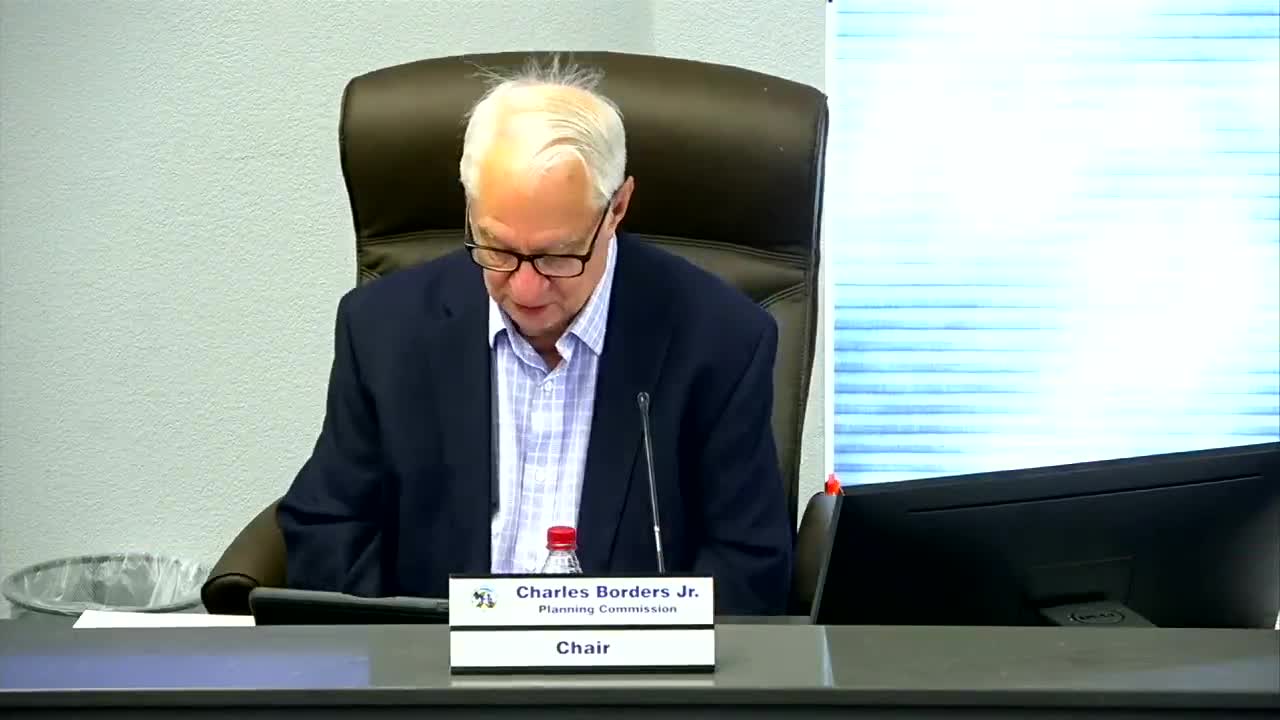
Growth Management Commission keeps 3% growth rate; recommends 774 residential allocations for 2026 and 10,000 gpd commercial water threshold
Summary
The Growth Management Commission recommended the Board of Supervisors retain a 3% growth rate, which staff calculated as 774 residential building permit allocations for 2026, keep a 43/57 split between general and developer categories, and maintain a 10,000‑gpd threshold for commercial/industrial review.
The Growth Management Commission recommended the Board of Supervisors adopt a resolution setting residential building permit allocations and related thresholds for 2026–2029.
Staff presented the annual growth management package and recommended retaining a 3% growth rate, which yields 774 residential building permits in 2026, and maintaining a 43% / 57% allocation split between the general property owner category and the development project category. Staff also recommended retaining a 10,000 gallons‑per‑day average daily water use threshold for commercial and industrial projects that triggers Growth Management review.
The recommendation followed detailed briefings from multiple city departments and agencies. Public Works Director Darren Schultz explained that new development’s incremental effect on pavement deterioration is minimal and not measurable compared with long‑term degradation, though additional trips increase congestion and signal/timing or turn‑lane solutions are typical mitigations. Utility Manager Andy Hummel presented an update on water resources and wastewater treatment capacity: Carson City holds multiple water rights and produced roughly 10,000–11,000 acre‑feet annually in recent years, with average summer peak day production of about 18.8 million gallons and treatment plant average flows in the 4–5 MGD range; Quill Water Treatment Plant upgrades (4 MGD capacity prior to optional expansion to 6 MGD) are underway and Marlette Hobart recharge timing is variable depending on snowpack and reservoir works. Hummel noted treatment plant peak capacity of about 6.9 MGD and that the city monitors the 85% threshold that would trigger facility planning.
Sheriff Furlong reported call volumes and calls for service were at or below three‑year averages and the department’s co‑response mental‑health teams have expanded to two full‑time teams; Fire Chief Sean Slayman said Fire Station 55 is expected to be operational in late July and the Fire Department is adding a single‑role ambulance to help peak‑hour calls. Parks staff reported ongoing projects and capital needs, and school district and other agency letters were included in the packet.
Commissioners asked technical questions about pavement maintenance funding, water loss, reuse effluent availability, and the urban service boundary; staff and department heads responded with current programmatic plans and capital schedules. Commissioners debated methodology for setting a percentage‑based growth rate; several commissioners expressed interest in exploring alternate methodologies over the coming year, but a majority accepted staff’s recommendation for the current cycle.
Commissioner Brooks moved to recommend the draft resolution to the Board of Supervisors (3% growth rate, 774 allocations in 2026, 43/57 split and 10,000 gpd threshold); the motion was seconded and carried by voice vote. The recommendation will be forwarded to the Board of Supervisors for adoption.