Get Full Government Meeting Transcripts, Videos, & Alerts Forever!
Get email alerts on the Death Investigation Services topic
No spam. Unsubscribe anytime.
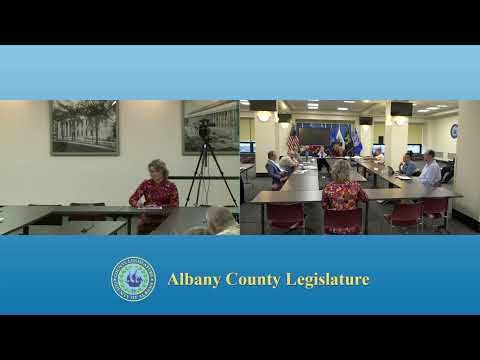
Albany County committee holds public hearing on proposed charter change for death-investigation services; no action taken
Summary
The Rules Review and Legislative Modernization Committee held a public hearing May 28 on a proposed local law to amend the Albany County Charter addressing death-investigation services, discussing funeral-home transport, autopsy timing and possible regional partnerships. The committee did not report or vote on the measure.
The Rules Review and Legislative Modernization Committee of Albany County held a public hearing May 28 on a proposed local law to amend the county charter and Local Law No. 8 of 1993 governing death-investigation services; the committee did not take action on the measure.
Committee members and staff focused discussion on who transports decedents from scenes, the timing of autopsies relative to embalming, options for private autopsies, fee structures for regional forensic services and case volume. "What we're looking at right now is still having the contract that we have in place with Albany County County Funeral Homes. That's who's currently doing the those transit works," a staff member said, adding the county does not propose changing the contract because, to their understanding, the vendor is "doing a good job." The committee did not provide public findings or a recommendation at the hearing.
Why it matters: The proposed local law would change how Albany County organizes or oversees death-investigation services — a set of duties that can affect families of the deceased, law enforcement evidence handling and county costs. Committee members pressed staff on operational details and intergovernmental arrangements that would affect implementation if the charter amendment advances.
Key points from the hearing
- Transport and contracts: Staff said Albany County currently uses a contract with local funeral homes to transport decedents from scenes to hospitals or the medical examiner/coroner facility. Staff described that arrangement as the county's current practice and indicated no immediate plan to replace that contract.
- Autopsy timing and family options: Staff explained that autopsies are typically performed before embalming because embalming fluids can interfere with toxicology testing. Staff also said families may commission a private autopsy at their own expense if they want a second opinion or if a coroner does not order one: "There is the option to do what's called a private autopsy, where a family would pay, out of pocket, to get one done," the staff member said.
- Coroner vs. medical examiner authority: Committee members asked whether New York State law assigns different powers to coroners versus medical examiners. Staff said the relevant state section consolidates coroners and medical examiners' provisions in the same statutory section and offered to follow up with a copy of the statute to committee offices.
- Regional partnerships and fees: Members discussed neighboring counties' arrangements. Staff described Onondaga County as operating a regional forensic center that accepts cases from other counties, and said Oneida County and Onondaga have a quarterly flat-fee structure with an end-of-year reconciliation for intercounty services. Staff said some counties accept fee-for-service cases on an ad-hoc basis, but the exact amounts charged to Albany County, if any, were "not specified" at the hearing.
- Volume, toxicology and cost drivers: Staff reported the committee is reviewing total case volume, noting that for the period approximately 2018–2022 county averages ranged "roughly 30 to 50 plus" deaths outside medical facilities per year and that toxicology requirements (for example, tests for xylazine or expanded panels) could increase costs depending on which assays are requested.
Committee procedure and next steps
The committee opened the public hearing but did not report the hearing out or take a formal vote on the proposed local law during the session. Earlier in the meeting, the committee approved the previous meeting's minutes on a motion by Mr. Reedy with a second from Ms. McCaffis; members voted in favor. The meeting ended by unanimous voice vote after a motion to adjourn from Mr. Webster, seconded by Mr. Reedy.
The staff member told the committee they would follow up with the relevant state statutory language on coroner/medical examiner authority and provide additional data comparisons with neighboring counties on case volume and fee structures.
Ending
The committee did not advance or reject the proposed local law at the May 28 session. Staff indicated additional follow-up and data sharing will be provided to the committee for later consideration.