Get Full Government Meeting Transcripts, Videos, & Alerts Forever!
Get email alerts on the Platting topic
No spam. Unsubscribe anytime.
Planning staff offers boot‑camp on plats, explains state shot‑clock and plat types to P&Z
Summary
Assistant planner Erin Stanley briefed the Planning and Zoning Commission on plat types, state rules (including the 30‑day 'shot clock' and HB 3699 changes), approval criteria and common deficiencies that lead to denial or revision.
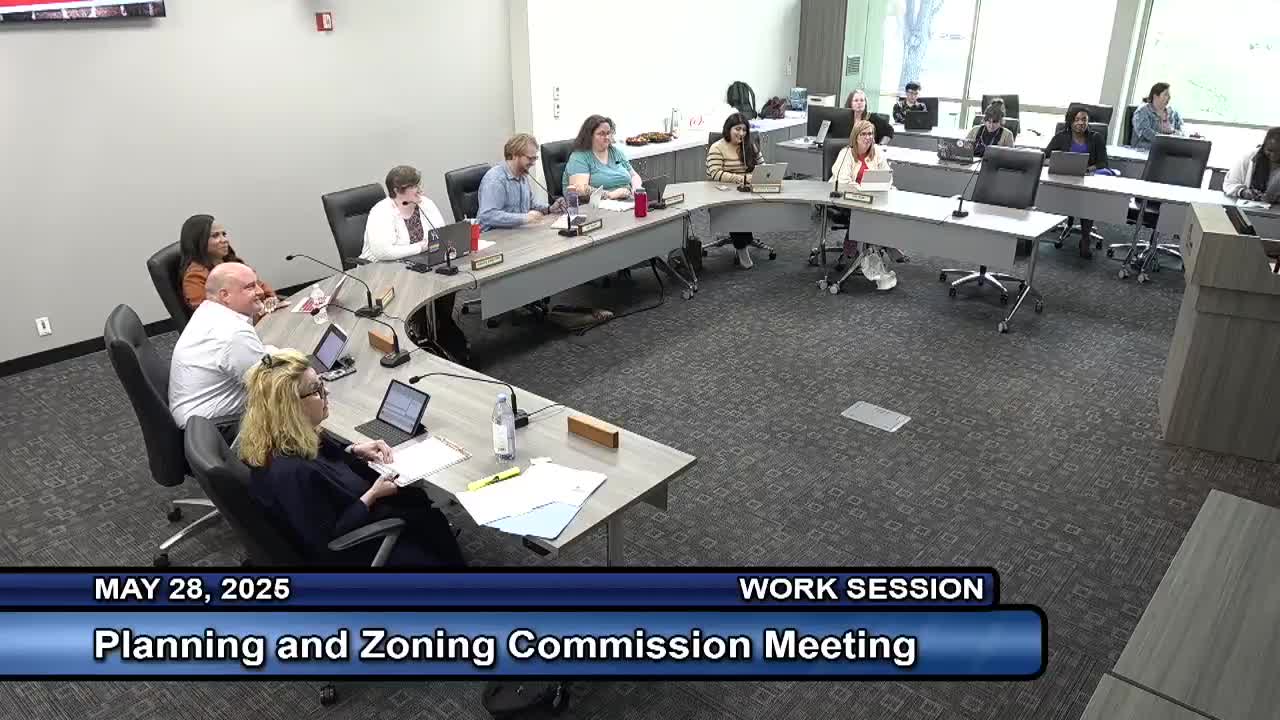
Erin Stanley, assistant planner, gave a boot‑camp presentation on May 28 explaining what plats are, why they matter and the typical types the City of Denton reviews, from final plats to replats, minor plats and conveyance plats.
Stanley described a plat as a survey-based map prepared by a surveyor that, when approved and filed, dedicates public rights and records lot boundaries, easements and rights of way. She reviewed map components (vicinity map, plat notes, title block), exemptions to platting (parcels over five acres intended not to be developed; lots of record established before Jan. 1, 1960; certain accessory structures and agricultural uses) and the administrative processes used in Denton.
State rules, shot‑clock and HB 3699 Stanley summarized the 2019 shot‑clock legislation that requires municipalities act on plats within 30 days of submission and related procedural changes that followed. She also summarized House Bill 3699 (effective Sept. 2023) and its effect: the 30‑day window begins on a complete submittal, municipalities may not condition plat approval on completion of certain studies as part of the plat submittal (for example, tree-preservation plans or downstream drainage assessments), multiple 30‑day extensions are possible, and governing bodies may delegate staff the authority to approve with conditions in some jurisdictions.
Stanley told commissioners that because some studies can no longer be conditioned at the plat stage, the city typically reviews those items earlier—at the site-plan, zoning-compliance-plan or permit stage—so technical analyses are still required, just not as a precondition to plat approval.
Types of plats and common reasons for deficiency Stanley outlined preliminary and final plats, replats and residential replats (which may require a public hearing if a variance is requested), administratively approved minor plats and conveyance plats, and rarer development or site plats. Common causes for staff-recommended denial include incomplete checklists, missing easement citations, insufficient right-of-way dedication and failure to meet minimum subdivision standards.
Commissioners asked whether plats can vest development rights; staff said vesting is governed by Texas law (Local Government Code Chapter 245) and usually occurs when an applicant submits the first application in a series required for development (often a zoning compliance plan or a preliminary plat). Staff also noted that, under current Denton practice, final plats recommended for denial are brought to the commission; Denton has not moved to delegate final-plat approval to staff.